A former senior manager at the University of Wollongong has told a state inquiry she reported the institution to the Independent Commission Against Corruption, alleging serious governance failures and a culture of reprisals.
Whistleblower details ICAC report to parliament
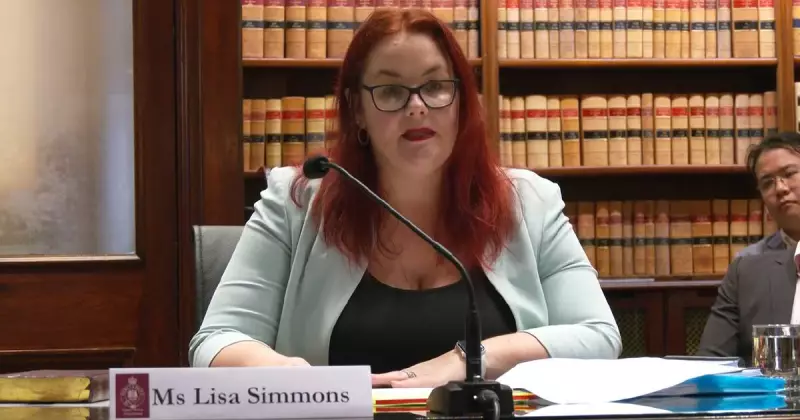
Lisa Simmons, the former executive manager of research operations at UOW, gave evidence before the NSW Parliament's Standing Committee on Social Issues in Sydney on Wednesday. She confirmed she had made a formal report to ICAC, the state's anti-corruption body.
"What concerns me deeply is that over time, an accountability deficit has emerged that shields decision-making from proper public scrutiny," Ms Simmons told the inquiry. She emphasised that the public, whose taxes fund universities, deserves the full truth about institutional governance.

During her testimony, Ms Simmons provided the committee with documents outlining her allegations. These included concerns about the management of conflicts of interest by the Chancellor and other members of the University Council.
Allegations of reprisals and a controversial property deal
A key allegation centred on the treatment of Professor Sean Brawley, the former deputy vice-chancellor of strategy and assurance. Ms Simmons stated that after Professor Brawley raised concerns about governance issues, he was made redundant by the university. Several months later, UOW advertised a vice-president role with a strikingly similar portfolio.
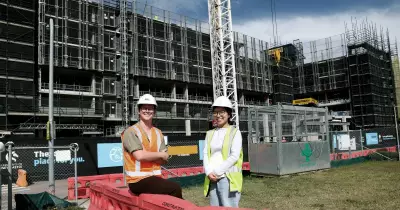
Ms Simmons also raised questions about UOW's relationship with developer Built, into whose Liverpool Civic Square building the university relocated its Liverpool campus. She noted that property consultants Knight Frank had advised the university to search for alternative sites and engage with other developers before committing to the move.
The inquiry heard that Ms Simmons' concerns crystallised in 2024, when respectful questions from her union went unanswered and senior leaders who had raised issues departed. In early 2025, colleagues began sharing experiences of "pressure, intimidation, and ethical compromise," which compelled her to act.
On March 6, 2025, she made a voluntary disclosure to ICAC under the Public Interest Disclosures Act, which was accepted, granting her whistleblower protections. "What followed were adverse experiences that no system should allow," she said.
Systemic failures and a culture of silence
Ms Simmons, who also served as chair of UOW's work health and safety committee and a CPSU delegate, stressed that her experience was not isolated. "The conditions enabling these failures developed over many years," she testified, describing a environment where accountability structures were weakened and silence became the norm.
She acknowledged the personal risk of coming forward. "I appear today knowing that my future in the sector I love may be uncertain," Ms Simmons said, dedicating her testimony to the courage of colleagues who shared their experiences with her.
Separately, media outlet Michael West Media reported last week that ICAC officers had raided UOW and seized laptops as part of an investigation. Neither UOW nor ICAC would confirm or deny the raid, and it remains unclear if it is connected to Ms Simmons' report.
In her concluding remarks, Ms Simmons noted that UOW is now fortunate to have a Vice-Chancellor, Professor Max Lu, and a senior team committed to rebuilding the university with integrity. UOW Chancellor Michael Still also appeared before the inquiry, facing questions about conflict of interest handling related to former interim vice-chancellor John Dewar.