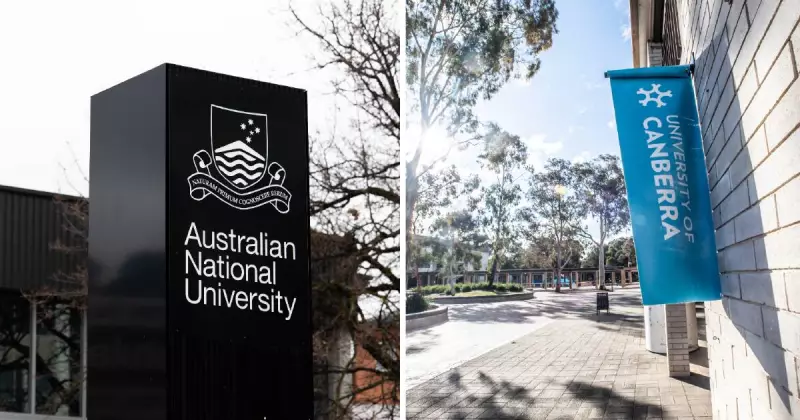
Canberra Universities Demonstrate Gains in Global Subject Rankings
The latest subject rankings from Times Higher Education reveal a positive trajectory for Canberra's universities, with the Australian National University showing improvement compared to the previous year. While these gains are notable, the institutions have not yet returned to their peak performance levels observed in earlier years.
ANU's Standout Performance in Key Disciplines
The Australian National University achieved its strongest result in physical sciences, securing a score of 70.4 that positions these subjects at 60th place globally. This represents a significant achievement for the university in this competitive field.
In the legal discipline, ANU attained an even higher global standing, ranking 39th worldwide with a score of 66.2. This places the university as a leading institution for legal education in Australia, though the University of Melbourne maintains the country's top position in this field with its eighth-place global ranking.

According to THE's comprehensive world university rankings, ANU stands as Australia's premier institution for both physical and social sciences. The university's overall position remained stable at equal 73rd, matching its 2025 ranking but still below its peak performance in 2017 when it achieved 47th place globally.
University of Canberra's Educational Strengths
The University of Canberra demonstrated particular strength in education studies and social sciences, with both disciplines ranking between 251st and 300th globally. These subjects received scores ranging from 40.6 to 43 for education and between 42.1 and 44.3 for social sciences.
Overall, the University of Canberra placed between 401st and 500th in the world rankings. The institution's best historical performance occurred in 2022 when it achieved equal 170th position globally, indicating room for growth back toward that level of achievement.
Global Shifts in Higher Education Landscape
The THE subject rankings continue to be dominated by institutions from traditional powerhouses, with universities from the United Kingdom and United States occupying most positions in the top ten across various disciplines.
However, Phil Baty, THE's chief global affairs officer, highlighted significant changes occurring in the global higher education landscape. He described the rankings as providing "further evidence of an emerging new world order" in academia.
"Western dominance of higher education and research is steadily being challenged by the rapidly rising powers of East Asia," Baty explained. He specifically noted that "East Asian nations, led by China, are making particularly remarkable strides in geopolitically strategic areas, including Computer Science and Physical Sciences."
This commentary suggests that while Canberra universities are making progress, they operate within an increasingly competitive global environment where traditional hierarchies are being reshaped by emerging educational powers.