Newcastle Dog Attack Leaves Man Hospitalised with Severe Leg Injuries
A Newcastle man has been hospitalised with severe leg injuries following a vicious dog attack on Darby Street in the Cooks Hill area. The incident occurred on Friday morning, leaving the victim with bone-depth wounds and significant tissue damage.
Graphic Details of the Attack
The Darby Street resident was walking his own dog when a roaming stray, described by locals as a known neighbourhood issue, attacked his pet. When the man attempted to intervene and separate the animals, the aggressive dog latched onto his lower left leg, mauling him severely.
The injuries were described as horrific, with bone exposed below the knee and large patches of skin and muscle torn completely away around the ankle area. Witnesses initially believed the victim had severed arteries due to the profuse bleeding.

The man sought help at a nearby veterinary clinic, where staff wrapped his leg and applied pressure before an ambulance arrived. He was transported to John Hunter Hospital where he remained in stable condition on Saturday, February 7.
Community Concerns and Enforcement Issues
Two animal rescue organisation operators familiar with the incident have expressed serious concerns about public safety and what they describe as an ailing enforcement system struggling to control dangerous dogs.
Kelly Handsaker, who operates Nine Lives Cat Rescue and knew the victim, reported the incident to council and police when she became aware of it around 5.30pm on Friday. She expressed frustration with what she perceived as a lack of immediate action.
"I showed some of the girls in the rescue, and we are pretty seasoned with injuries and gore. They said, that isn't a dog attack; surely he has been attacked with a machete," Ms Handsaker told the Newcastle Herald.
She described reaching the city's after-hours service after approximately 20 minutes, where her details were taken but she received no further contact. "I needed to make it clear that it was severe. It wasn't just a scratch," she said of her conversation with the operator.
Known Problem Dog and Neighbourhood Fears
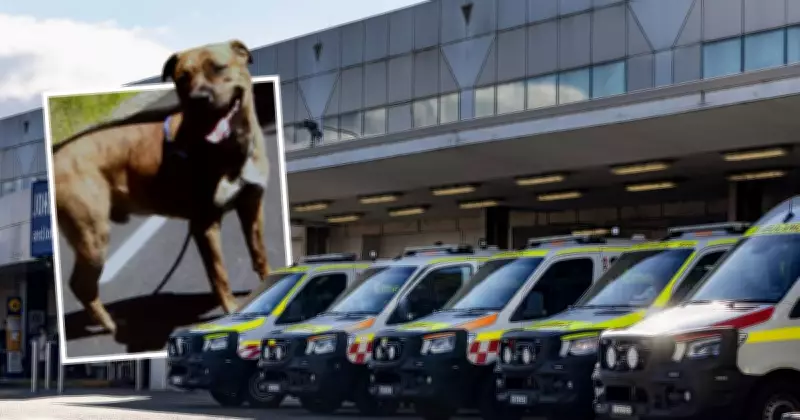
The attacking dog was described by multiple witnesses as a white and tan female crossbreed with Staffordshire bullmastiff appearance. The animal was reportedly known to be aggressive and frequently seen roaming off-lead in the neighbourhood without an owner in sight.
Ms Handsaker, who visits residents in Cooks Hill and Bar Beach areas weekly through her work, said complaints about aggressive dogs wandering uncontrolled were routinely raised with her. "There are certainly instances prior to this where, if it is not cats being killed, it is other dogs being attacked or people being bailed up," she explained.
She described one long-time Darby Street resident, a neighbour of the victim, who fears for his own pet's safety and feels completely ignored by authorities.
Broader Context of Dog Attacks in NSW
The incident highlights broader concerns about dangerous dogs in New South Wales. Staffordshire and bull-terrier breeds have been identified as the state's most dangerous dogs, overshadowing state-compiled attack reports by breed.
According to recent data:
- American Staffordshire Terriers were involved in 200 attacks in the three months to June, the highest number of any breed
- Bullterriers accounted for another 87 attacks during the same period
- Together, these breeds represented more attacks than the next six breeds combined
- Dog attacks hospitalised 65 people across NSW in the three months to June, with another 191 requiring medical treatment
Staffordshire dogs and crossbreeds have been linked to at least four deaths in NSW over the last decade, according to coronial data.
Rescue Organisations Call for Tougher Enforcement
Sue Barker, founder of Dog Rescue Newcastle who was also aware of the attack, said she fields calls about dangerous roaming animal encounters several times monthly. She singled out Cooks Hill and Hamilton South as particular areas of concern.
"When a dog attacks, it clearly comes under either the council or the police," Ms Barker said. "But sometimes, it is very hard to get someone to actually attend to them."

She explained that residents often contact her when incidents occur but are reluctant to report them directly to authorities because they know the animal owners or fear repercussions. "I contact the authorities and they say unless the person who witnessed the attack comes forward and is willing to give their details, they can't do anything about it," she said. "There's no follow through."
Ms Barker emphasised the severity of the recent attack: "If that had been a child, the child would have been killed. That man could lose his leg. It is terrible ... If something is capable of doing that, it is capable of killing a child."
Local Statistics and Legislative Review
According to local government data, twelve Novocastrians were attacked and at least four were seriously injured or hospitalised by dogs in the three months to June last year. Dog attacks contributed to four NSW deaths in the past five years, the most recent being Singleton teenager Annalyse Blyton in September.
Following that tragedy, the NSW Government committed to reviewing state legislation regulating pet ownership.
Newcastle council reported the third highest number of serious attacks in the final quarter of the last financial year among regional councils, behind only the Central Coast and Lake Macquarie. The city ranked 23rd among all councils in the state.
From the Central Coast to Mid-North Coast, councils euthanised 75 dangerous dogs in the year to June, with another 62 put down because they were unsuitable for rehoming.
According to available data, all but one of the 154 dogs recorded in City of Newcastle's pound facilities last year were either released to rehoming organisations or returned to their owners.
Newcastle has the ninth highest population of dogs in NSW, with just over 68,000 microchipped canines in the state's most recent tally.
Official Responses and Investigation
Police were notified of the attack but declined to comment, referring to the City of Newcastle as the responsible agency. A council spokesman confirmed inquiries had begun, with rangers seeking witnesses to help identify the alleged attacking dog and its owner.
"Penalties apply under the Companion Animals Act 1998 and dog owners are liable if their pet attacks another person or animal," the spokesman stated.
The council was unaware of the incident until Friday evening, according to their statement. Paramedics' notes indicated the dog was still in the area as they arrived, but witnesses reported it left the scene before it could be seized.
The incident continues to raise questions about public safety, enforcement effectiveness, and community concerns regarding dangerous dogs in Newcastle neighbourhoods.