New laboratory results have confirmed the presence of asbestos in several colours of a popular decorative sand, leading to widespread removal efforts across the Australian Capital Territory's education sector.
Test Results Pinpoint Contaminated Products
WorkSafe ACT has received the findings from more detailed analysis of Kadink Decorative Sand. The transmission electron microscopy (TEM) testing confirmed asbestos contamination in specific colours: purple, blue, green, yellow, and pink.
Authorities noted that the white coloured sand from the same product line did not show traces of asbestos in this round of testing. The types of asbestos identified were tremolite and chrysotile, though WorkSafe ACT maintains the risk of harm from exposure remains low.

School Disruption and Ministerial Response
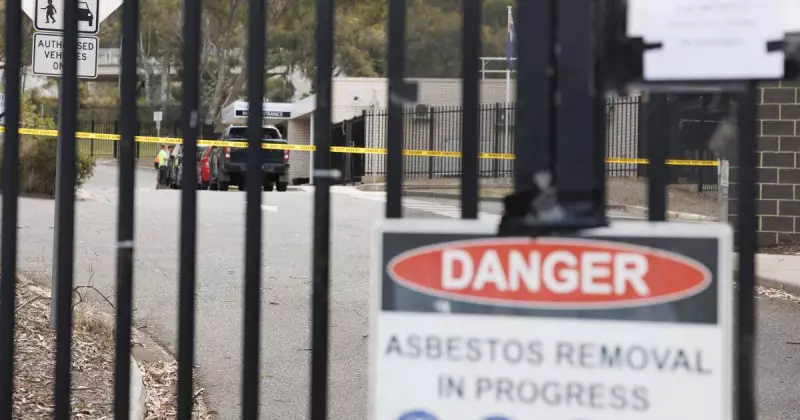
The discovery caused significant disruption, leading to the closure of nearly all ACT public schools on November 17, 2025. The ACT Education Directorate subsequently hired licensed asbestos removalists to enter schools, remove the contaminated sand, and certify the sites as clear.
Education Minister Yvette Berry warned that more sand could be discovered in schools, potentially hidden at the back of cupboards or in other less visible areas. Her directive was clear: any further discoveries should be immediately cordoned off and professionally removed.
In response to the crisis, a ministerial declaration by Michael Pettersson under the Work Health and Safety Act came into effect on December 3, 2025. This amendment specifically classifies the cleaning and disposal of the recalled coloured sand as "minor work."
New Rules for Safe Removal
The new regulation outlines who is authorised to handle the contaminated product. The "minor work" can now be completed by one of the following:
- A person who has completed the relevant training specified by the regulation.
- A licensed asbestos removalist.
- An individual who has completed equivalent or higher training.
This streamlined approach aims to facilitate the safe and efficient cleanup of the product from homes, schools, and businesses across the territory. The official advice from health and safety regulators remains for the public to remove the sand and avoid any contact with the affected products.