Hanoi Five Gates Train: Vietnam's New Tourist Attraction Under Scrutiny
The Hanoi Five Gates Train, launched in late 2025 to mark Vietnam's 80th independence anniversary, has quickly become a must-see for visitors. This double-decker train features carriages themed around Hanoi's five historic city gates, offering a moving tribute to the country's rich cultural heritage. However, while it promises an immersive experience, does it truly deliver for international tourists?
A Bizarre Hall of Mirrors Experience
Riding the Hanoi Five Gates Train feels like stepping into a surreal hall of mirrors. As the train trundles from Hanoi's main railway station to Bac Ninh province and back, passengers find themselves both observers and exhibits. With lenses pointed at lenses, the journey creates a meta experience, especially when passing through the infamous Train Street. This narrow laneway, a viral social media sensation, draws thousands daily to witness trains hurtling through a thoroughfare barely wider than the tracks, with cafes and bars crammed just centimetres away.
The danger is real—last year, a man nearly got dragged under a moving train while filming, highlighting the razor-thin margin between risk and spectacle. This has prompted the Vietnamese Government to consider shutting down the site, yet the intrigue only deepens. On the Five Gates Train, passengers peer out at Train Street's crowds, capturing the mutual gaze on cameras, often waving to heighten the theatrics.

Stunning Design Meets Practical Shortfalls
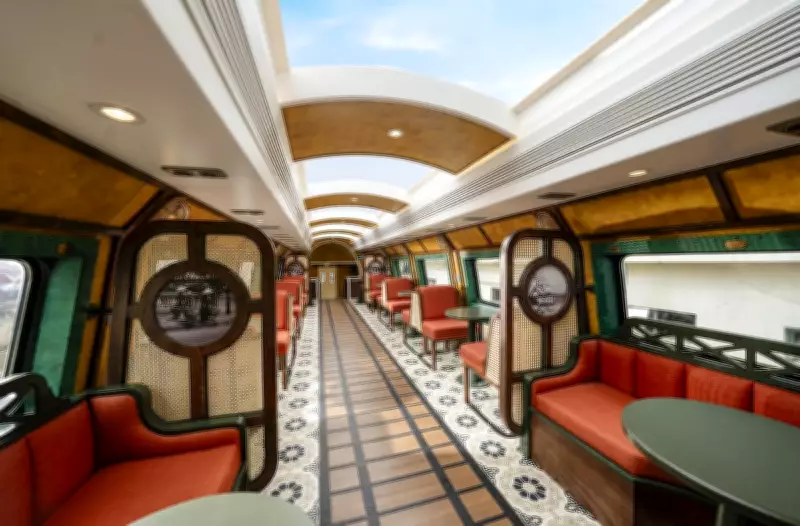
Beyond the thrill of Train Street, the train's carriages are beautifully designed, evoking a Wes Anderson-like charm with upholstered booth seating, rattan panels embedded with vintage artwork, and intricately patterned tiles. The top level features a curved glass roof offering expansive views of Hanoi's skyline. Details are impeccable, from staff uniforms to welcome snacks of sticky rice and lotus tea, and traditional music performances.
However, critical elements are overlooked. The onboard narration is delivered exclusively in Vietnamese, with no translation available, leaving international tourists in the dark about the significance of Hanoi's ancient gates or key sights. This storytelling gap extends to the stopover in Tu Son, Bac Ninh province, where passengers visit the nearly 1000-year-old Do Temple complex dedicated to the Ly Dynasty emperors. Without clear explanations, many wander confused for two hours before returning to the train.
Safety and Accessibility Concerns
With two daily departures at 8am and 1.30pm, the round trip lasts about 3.5 hours, including the Tu Son stopover. Tickets start from VND 550,000 (approximately $30), with discounts for seniors and children under 10, and free travel for those under six. Bookings are available via hanoitrain.vn. Despite the aesthetic effort, the service's focus on tourists is undermined by language barriers and safety issues at Train Street, where incidents have sparked government warnings.
As the train passes through Train Street a second time, the crowds swell, and passengers become unwitting characters in a living postcard. While the experience finishes with a bang, the overall journey leaves questions about whether the Hanoi Five Gates Train fully capitalizes on its cultural potential or merely offers a visually appealing ride with missed opportunities for deeper engagement.