Standing in the vast courtyard of the Chateau de Chambord, a sense of history is palpable. Our guide, Olivier, begins a journey back five centuries, to the Renaissance era when King Francois I commissioned a hunting lodge on this very spot.
A Royal Vision in the Heart of France
The surrounding forests of the Loire Valley, teeming with wild boar and deer, provided the original playground for the king and his court. Yet Francois I envisioned far more than a simple retreat. He summoned the finest artisans from France and Italy to create a country getaway of unparalleled splendour, located just 15km from the royal city of Blois.
Interestingly, historical records suggest King Francois I spent only around 50 days at Chambord during his 32-year reign. However, his successors, most notably the Sun King Louis XIV, continued to enhance and embellish the lodge, transforming it into the chateau we see today. It stands as a revered monument, a crown jewel often mentioned in the same breath as Versailles and Fontainebleau.

Architectural Wonders and Hidden Secrets
Crunching across the gravel, Olivier leads our Albatross Tours group inside. The scale is staggering: over 400 rooms, 280 fireplaces, and approximately 80 staircases. The centrepiece is the breathtaking double-helix spiral staircase that ascends through the central keep, or "donjon."
"Legend credits Leonardo da Vinci with its design," Olivier reveals. "Francois I was his patron, and sketches found in da Vinci's studio after his death bear a striking resemblance." To demonstrate its ingenious design, our group splits in two, each half taking a separate helix. We ascend without ever crossing paths, just as royalty and servants were intended to do, reuniting seamlessly on the floor above.
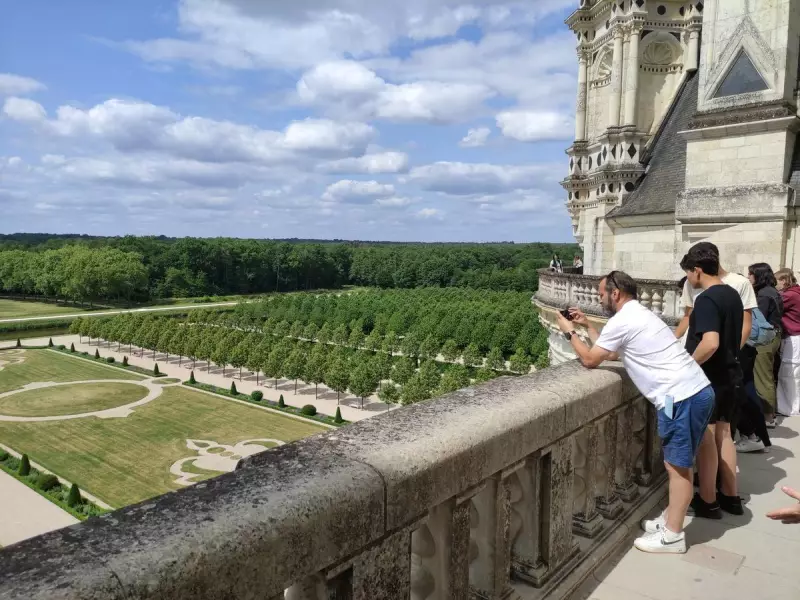
The opulence continues through a series of bedchambers and apartments, lavishly decorated with period paintings, tapestries, and furniture. The staircase ultimately leads to the rooftop, offering panoramic views over the water-filled moat and the magnificent formal gardens, replanted a decade ago with over 16,000 plants, shrubs, and trees.
From Royal Hunting Ground to Public Paradise
From this high vantage point, the sheer scale of the 5540-hectare domain becomes clear. Enclosed by a 32km wall, it is Europe's largest enclosed park. Today, where kings once hunted, visitors now hike, cycle forest trails, and picnic on the lawns. The estate also hosts equestrian shows and summer concerts, with past performers including Sting and David Guetta.
Adjacent to the chateau, the quaint village of Chambord offers photogenic cottages for rent, a charming church, and stores where visitors can source picnic supplies like baguettes, deer terrine, and local rum and raisin cookies.
Before our independent exploration of the gardens, Olivier shares a final, privileged glimpse. Using a key from his satchel, he unlocks doors to hidden spaces: spiral stone staircases and austere attics supported by a complex web of 16th-century oak beams. On an ancient door, the carved image of a salamander—the heraldic symbol of Francois I—serves as a lasting imprint of the king who started it all.
Fact File:
Chateau de Chambord is open year-round except January 1, March 20, and December 25. General admission for a self-guided visit is €19. Guided tours in English run daily at 11.15am from early July to late August for an additional €7 for adults. Bookings can be made via chambord.org.
For Australian Travellers: Albatross Tours includes Chambord in its 19-day 2026 La Grande France Tour, with departures in May, June, August, and September. Prices start from $15,887 per person, twin share. Visit albatrosstours.com.au for details.