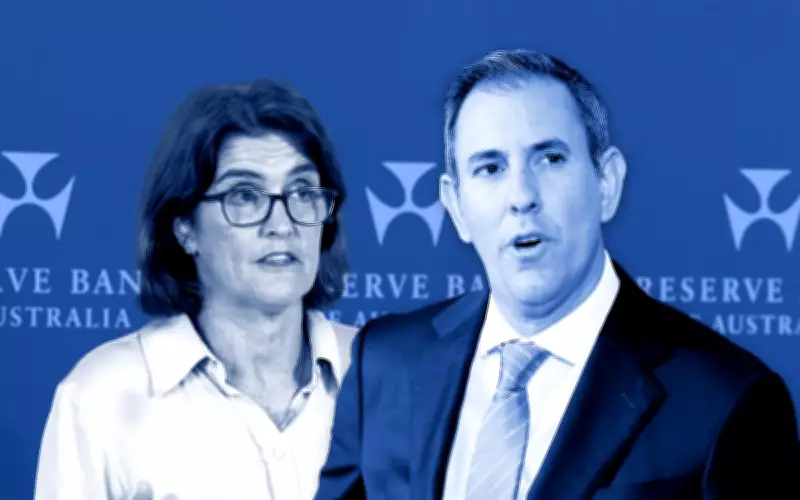
Reserve Bank of Australia Governor Michele Bullock has publicly attributed persistent inflation and subsequent interest rate hikes to federal spending initiatives led by Treasurer Jim Chalmers. This critique emerges as Australia grapples with economic pressures that have prompted the central bank to maintain a tight monetary policy stance.
Bullock's Direct Critique of Fiscal Policy
In a significant statement, Governor Bullock explicitly linked the stubborn inflationary trends to the government's fiscal decisions. She argued that increased public expenditure under Chalmers' stewardship has contributed to demand-side pressures, complicating the RBA's efforts to curb inflation through interest rate adjustments alone. This marks a rare public divergence between the central bank and federal treasury on economic management strategies.
Economic Context and Implications
The Australian economy has faced mounting challenges with inflation remaining above target levels, despite a series of interest rate increases. Bullock's comments suggest that monetary policy tools may be insufficient without complementary fiscal restraint. This perspective highlights the delicate balance between stimulating growth and controlling price rises in a post-pandemic recovery phase.

Chalmers' Spending Initiatives Under Scrutiny
Treasurer Jim Chalmers has overseen various spending programs aimed at supporting households and driving economic activity. However, Bullock's critique implies that these measures may have inadvertently fueled inflationary pressures. The debate centres on whether such spending is necessary for social support or counterproductive to broader economic stability goals.
Broader Economic Policy Debate
This development sparks a wider discussion on the coordination between monetary and fiscal policy in Australia. Experts note that effective inflation management often requires alignment between the RBA's interest rate decisions and the government's budgetary approach. Bullock's remarks may signal a call for more conservative fiscal measures to alleviate the burden on monetary policy.
Potential Impacts on Households and Businesses
Continued high inflation and interest rate hikes pose significant challenges for Australian consumers and enterprises. Rising borrowing costs can dampen investment and spending, while persistent inflation erodes purchasing power. The tension between Bullock and Chalmers underscores the complex trade-offs in economic policymaking that directly affect everyday Australians.
As the situation evolves, stakeholders will closely monitor any shifts in government spending or RBA policy. The outcome of this fiscal-monetary interplay could shape Australia's economic trajectory in the coming months, influencing everything from mortgage rates to business confidence.