Bilbao's Remarkable Turnaround: From Industrial Decline to Tourist Magnet
Few European cities have undergone a transformation as dramatic as Bilbao. Once plagued by post-industrial decay and overshadowed by the militant activities of ETA, which sought a separate Basque State for over four decades, this Spanish city was largely overlooked by tourists. However, following a series of ceasefires starting in the late 1980s and the formal disbandment of ETA in 2018, Bilbao has blossomed into a captivating destination. Nestled in the verdant, mountainous north of Spain, it now complements the allure of nearby San Sebastian, another enchanting Basque city just over an hour's drive away.
The Guggenheim Museum: An Architectural Marvel
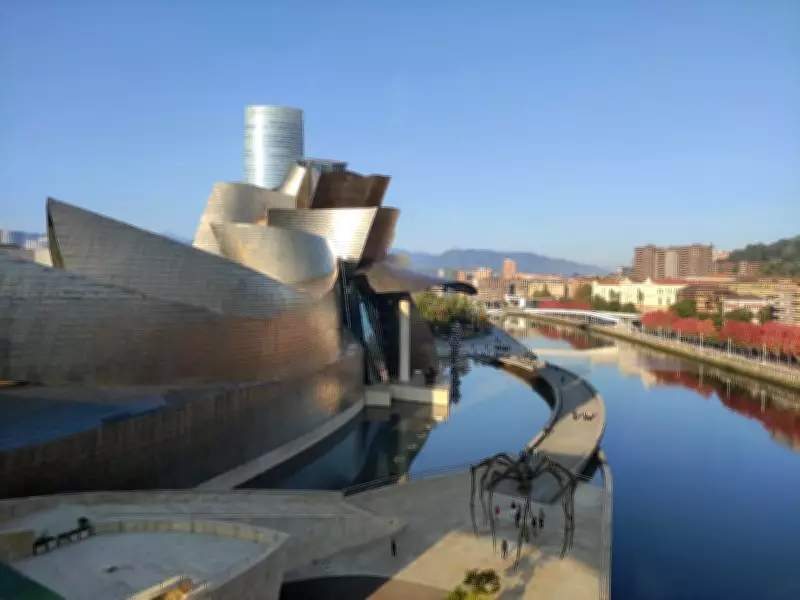
You cannot miss the Guggenheim Museum, and you certainly won't want to. Opened in October 1997, this titanium-clad structure, masterminded by the late Canadian-American architect Frank Gehry, stands as a breathtaking icon of Bilbao's resurgence. Perched on an old wharf along the River Nervion, the city's lifeblood, it is an offshoot of the New York-based Solomon R. Guggenheim Foundation.
Inside, thought-provoking temporary exhibitions keep the galleries fresh and contemporary, but it is the permanent exhibits that often spark the biggest smiles and most camera clicks. On the ground floor, visitors can immerse themselves in the giant abstract steel installations of Richard Serra, a California-born artist who died in 2024. Upstairs, works by renowned artists such as Andy Warhol, Damien Hirst, Roy Lichtenstein, and Jean-Michel Basquiat are on display.

Surrounding the museum, large-scale sculptures by Anish Kapoor, Louise Bourgeois, and Jeff Koons adorn the pavements and pools. Koons' 12.4-meter-high Puppy, decorated with nearly 40,000 live plants, is especially Instagrammable. Nearby, The Artist Grand Hotel of Art offers top-tier accommodation in the walkable city centre.
Casco Viejo: The Historic Heart of Bilbao
For many visitors, the most charming part of Bilbao is its oldest quarter, Casco Viejo. A 30-minute stroll along the riverside promenades east of the Guggenheim leads to this picturesque area, built around Las Siete Calles (The Seven Streets). These atmospheric narrow lanes have medieval origins, dating back to when Bilbao was a small fishing port, with names like Calle Carniceria Vieja, meaning "old butchery," hinting at past trades.
Evolving over centuries, particularly in recent decades, these streets are a joy to explore day and night. Look up at the colourfully painted enclosed apartment balconies and down at the bustling street-level businesses, including numerous purveyors of pintxos—the addictive Basque answer to tapas. Plaza Nueva, a neoclassical-style square at the heart of Casco Viejo, and the ornate riverside market hall, Mercado de la Ribera, offer ample opportunities for snacking and feasting.
San Mames: Soccer and Spiritual Heritage
Bilbao boasts a strong Christian heritage and lies on the Camino del Norte, a northern branch of the Camino de Santiago pilgrimage route. Imposing churches, such as the gothic-style cathedral dedicated to St James, the baroque church of St Nicholas, and the Church of St Antony, dot the Casco Viejo area. The latter features on the badge of Athletic Club Bilbao, which plays at San Mames Stadium, nicknamed "La Catedral."
A force in La Liga, Spain's top soccer division, Bilbao regularly qualifies for major European club competitions. Their success is particularly impressive given the club's strict policy of only fielding players born or raised in the Basque Country, a rarity in today's globalised sport. Visitors can watch matches, explore the club museum, or admire the flashy new stadium designed by local architect Cesar Azcarate.
Located 2.5 kilometers east of Casco Viejo, the San Mames neighbourhood also houses Bilbao University and the coach station, with regular services to San Sebastian. Reach it via a half-hour walk through the New Town, with its 19th-century boulevards reminiscent of Barcelona or Paris, or take the Metro. The quirky tubular station entrances, known as "Fosteritos" and designed by British architect Sir Norman Foster, add a unique touch to the journey.