Western Australia is just weeks away from being connected to one of the most significant upgrades to Australia's internet infrastructure in a generation, with a new subsea cable set to enhance Perth's role as a strategic digital hub.
SMAP Cable: A New Era for Connectivity
The Sydney, Melbourne, Adelaide, and Perth cable, known as SMAP, is scheduled to enter service in June. This 5,000-kilometre fully armoured submarine cable system will deliver more than 400 terabits per second of capacity, marking a major leap in national connectivity.
“For WA, SMAP means Perth is no longer the western end of the country,” said Bevan Slattery, founder and co-chief executive of Subco, the company behind the cable. “It’s our secure gateway to Asia, the Middle East and Europe, with direct access to every other major Australian city for the first time in over two decades.”

The cable arrives as investment pours into Australian data centres, driven by surging demand for cloud computing and artificial intelligence. Subco says SMAP is about 25 times more energy-efficient than legacy systems.
SMAP is designed to give giant data centres a faster, more resilient link between Australia’s major capitals and key international markets. But Mr Slattery noted the cable’s implications extend beyond AI, supporting banking apps, cloud services, government systems, online gaming, remote work, and the data-heavy industries that underpin WA’s economy.
Risks: Ships, Sharks, and Sabotage
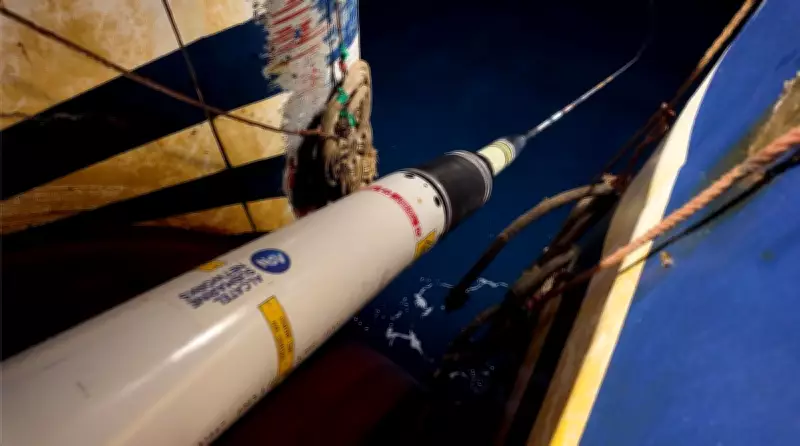
Despite the concept of the cloud, the internet still relies on physical infrastructure on the ocean floor. A submarine cable consists of hair-thin glass fibres that carry data as pulses of light, wrapped in protective layers against saltwater, pressure, and damage.
In deep water, distance from human activity often provides the best protection. However, subsea cables can still be damaged by earthquakes, ocean currents, and deliberate interference. Recent cable cuts in the Baltic Sea, Red Sea, and Taiwan Strait highlight the security risks surrounding critical digital infrastructure.
The risks are increasingly geopolitical. Writing in The Conversation, Meredith Primrose Jones, a researcher at RMIT University’s Oceania Cyber Security Centre, pointed to Iranian state-linked media reports floating a plan to charge undersea cable operators in the Strait of Hormuz for access to what they described as Iran’s offshore territory.
There is even the risk of sharks. Google famously reinforced some of its undersea cables in 2014 after concerns about bite damage. But in Australian waters, the industry is far more worried about ships than sharks.
Vocus, the Australian fibre and network operator behind major systems including the Darwin-Jakarta-Singapore Cable and North-West Cable System, has seen the risk first-hand. “There are three things certain for Australian telecommunication operators: bushfires and floods will rip through swathes of Australia every few years, and ships will drop anchor on top of vital submarine cables that carry 99 per cent of Australia’s internet traffic to the world,” Vocus general manager technology operations, wholesale and infrastructure Jonathan Gleeson said in a blog post. “As they say in the submarine cable industry, ‘ship happens!’”
It is against that backdrop that SMAP’s design makes all the difference, being double-armoured by metallic barriers for the entire route. For all the risks of going subsea, SMAP also avoids some of the vulnerabilities that come with land-based fibre routes, which carry much of the domestic internet traffic across the continent. “Australia has been over-reliant on a small number of terrestrial corridors. A single backhoe in the wrong paddock can take out meaningful national capacity,” Mr Slattery said.
AI Demand Behind the Cable
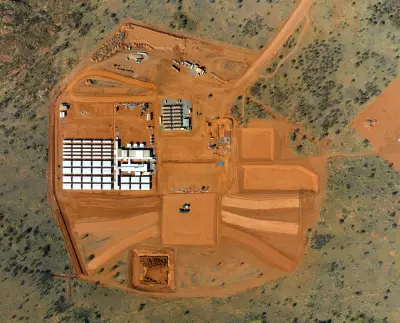
The cable lands as Australia’s data centre sector races to keep up with AI demand. It is designed to plug directly into major data centre ecosystems, including Equinix in Perth, giving customers faster access to carriers, cloud providers, enterprise networks, and digital services already operating inside the facility.

Matthew Gully, senior interconnection manager at Equinix, said direct connectivity to subsea cables reduced the number of network “hops” and lowered latency for real-time, data-heavy workloads. “Such performance is mission-critical for real-time, data-intensive workloads like AI, which require ultra-low latency, typically below 100 milliseconds,” Mr Gully said.
Mr Slattery said demand was coming from the biggest users of cloud and data infrastructure. “Hyperscalers, carriers, government. AWS, Microsoft and Google all need diverse east-west paths between availability zones,” he said. “Carriers selling east-west capacity get genuine competition for the first time in 25 years. And for government and sovereign workloads.”
Perth's Role as a Digital Hub
SMAP’s importance is amplified by the cables already landing in Perth. Indigo West is a 4,675-kilometre subsea cable linking Perth directly to Singapore, giving Australia a low-latency route into Asia. The Oman Australia Cable is larger still: a 9,800-kilometre link between Perth and Muscat, giving Australia a direct route into the Middle East and beyond. SMAP adds the domestic leg, putting Perth at the centre of where Australia’s east-west data traffic connects with international routes.
SMAP will connect into Equinix’s P2 centre in Shenton Park, while also linking into data centre ecosystems in other capitals, including NEXTDC centres. The connection is notable given Mr Slattery founded NEXTDC, along with other listed infrastructure and connectivity companies including PIPE Networks, Megaport, and Superloop.
Mr Gully said Equinix was already seeing demand from hyperscalers, network operators, and businesses running latency-sensitive workloads, with strong interest in WA from resources, energy, logistics, and government. “AI is also emerging as a major driver, with organisations seeking locations that can support high-performance data exchange and resilient access across Australia and into global markets,” he said.