Western Australia's Population Surge Outpaces National Growth
Western Australia continues to attract residents at an unprecedented rate, with the Australian Bureau of Statistics confirming the state's population is expanding faster than any other region in the nation. Fresh figures released this week reveal that WA was home to approximately 65,800 more people in September 2025 compared to the previous year, swelling the total population to 3.06 million.
This translates to a substantial 2.2 percent population increase, significantly exceeding the more modest national growth rate of 1.6 percent. Phil Browning, ABS head of demography, stated, "Our population grew to 27.7 million, with 423,600 more people than in September 2024. This was made up by natural increase, which is the number of births minus those who died, and overseas migration."
National and State Demographic Trends
Nationally, the natural increase amounted to 112,600 people, with 1.9 percent more births and 1.4 percent fewer deaths recorded. Net overseas migration contributed a boost of 311,000 people over the year. Mr. Browning emphasized, "Western Australia was the fastest growing state, with a population rise of 2.2 percent. Victoria and Queensland grew by 1.7 percent, while Tasmania had the slowest growth over the 12-month period, with a 0.3 percent rise in population."

While this rapid growth highlights WA's desirable qualities, it is placing significant strain on local infrastructure and resources. Amanda Davies, head of the school of social services at the University of WA, noted, "There's been criticism about the supply of land, as well as the speed at which schools and healthcare and those things are being developed, as well as extending of the public transport network. When it comes to the smaller local level things, I think there's quite a lot of frustration that those are quite delayed."
Critical Land Shortages in Perth
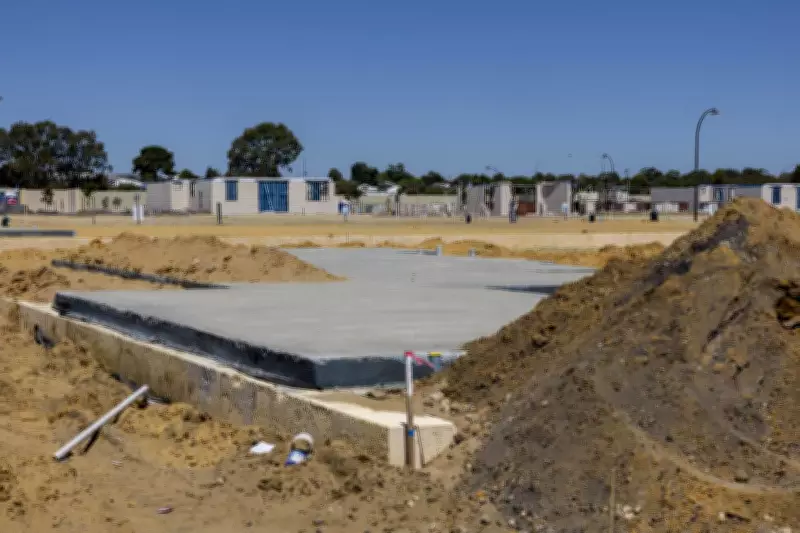
Land availability is looking especially bleak, with the Urban Development Institute's State of the Land Report this week revealing that Perth has just 16 days of supply remaining if no additional land is brought to market. This represents the worst demand-supply ratio since the peak of the 2013 housing boom.
The report indicates that land supply in Perth has dropped into "chronic or critically low territory," well below a healthy range of two to four months of active supply. It further stated that Perth delivered 17,000 dwellings in 2025 and is expected to maintain that rate for the next three years, "as the significant stock of dwellings under construction completes and improved unit supply starts to flow through."
Infrastructure and Regional Development Challenges
Davies added that more focus is urgently needed for the state to keep pace with population growth. "All forecasts indicate that we're going to continue to grow, and that means that we are going to have very substantively increased demand on the aged care sector," she warned.
In response to the population putting strain on Perth's infrastructure, Premier Roger Cook has advocated for encouraging people to move north to regional towns. He nominated Port Hedland, Karratha, Geraldton, and Kalgoorlie as places he wants new West Australians to live, stating late last year that supporting a roaring population in the city was "not unsustainable, but it's challenging."
The combination of rapid demographic expansion and inadequate land and infrastructure development poses ongoing challenges for Western Australia's future planning and sustainability.