A small Australian tea business has taken on global drink giants by doing something its founders say many of them do not: listening.
Queensland-based East Forged has beaten multinational heavyweights including Coca-Cola and PepsiCo to claim Best Drink Innovation at the 2026 World Food Innovation Awards in London, topping more than 100 entries from 28 countries.
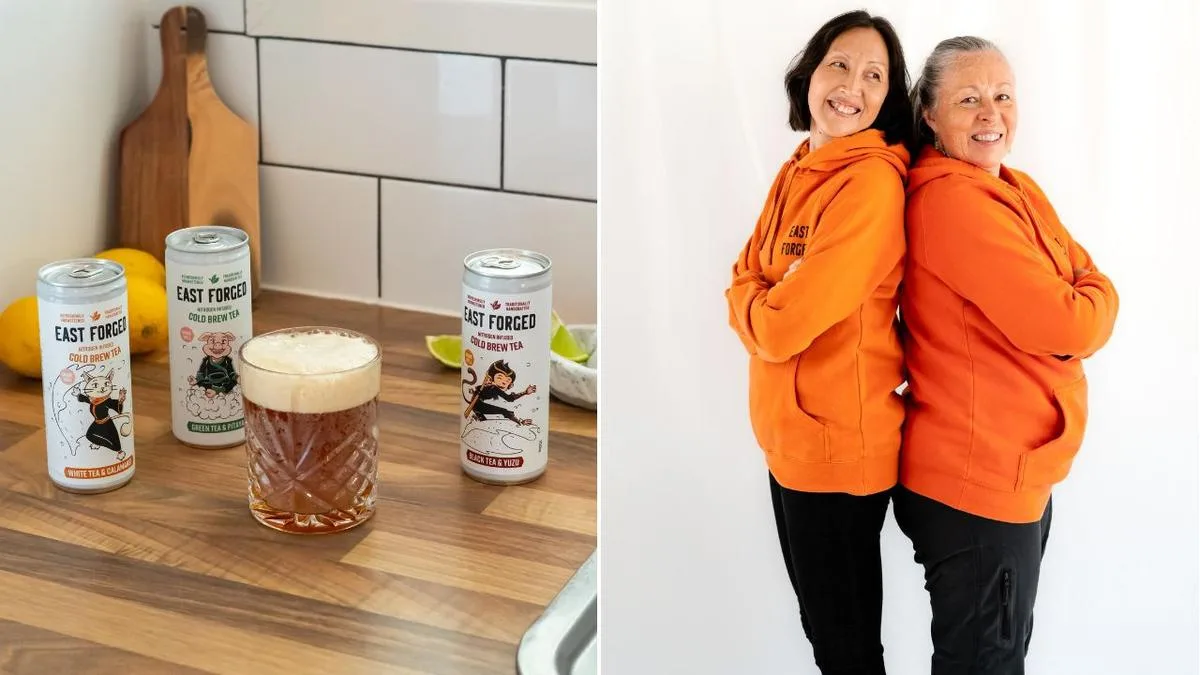
The brand produces a cold-brew tea infused with nitrogen, creating a creamy, full-bodied texture more commonly associated with stout beer than iced tea, without any sugar or artificial sweeteners.
Co-founders Tania Stacey and Kym Cooper say the breakthrough did not come from a lab but from markets, real conversations and repeated feedback from customers when they began selling at market stalls.
“We stand there and we listen to the people when they’ve tasted our drinks,” Stacey told 7NEWS.com.au.
“So many drinks nowadays have a strange aftertaste, or they’re hyper-sweet and (customers) said of our drink, ‘Wow, this tastes healthy. It tastes clean. There’s no weird aftertaste’.
“When you have the same thing being said to you all the time, you just know you’re on the right path.”
The founders say many large beverage companies are missing the mark by focusing on reformulating products rather than rethinking them.
“They’re taking what the customers’ needs are but interpreting them in the wrong way,” Stacey said.
“They’re not looking back at processes. They’re just looking at formulas.”
That approach led Stacey and Cooper to rethink tea from the ground up, focusing not just on ingredients but on texture, balance and the overall drinking experience.
“It was more that we were stepping back and considering the whole consumer experience,” Cooper said.
“When you looked around there’s not that same care or interest in creating a drink that has those elements.”
Instead of building another product around trends, the pair focused on how the drink should feel to consume — from its texture and weight to how it fits into social settings.
The cascading effect and foam-like head might look familiar to beer drinkers, particularly those used to Guinness, but the founders say the goal was never to imitate alcohol or replace it.
Instead, they saw a gap in the market.
“We just felt there was a gap for a drink that could be taken to other social occasions,” Stacey said.
They describe the result as something that feels considered and social, but without alcohol or the heavy sweetness of traditional soft drinks.
Demand for those kinds of options is growing, data shows. From younger Australians drinking less alcohol to older consumers cutting back for health reasons, habits are shifting across age groups.
The change is being driven by a mix of factors, including evolving social norms, health advice, pregnancy and life stages such as perimenopause and menopause.
At the same time, many consumers are moving away from overly sweet or highly processed drinks, looking instead for options that feel more natural and less engineered.
“It is not a trend, it’s a lifestyle choice,” Stacey said.
“We’re seeing it across all ages, just for different reasons,” she said, pointing to everything from social habits to health advice driving people to cut back.
Even so, timing has been a challenge.
“We possibly thought that we were too soon,” Stacey said.
Early on, retailers struggled to place the product, often defaulting to comparisons with sweet iced tea or non-alcoholic substitutes, categories it did not fit.
“All their frame of reference is sweet iced tea, people want sweet tea,” Stacey said, describing early conversations with retailers.
Now, that lack of a clear category may be working in the company’s favour as it is increasingly finding an audience as consumer preferences shift.
Behind the scenes, the business has been built on a close working partnership.
With backgrounds in sourcing tea directly from growers, running specialist tea businesses and education programs, Stacey and Cooper bring deep industry expertise to the brand.
While they say they are very different people, both share core values and trust each other’s decisions, creating what they describe as a “safe zone” where mistakes can be made and learned from.
While the global recognition marks a significant milestone, they say their approach has remained consistent.
“It’s always been taking traditional ingredients but innovating the process around it,” Cooper said.
Backed by the award win, Stacey and Cooper are planning expansion into tea-drinking markets including South-East Asia and the United Kingdom, taking on the challenge of positioning a product that sits outside established categories.