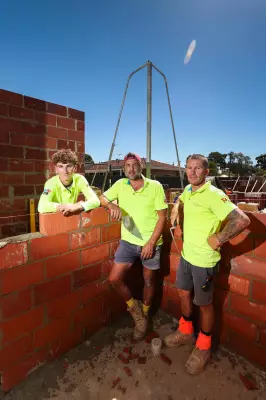
National Housing Pipeline Report Exposes Critical 380,000 Home Shortfall by 2030
The latest National Housing Pipeline (NHP) report, released by the Urban Development Institute of Australia Western Australia (UDIA WA), has uncovered a significant and ongoing housing supply crisis across Australia. The findings reveal that forecast dwelling production over the five years leading up to the 2030 financial year is projected to fall approximately 380,000 homes short of the Federal Government's Housing Accord target, intensifying concerns about affordability and market stability.
Constrained Land and Infrastructure Challenges Hamper Development
According to the report, approximately 40 percent of undeveloped residentially zoned land in all NHP Capital City regions is development constrained. Environmental constraints are identified as the most dominant category nationally, effectively sterilising land from future development. Additionally, essential infrastructure and servicing issues significantly reduce effective supply, with land lacking enabling infrastructure such as power, water, and roads facing delays that could be addressed through timely planning and funding.
It is crucial to note that the land analysed in the NHP report is already zoned for urban development under State Government schemes or identified in urban expansion areas, highlighting the urgency of addressing these constraints.

Greater Perth Faces Significant Land Supply Issues
In Greater Perth, as of August 2025, there was an estimated 12,705 hectares of total aggregate vacant or undeveloped residential-zoned land distributed across the region. However, the NHP report indicates that 35 percent (4,502 hectares) of this land is constrained, reducing the unconstrained zoned residential land to 8,202 hectares. This equates to a total theoretical dwelling capacity of over 164,000 homes.
Importantly, 30 percent of surveyed greenfield yield in Perth requires commitment or funding for enabling infrastructure, further complicating development timelines. All of this data translates to just under six years (5.96 years) of unconstrained residential land supply currently available in the Perth market, underscoring the pressing need for strategic intervention.
Economic Pressures Exacerbate Housing Affordability Crisis
The identified blockages in the housing supply pipeline have already been exerting pressure on affordability, with escalating fuel costs and supply chain disruptions adding further cost and delay to housing delivery. These factors compound the challenges faced by developers and homebuyers alike, creating a volatile market environment.
Advocacy for a Multi-Pronged Approach to Housing Solutions
Based on this latest evidence, UDIA WA continues to advocate for a strategic and multi-pronged approach to accommodate Australia's rapidly growing population. Key recommendations include:
- Removing unnecessary barriers and costs to development
- Streamlining approval processes to accelerate project timelines
- Ensuring the attraction and retention of an appropriately skilled construction workforce
- Guaranteeing infrastructure is delivered where and when it is needed to support new housing
This comprehensive strategy aims to address both immediate and long-term housing shortages, fostering a more sustainable and accessible housing market for all Australians.