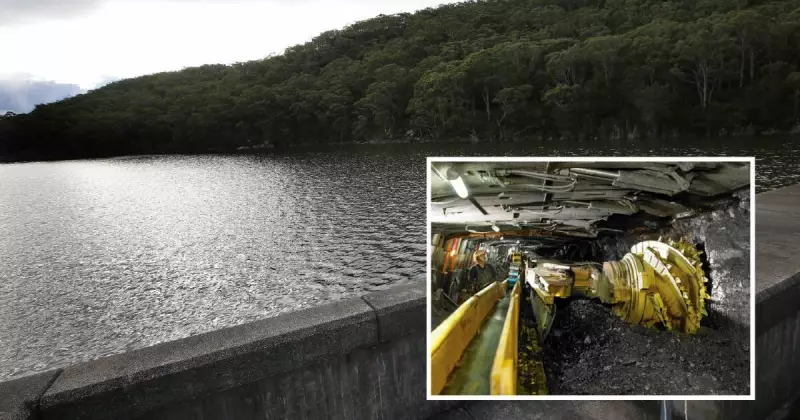
Coal giant Peabody has declared it cannot shrink its mining plans near a crucial Sydney drinking water catchment any further, arguing additional reductions would render its operations uneconomic. The company's stance sets up a major clash with environmental regulators who warn of serious and irreversible impacts on sensitive swamps and endangered species.
Regulators Demand More Protection for Catchment
The owner of the Metropolitan mine at Helensburgh is seeking approval to modify its plans, adding one longwall panel and realigning another to extend the mine's life from 2029 to 2031. This would preserve around 400 local jobs for an additional two years.
However, both state and federal authorities have expressed deep reservations. The NSW Department of Climate Change, Energy, the Environment and Water's Conservation Programs, Heritage and Regulation division (CPHR) stated the plan would likely cause serious and irreversible impacts on high-priority swamps, including the loss of surface water and baseflow in streams.

Their submission specifically highlighted Swamp 106, the area's largest swamp which feeds the Woronora Dam. They, along with Water NSW, argued that avoiding mining underneath it is the only effective protection. The CPHR urged Peabody to consider narrower longwall panels, similar to those used under the reservoir itself, to avoid biodiversity damage.
Peabody's $150 Million Compromise
In a response published this week, Peabody pushed back strongly. The company argued its proposed longwall sizes are already more conservative than other regional mines and that further shrinking them would not justify the cost of extracting less coal.
A mine layout that completely avoids undermining Swamp 106 would be uneconomic, the company stated, due to significantly reduced coal extraction and mining discontinuity.
Peabody emphasised it has already made substantial concessions, claiming to have forgone an estimated $150 million in revenue. This was achieved by shortening the length of several longwall panels near sensitive environmental features and ceasing mining on three others early. The company said this adaptive management approach sterilised 1.1 million tonnes of coal production.
Local Objections and Heritage Concerns
The modification application has faced significant local opposition. Of 216 public submissions to the NSW Major Projects planning process, 138 (61%) objected to the proposal, with 40% of objectors from Wollongong and 47% from the Sutherland Shire.
The Illawarra Local Aboriginal Land Council and Wollongong City Council criticised the plan, accusing Peabody of downplaying Dharawal heritage. The Land Council slammed the Aboriginal Cultural Heritage Assessment, claiming it offered only managed destruction instead of genuine mitigation for numerous heritage sites.
Peabody must now also respond to advice from the Commonwealth's Independent Expert Scientific Committee. The application requires both state and federal approval, as well as a new mining lease, because the proposed area extends beyond Peabody's current boundary.
The standoff highlights the ongoing tension between regional economic dependency on mining and the imperative to protect critical water sources and ecosystems for Sydney's future.