The Port of Newcastle has reported a resilient year of trade, with total exports climbing to more than 154 million tonnes in 2025. This figure marks a slight increase from the 152.2 million tonnes handled the previous year, underscoring the facility's ongoing critical role in the national economy.
King Coal Holds Firm Despite Volatile Year
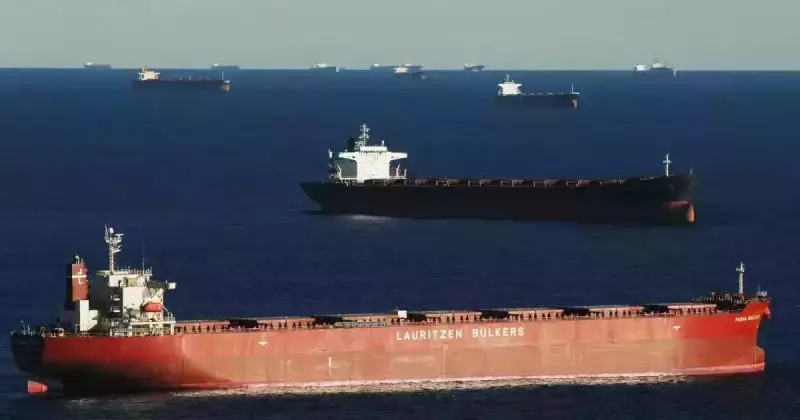
Coal exports, while facing challenges from wet weather earlier in the year, staged a powerful recovery in the final months. A bumper December saw 15.3 million tonnes shipped, bringing the annual total for coal to 149.1 million tonnes. This was only marginally down from the 149.9 million tonnes exported in 2024.
The industry remains confident about its medium-term future, even as long-term forecasts paint a different picture. Port Waratah Coal Services chief executive Hennie du Plooy stated that firm contracts with producers indicate stable export volumes at current levels through at least 2030. He pointed to sustained demand in South East Asian markets, where new thermal coal generation capacity is still being built alongside renewable investments.

This optimism contrasts with projections from the federal government's net zero transformation report. Released in October, the report suggested that under all scenarios, the value of Australia's fossil fuel exports could halve within the next five years due to falling volumes and declining global prices.
Diversification Strategy Delivers Concrete Results
While coal continues to be the port's primary commodity, a deliberate strategy to broaden its trade base is yielding significant results. The port's diversification efforts are visibly gaining momentum, positioning it for a future beyond fossil fuels.
In a landmark move, August 2025 saw the arrival of the Parsifal, one of the world's largest transport vessels. The 265-metre-long ship delivered a major consignment of rail wagons and large-scale mining equipment to the Hunter region.
Perhaps more tellingly, that same month the port began receiving the first of an expected 30,000 wind turbine components, with shipments scheduled to continue over the coming decade. This activity is set to be supported by a major new state government initiative.
Government Backs Renewable Logistics Hub
In June 2025, the NSW government committed to building a $115.5 million logistics precinct on the former BHP Intertrade site at Mayfield East. This project is designed specifically to support the statewide rollout of renewable energy infrastructure.
The precinct will provide crucial portside storage for oversized equipment like wind turbines and transformers, directly facilitating the clean energy transition. This development represents a tangible investment in the region's economic evolution, creating a new industrial pillar alongside traditional exports.
The state's budget forecasts also reflect a stable outlook for coal royalties in the near term, projecting steady revenue of around $3.3 billion annually through to 2028-29. This provides a financial bridge as the port and the wider Hunter economy continue to adapt and invest in new growth sectors.