An Australian-listed mining company has passed a crucial technical milestone for its African rare earths project, paving the way for development and securing a strategic partnership with a major local player.
Metallurgical Success Confirms Project Viability
Lindian Resources has received outstanding results from independent metallurgical test work on ore from its Kangankunde rare earths project in Malawi. The testing, conducted by Australia's national nuclear science agency, ANSTO, confirms the ore can be cleanly processed into a high-value product using standard industry methods.
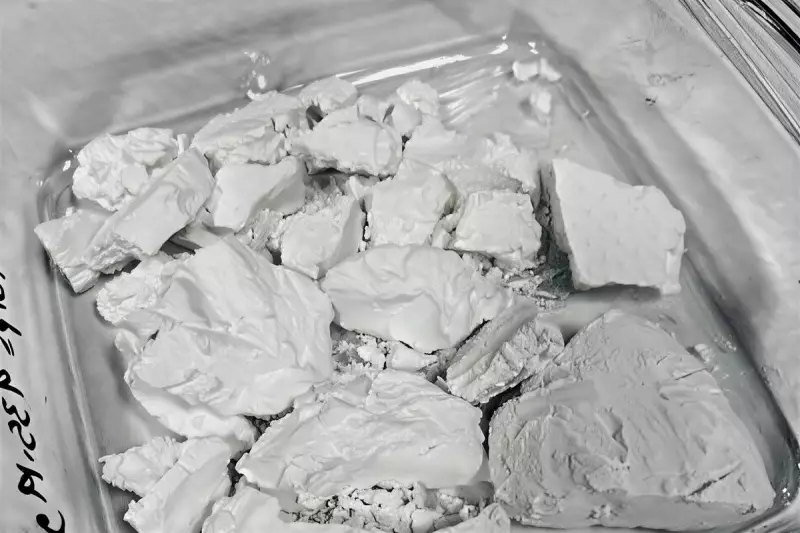
The work proved that Kangankunde's monazite concentrate, which assays at a high 55.9% total rare earths oxide (TREO), can be cracked using a conventional sulphuric acid bake. The process achieved impressive recoveries of 91-94% for all rare earths and an even higher 93-97% for the critical magnet metals neodymium and praseodymium (NdPr).

A Clean Product with Major Commercial Advantages
Perhaps the most significant finding is the project's radiation profile. ANSTO classified the Kangankunde concentrate as "non-radioactive for transport". This is a rare outcome for monazite-based projects, which often contain thorium and uranium levels that trigger strict Class 7 radioactive handling rules.
Avoiding these onerous regulations dramatically widens the pool of potential customers and can significantly reduce compliance costs and logistical headaches. The final mixed rare earth carbonate (MREC) product graded 54% TREO, with a strong 20% content of lucrative NdPr. Uranium and thorium in the final product were below detectable limits.
The entire processing circuit, from bake to precipitation, achieved overall recoveries of 92% for TREO and up to 97% for NdPr, capturing nearly all the value from the original concentrate.
Foundations for a Low-Cost, Long-Life Project
These results de-risk the technical side of the project, confirming it can use a standard, well-understood flowsheet without relying on novel technology. The Kangankunde ore reserve currently stands at 23.7 million tonnes, grading 2.9% TREO, containing 676,000 tonnes of TREO. The project boasts a projected mine life of 45 years.
A June 2024 feasibility study demonstrated a robust net present value (NPV) of US$794 million and one of the lowest capital cost estimates globally for a rare earths project at just US$40 million. This low-cost structure is supported by simple mining and processing plans and proximity to existing infrastructure in Malawi.
In August, Lindian made a final investment decision for Stage 1, backed by a A$91.5 million capital raise, fully funding the project to first production scheduled for the fourth quarter of 2026.
Strategic Partnership with Iluka Resources
Concurrently, Lindian executed a binding US$20 million secured construction loan and offtake agreement with Australian mineral sands giant Iluka Resources. The deal establishes a long-term strategic partnership for Kangankunde's development.
Iluka will take 6,000 tonnes per annum of premium monazite concentrate for 15 years from Stage 1. Furthermore, Iluka was granted a right of first refusal over up to an additional 25,000 tonnes per annum from a planned Phase 2 expansion, subject to providing debt funding support.
This partnership provides Lindian with a multi-decade processing pathway, as Iluka is developing Australia's first fully integrated rare earths refinery at Eneabba in Western Australia, a project backed by the Australian Government.
With its unique mineralogy, high grade, and now proven metallurgy, the Kangankunde project is regarded as one of the world's largest and highest-grade undeveloped rare earths deposits outside China. This week's positive test results have effectively removed a common technical stumbling block, solidifying its path forward.