Australia's resources sector has delivered a stronger-than-expected performance, with annual exports defying bearish forecasts to remain robust, anchored by the surprising resilience of iron ore and a surging gold price.
Defying the Downturn: Export Figures Hold Firm
New data from the Office of the Chief Economist reveals that sales of Australian minerals and energy to international trading partners reached $385 billion in the 2024-25 financial year. This result surpassed earlier pessimistic estimates of $372 billion. While a slight dip to $383 billion is forecast for 2025-26, the figures indicate remarkable stability despite weaker global economic growth applying a brake on commodity demand more broadly.
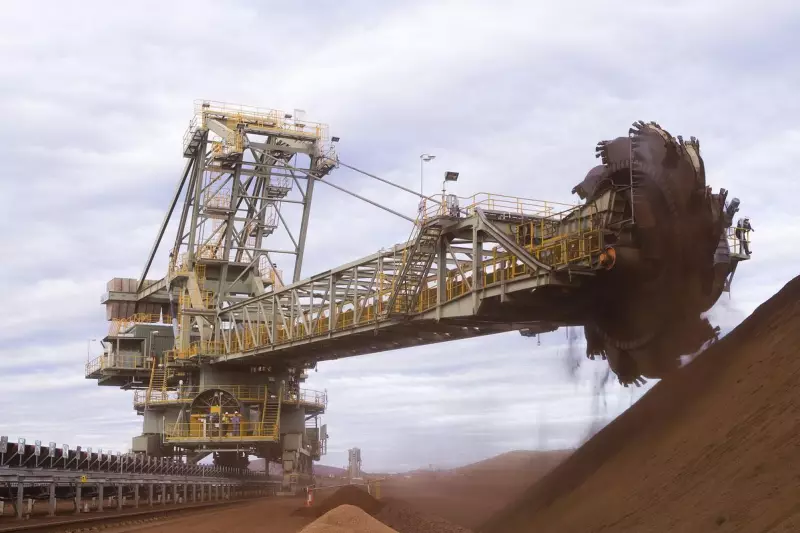
The report highlights that the nation's most significant export, iron ore, has managed to stay above the $US100 per tonne benchmark for most of 2025, countering predictions of a sharper decline. Simultaneously, the unstoppable rally in gold has provided critical support to the overall export bottom line.

A Healthy Project Pipeline Worth $62 Billion
Beyond current exports, the investment outlook for Australia's resources future is described as "healthy and relatively stable". The number of advanced projects under development across the country has increased to 432 as of October 2025, up from 407. Although the total value of this pipeline has eased from $65 billion to $62 billion—partly due to the completion of major builds like Pilbara Minerals' lithium expansion—this is viewed as a welcome stabilisation after several volatile years.
The distribution of this activity is heavily concentrated. Western Australia leads the nation, boasting close to 200 projects in development. Queensland follows, with approximately half that number.
Acting Minister for Resources, Tim Ayres, said the numbers reinforce Australia's role as a "trusted, reliable supplier of resources and energy to the world, despite global challenges."
Commodity Spotlight: Iron Ore and Gold Outlook
The fresh government outlook arrives as major banks like Westpac and the Commonwealth Bank predict iron ore is heading for a bear market in 2026. The Department of Industry, Science and Resources anticipates prices "are expected to fall modestly through to the end of 2027", citing weak steel demand and increased global supply.
By the numbers, iron ore export earnings are forecast to fall by $2 billion to $114 billion in 2025-26, and to $107 billion in 2026-27. These projections are based on a conservative price estimate of $US87 per tonne. Despite the predicted decline, iron ore will continue to dominate, making up over 25 per cent of all Australian resources exports.
The news for gold remains decidedly bright. The Chief Economist's office predicts the yellow metal will stay strong at around $US4000 an ounce throughout 2026, before tapering off in 2027. The report links this strength to investment speculation driven by perceptions of future geopolitical and fiscal risks, alongside continued confidence-boosting purchases by central banks using gold as a currency hedge.
Junior miners are rushing to capitalise on the boom. The number of new gold projects has jumped from 38 in 2024 to 47 in 2025. This frenzy is mirrored in exploration spending, which soared 37 per cent year-on-year in the September quarter to a record $431 million, with Western Australia accounting for a staggering 80 per cent of that expenditure.