Golden Dragon Mining Consolidates Major WA Goldfield into Cue Project
Golden Dragon Mining has significantly bolstered its presence in Western Australia's prolific Murchison Goldfields by consolidating a vast 600 square kilometres of prime, underexplored tenure into a single, centralised landholding. This strategic move creates the newly named Cue gold project, positioning the company for focused exploration in a historically rich mining district.
A Strategic Consolidation in a Tier One Jurisdiction
The broader Murchison district is an infrastructure-rich, tier one mining jurisdiction that has historically yielded more than 35 million ounces of gold. Prior to Golden Dragon's intervention, the ground was fragmented among multiple explorers, resulting in a patchwork of small, isolated tenements. Exploration efforts were often piecemeal, with programs frequently halting at boundaries and lacking a consistent, district-wide strategy.
By unifying these previously disjointed tenures, Golden Dragon has assembled a coherent exploration package situated along strike from established gold deposits. The company believes this consolidated approach is a winning strategy, enabling the use of modern drilling and exploration technologies to cast a more refined and focused net across the entire grounds.

Proximity to Established Gold Pedigree
The Cue project's location is notably advantageous, sitting just down the road from Westgold Resources' massive Big Bell gold mine, which boasts a combined resource base of approximately 2.3 million ounces. Additionally, the historic Cuddingwarra mining centre, also operated by Westgold, has produced about 780,000 ounces of gold at an impressive grade of 2.1 grams per tonne.
This consolidation appears to be yielding early dividends, with several old prospects containing significant historic intersections now receiving renewed attention. For instance, at the Bering Bore prospect, a cluster of historical results included intersections of 8 metres at 7.7 grams per tonne gold, 12 metres at 5.4 grams per tonne gold, and 8 metres at 5.8 grams per tonne gold within a small mining lease. Intriguingly, the drill hole collars from these historical campaigns terminated at the old tenement boundary, potentially leaving significant mineralisation untested.
Now, with the adjacent lease incorporated into Golden Dragon's contiguous land package, the company can pursue these results and other extensional drill targets more comprehensively.
Active Exploration and Drill-Ready Targets
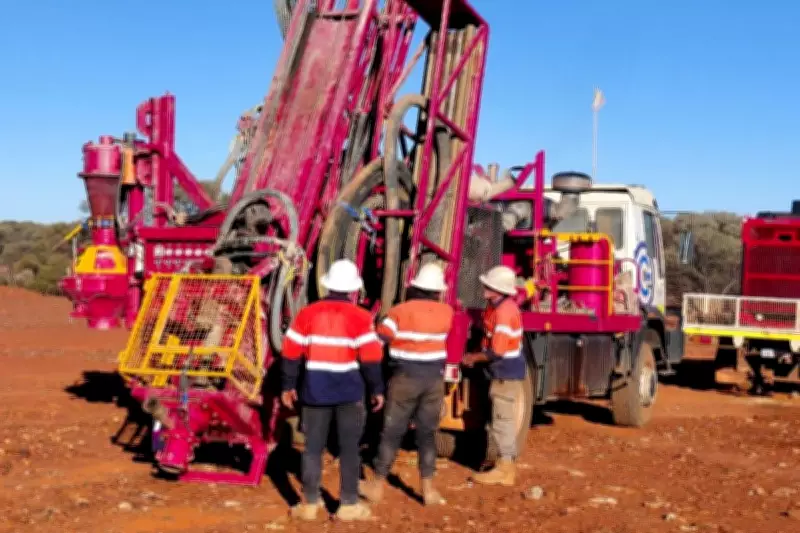
Since its listing in October last year, Golden Dragon has moved swiftly into active exploration. The company has already completed its first reverse circulation drill program at Bering Bore, with assay results anticipated in February. Furthermore, a pipeline of drill-ready targets exists at other historical prospects across the Coodardy area within the project.
These include Curtis Find, where past drilling returned 3 metres at 11.2 grams per tonne gold, and Piston, which delivered a broader 24-metre intersection grading 0.9 grams per tonne gold. Many of these prospects have seen only sporadic follow-up work and remain open in multiple directions and at depth, presenting clear opportunities for expansion.
Geological Advantages and Infrastructure
The Cue project is strategically located approximately sixty kilometres north-west of the town of Cue, surrounded by operating processing plants such as Westgold's Tuckabianna Mill and Ramelius' Mount Magnet operations. This proximity highlights a practical commercialisation pathway; should Golden Dragon make a significant discovery, the potential for a lucrative toll treatment agreement with nearby operators is a distinct advantage.
Geologically, major shear zones strongly influence gold mineralisation distribution within the Murchison Goldfield. The Big Bell and Cuddingwarra gold mines are adjacent to the northeast-southwest striking Big Bell shear and Cuddingwarra shear, respectively, underscoring the importance of these regional structures.

Both the Big Bell and Cuddingwarra shears extend more than sixty kilometres based on aerial magnetic imagery and traverse the western portion of Golden Dragon's tenement package. Given their association with gold mineralisation along their strike lengths, they offer compelling exploration targets on largely underexplored ground.
A third regionally significant shear zone, the Emily Wells shear, transects the eastern half of the tenements. Prospects like Stockyard East and Jeffery Well, proximal to this shear, hold untapped potential, as indicated by historical intersections including 8 metres at 5.77 grams per tonne gold and 5 metres grading 5.0 grams per tonne gold.
Additional Exploration Opportunities
Notably, substantial portions of the Coodardy area are concealed beneath transported cover of varying thicknesses, including extensive palaeo drainage channels. These underexplored zones, often situated above easily weathered major shear structures, present further opportunities for new discoveries.
Adding to the project's diverse potential, two volcanic-hosted massive sulphide horizons, known as the Wattagee and Emily Well horizons, bisect Golden Dragon's eastern tenements at Coodardy. Historic exploration in the early 1970s discovered gossanous outcrops rich in zinc and copper near Wattagee Well, with diamond drilling returning significant grades, including 3 metres grading 7.5 percent zinc and 0.42 percent copper.
While this historic drilling focused on base metals, the geological setting near a major shear zone and sporadic gold recorded in assays are considered prospective for orogenic gold mineralisation. The presence of these VMS horizons provides a significant exploration opportunity, as such deposits can occur in clusters with extensions down dip and along strike.
Diversification with the Stella Range Project
To further diversify its commodity pipeline, Golden Dragon has acquired the Stella Range project, a single granted exploration licence located in the northeast corner of Western Australia's Eastern Goldfields. This project is considered prospective for primary nickel sulphide mineralisation, with secondary exploration targets including nickel laterite, gold, rare earth elements, and platinum group elements.
Previous work by St George Mining and BHP included geophysical surveys and drilling over the Irwin Hills-Stella Range greenstone belt, which unearthed disseminated and veinlet nickel-sulphide mineralisation in favourable komatiitic rock types. BHP noted these komatiites were compositionally similar to those in the fertile Agnew Wiluna belt, which hosts world-class nickel deposits.
Golden Dragon has reviewed this historical data and identified multiple nickel-sulphide and platinum group element targets warranting follow-up exploration, broadening its strategic resource base.
Timing and Market Context
With drilling underway and assays pending, Golden Dragon has rapidly transitioned from a land consolidator to an active explorer in one of Australia's most proven gold belts. The company now holds district-scale ground with strong geologically controlling structures and multiple walk-up targets, providing the essential ingredients and logistical advantages to pursue a meaningful discovery.
This aggressive exploration push comes at an opportune time, with the gold price demonstrating remarkable strength, having surged more than 25 percent recently to reach lofty levels around US$5564 per ounce. This favourable market backdrop could potentially fast-track any successful discoveries in a region historically built on gold.