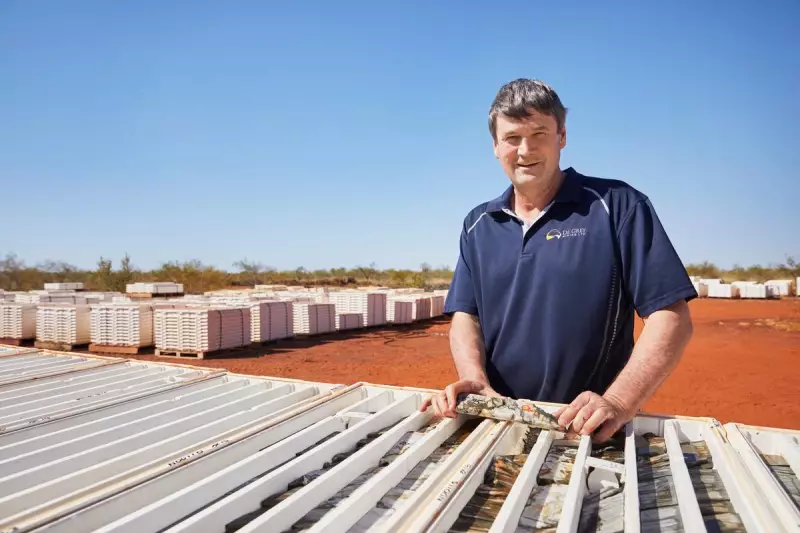
In a tale of unwavering belief that reads like a modern-day gold rush legend, three geologists have defied an entire industry's scepticism to uncover one of Australia's most significant mineral discoveries in decades. The Hemi gold deposit, nestled in Western Australia's rugged Pilbara region, is now the cornerstone of a $5 billion mining operation developed by De Grey Mining, proving that conviction and cutting-edge science can triumph over doubt.
The Discovery That Defied the Doubters
The story begins with exploration manager Andy Beckwith and senior geologists Simon Mottram and Gareth Heywood. In 2019, their team was drilling in the Mallina Basin, a region long considered prospective but where previous efforts had yielded little. The prevailing wisdom in Australian gold exploration was that major deposits were found near major fault structures. Hemi, however, was different.
Their discovery hinged on recognising a new geological model. The team identified a large intrusive complex, a type of igneous rock formation, as the potential host for gold. This was a departure from traditional exploration models. Despite initial drill results showing promising signs, the broader market and many peers remained unconvinced. De Grey Mining's share price languished around 3 cents in early 2019, reflecting the widespread disbelief in their project.

Perseverance paid off. A pivotal drill hole, HEDD001, intersected what they were hoping for. Further drilling throughout 2019 and 2020 consistently hit high-grade gold mineralisation, confirming Hemi was not a fluke but a world-class discovery. The resource grew at a staggering pace, transforming De Grey from a micro-cap explorer into a multi-billion-dollar company almost overnight.
Building a $5 Billion Giant in the Pilbara
The scale of the Hemi find is staggering. It sits as the centrepiece of De Grey's broader Mallina Gold Project, approximately 60 kilometres south of Port Hedland. The deposit itself is characterised by its large, continuous zones of gold mineralisation, making it amenable to low-cost, bulk open-pit mining methods.
Following the discovery, De Grey moved at breakneck speed to advance the project. The company completed a definitive feasibility study, which outlined the economic viability of a large-scale operation. The current plan envisions a mine producing over 500,000 ounces of gold per year for more than a decade, with all-in sustaining costs predicted to be highly competitive on the global stage.
The total capital cost to develop the mine and processing infrastructure is estimated to be around $1.3 billion. However, the in-ground value of the resource underpinning this development is what catapults the project's worth to the $5 billion mark, a figure that has reshaped the landscape of the Australian gold industry and delivered monumental returns to early believers.
A Legacy of Geological Innovation and Tenacity
The impact of the Hemi discovery extends far beyond balance sheets and production schedules. It has validated a new exploration approach in a previously underappreciated part of the Pilbara, prompting a fresh wave of investment and activity in the Mallina Basin. The success story serves as a powerful reminder to the resources sector that major discoveries are still possible in mature terrains, but they require fresh thinking.
For Beckwith, Mottram, and Heywood, the discovery is the culmination of years of expertise and, most importantly, the courage to back their own scientific interpretation against the tide of popular opinion. Their journey from drilling speculative targets to delivering a mining giant underscores a classic Australian narrative: resilience and technical skill can unearth extraordinary value from the ancient earth.
As construction at Hemi progresses, the mine is poised to become a major employer and economic contributor to Western Australia for years to come. It stands as a monumental testament to the trio who looked at the same rocks as everyone else, but saw what no one else could believe.