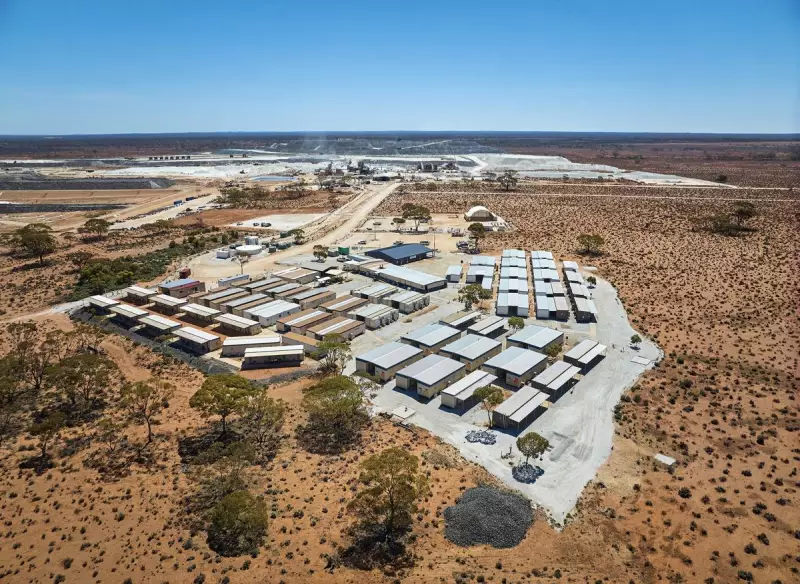
Western Australia's vast mining landscape is set for a series of pivotal developments in 2026, with five key projects earmarked as critical to watch. These operations, spanning lithium, nickel, and rare earths, highlight the evolving focus of the state's resources sector as it navigates shifting global commodity demands and complex financial environments.
Lithium and Nickel Operations in the Spotlight
The year 2026 is shaping up as a decisive period for several major WA mines. At the forefront is the Bald Hill lithium and tantalum mine, located 100 kilometres south of Kambalda. Owned by Mineral Resources (MinRes), the site's future hinges on a final investment decision expected next year. The project's revival is closely tied to an improvement in spodumene concentrate prices, which have been under significant pressure.
Another major player facing a crucial juncture is the Murrin Murrin nickel-cobalt operation in the northern Goldfields. Controlled by Swiss giant Glencore, this facility's fate will be determined by a review of its mining operations scheduled for 2026. The outcome of this assessment will decide whether mining continues or transitions solely to processing ore from third parties, a move with substantial implications for local employment and production.

Rare Earths and Strategic Minerals Take Centre Stage
Beyond traditional commodities, projects centred on critical minerals are drawing intense interest. The Thunderbird mineral sands operation in the Kimberley, owned by Sheffield Resources, is a prime example. First production is targeted for the first half of 2026, marking a significant step in developing a major new source of zircon and ilmenite. This project underscores WA's strategic role in supplying materials essential for high-tech and defence industries.
Further south, the development of the Manna lithium project, 100 kilometres east of Kalgoorlie, is progressing under joint venture partners Mineral Resources and Delta Lithium. With a final investment decision anticipated in the first half of 2025, construction could be well underway by 2026, aiming to feed growing global demand for battery materials.
Rounding out the list is the Kun-Mun rare earth element project in the East Kimberley, managed by Venture Minerals. The company plans to release a definitive feasibility study in 2026, a key document that will outline the economic viability and pathway forward for this potentially significant rare earths deposit.
Navigating Market Volatility and Future Demand
The trajectories of these five projects are not occurring in a vacuum. They are deeply influenced by global market forces, particularly the volatile prices for lithium and nickel which have challenged project economics. Analysts point to 2026 as a potential inflection point where market rebalancing could provide more favourable conditions for final investment decisions and project launches.
The diversity of these watched projects—from lithium and nickel to mineral sands and rare earths—reflects a broader strategic shift in Western Australia's mining sector. The state is leveraging its geological endowment to supply the minerals critical for the global energy transition and technological advancement. The decisions made at Bald Hill, Murrin Murrin, Thunderbird, Manna, and Kun-Mun throughout 2026 will serve as a strong indicator of the sector's health and strategic direction for the latter half of the decade.
Success for these operations will hinge on a combination of improved commodity prices, streamlined regulatory approvals, and successful capital raising. Their progress will be closely monitored by investors, local communities, and policymakers alike, as they collectively represent billions of dollars in potential investment and thousands of jobs for the Western Australian economy.