In a dramatic surge for the Australian mining sector, shares in Dalaroo Metals Ltd have rocketed almost 50 per cent following a landmark discovery at its Greenland project, underscoring the island's pivotal role in the West's critical minerals strategy.
A High-Grade Discovery in a Strategic Frontier
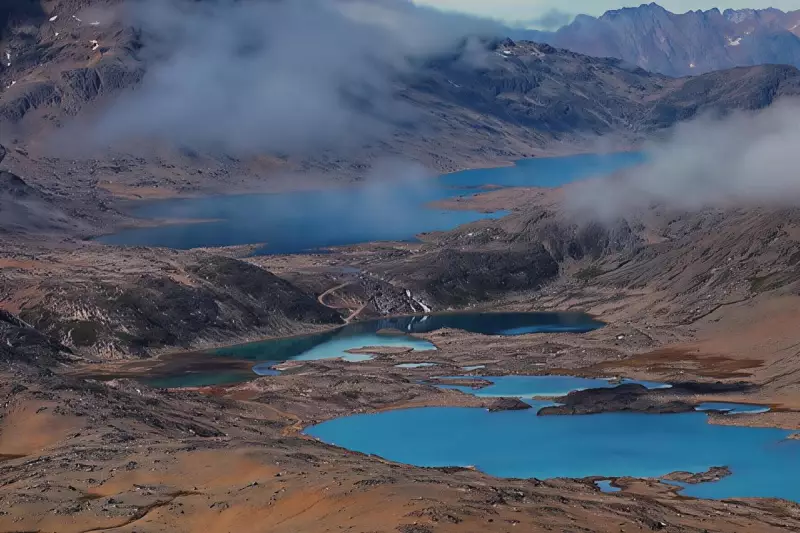
The company's share price leapt to 7.9 cents in early trade on Friday, 16 January 2026, on massive turnover after announcing maiden sampling results from its wholly owned Blue Lagoon project. The data reveals a broad, coherent rare earths, zirconium and hafnium system stretching 2.7 kilometres along strike.
Remarkably, every single one of the 113 surface and stream sediment samples collected returned anomalous results, an exceptional outcome for a first-pass program that strongly hints at substantial scale. The assays delivered standout rare earths oxides (TREO) grades, including a top result of 8079 parts per million (ppm) TREO, with magnet rare earths oxides (MREO) constituting a robust 29 per cent of that sample.

Intriguingly, the samples showed an unusually high proportion of heavy magnet rare earths like dysprosium and terbium, which are crucial for electric vehicles, wind turbines, and defence technologies. The top two samples assayed 886ppm and 752ppm combined heavy rare earths oxide (HREO).
Technical Advantages and Low-Risk Profile
One of the most encouraging technical aspects is that mineralisation appears to improve as grain size decreases, with consistent enrichment found in the finest sediment fractions. Dalaroo's management, led by CEO John Morgan, believes this characteristic could allow for low-cost gravity separation, avoiding more complex and expensive chemical processing.
Equally significant for the project's viability is the finding that uranium and thorium levels are extremely low, coming in well below Greenland's mandated 100ppm maximum uranium threshold. This dramatically reduces permitting risks compared to other rare earths projects burdened by radioactive elements.
The zirconium and hafnium results are also compelling, with multiple samples returning zirconium oxide grades above 2 per cent. A best result of 4.42 per cent zirconium oxide was accompanied by 98ppm hafnium oxide. Hafnium, a scarce and strategically critical metal used in next-generation semiconductors, showed consistent enrichment along the entire sampled strike.
Geological Pedigree and Global Implications
The Blue Lagoon project sits within Greenland's Gardar-age alkaline intrusive province, a proven geological setting for zirconium, niobium and rare earths deposits. The area had not seen modern exploration since 1979, with Dalaroo effectively revitalising a historical anomaly flagged by government surveys using superior modern methods.
The discovery is impeccably timed geopolitically. As Western nations, including Australia, scramble to secure critical mineral supply chains independent of China, Greenland has become a strategic focal point. The project's prominence is further amplified by ongoing geopolitical discussions about the island's future.
With its coffers recently bolstered by a $1.35 million placement in October 2025, Dalaroo is already planning its next phase of work. This will include geophysics, detailed mineralogy, further surface sampling and shallow drilling to trace the source of the mineralisation at depth.
If subsequent programs confirm the promise shouted by these surface results, the Blue Lagoon project could swiftly transform from a geological curiosity into a cornerstone asset, firmly placing Dalaroo Metals on the global critical minerals map.