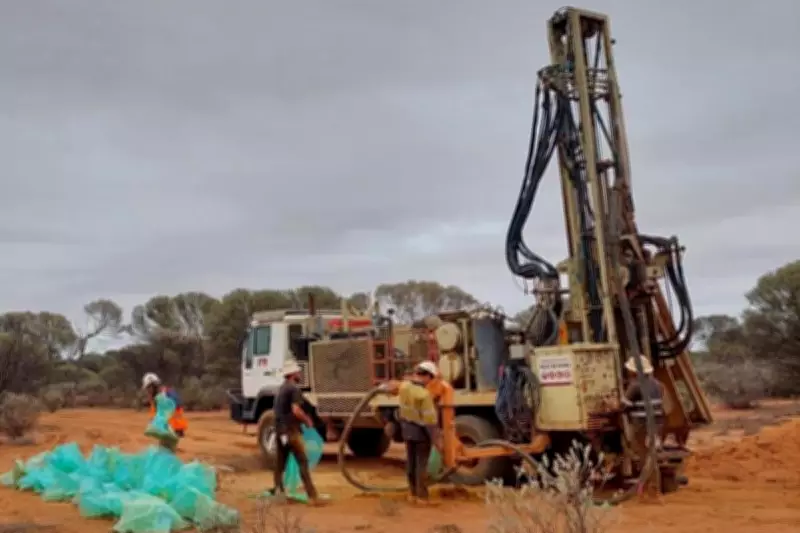
Critica's Jupiter Project Delivers High-Quality Rare Earth Carbonate
Testwork from Critica Limited's extensive clay-hosted Jupiter project in Western Australia has successfully produced its first high-quality mixed rare earth carbonate. This development marks a significant step forward in the rare earths industry, with the company achieving a breakthrough in processing that enhances key magnet elements.
Key Magnet Elements Upgraded with Conventional Methods
Critically, Critica has managed to upgrade essential magnet elements, including neodymium and praseodymium (NdPr), dysprosium, and terbium, using a conventional sulphuric acid bake. This approach represents a major advancement in creating a commercial, repeatable, and scalable carbonate product, which could streamline production processes globally.
Testwork conducted by the Australian Nuclear Science and Technology Organisation (ANSTO) confirmed the carbonate's high quality, achieving a refinery-ready grade of 58 per cent total rare earth oxides (TREO) and recovering approximately 80 per cent of the TREO. By recycling the material in a commercial process, overall recovery could potentially increase to as much as 89 per cent TREO, further optimizing efficiency.

Jupiter's Resource and Environmental Advantages
High-value elements such as neodymium, praseodymium, dysprosium, and terbium constitute about 24 per cent of the total TREO, reinforcing Jupiter's status as a magnet-rich rare earth element clay-hosted deposit. ANSTO also reported low levels of nuisance uranium and thorium, an impurity profile that is expected to simplify permitting and reduce environmental hurdles.
Additionally, testwork improved iron and phosphorus rejection, supporting efficient recoveries and enhancing the overall product quality. The production of both a mixed rare earth carbonate and a mixed rare earth oxide from Jupiter signifies a critical progression from laboratory validation to a demonstrated commercial product pathway.
Strategic Implications and Future Plans
Critica Limited's chief executive officer, Jacob Deysel, noted that these results, while still being refined, significantly de-risk the production process. They provide a solid, proven benchmark for setting formal product specifications as the company engages with refineries and offtake partners. Mixed rare earth carbonate serves as a widely traded intermediate in the supply chain, shipped to downstream refineries for further processing into high-purity metals.
Notably, the carbonate product from ANSTO's testwork compares favourably with other clay and ionic clay projects in Australia. Jupiter is recognized as Australia's largest clay-hosted rare earths resource, containing 1.8 billion tonnes grading 1700 parts per million (ppm) TREO, with valuable magnet rare earths and a bonus 39 ppm gallium.
Efficient Processing and Cost Benefits
Initial metallurgical testing demonstrated that the in-situ material could be upgraded by 830 per cent using a two-stage process involving wet, low-intensity magnetic separation and rougher froth flotation, producing a concentrate grading up to 13,310 ppm (1.33 per cent) TREO. Jupiter's flat-lying, near-surface mineralisation offers lower mining costs due to its softer clay-hosted nature, avoiding the blasting and heavy crushing typical of hard-rock projects.
This simplicity supports Critica's "beneficiate-first" strategy, designed to upgrade the ore six to ten times early in the flowsheet process before downstream processing begins. Drilling programs are planned to grow the resource, improve grades, and enhance confidence levels, feeding data into resource optimisation and future mine planning.
Moving Towards Commercialisation
Critica aims to complete a scoping study by the end of June, contingent on metallurgical testwork outcomes. With a refinery-ready product now available, improving recoveries, and a clear development pathway emerging, Jupiter is rapidly transitioning from concept to contender. As global demand for secure, magnet-rich rare earth supply accelerates, Critica is positioning itself at the intersection of scale, simplicity, and strategic relevance.