A significant dispute has erupted in Western Australia's resources sector, with the state's peak mining body launching a strong defence of Rio Tinto against what it labels "misleading" environmental claims.
Clash Over Clearing Figures in the Pilbara
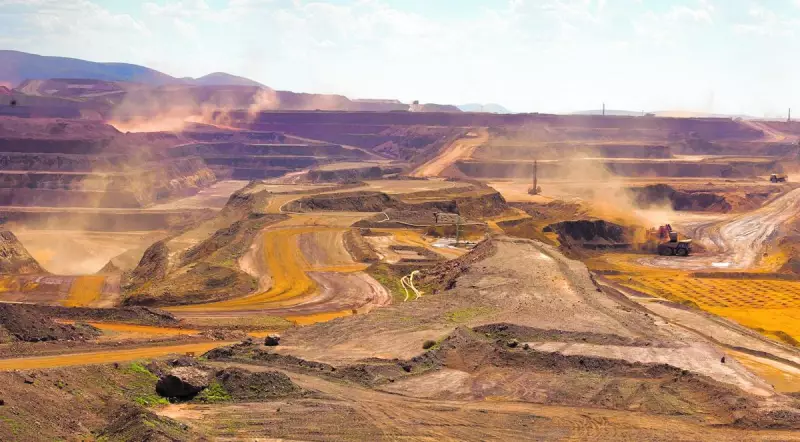
The Chamber of Minerals and Energy of Western Australia (CME WA) has publicly challenged a report from the Australian Conservation Foundation (ACF). The environmental group's report, released this week, claimed that Rio Tinto had received federal approval to clear more than 26,000 hectares of threatened species habitat for an expansion of its West Angelas iron ore mine in the Pilbara.
CME WA Chief Executive Aaron Morey stated the Federal Government had, in fact, approved habitat clearing for only a fraction of that area. "The report characterises Commonwealth approval for the legal clearing of 5,350 hectares as a 'green light' to 'bulldoze' 26,750 hectares of animal habitat, which is a misleading distortion," Mr Morey said on Thursday.

The discrepancy between the two figures is substantial. The area difference is equivalent to roughly eleven times the size of Rottnest Island.
Basis of the Conflicting Claims
The ACF later clarified its methodology, explaining its figures were "species-specific." The group multiplied the 5,350 hectares of approved clearing by five, arguing that five different threatened species could be impacted by the development.
These species include the northern quoll, night parrot, ghost bat, Pilbara leaf-nosed bat, and the Pilbara olive python. An ACF spokeswoman defended the approach, stating, "Australia has more than 2,000 species listed as threatened under national nature laws. We are seeing rare and unique species like the night parrot lose the equivalent of six Sydney airports worth of habitat."
However, Mr Morey was scathing in his criticism of the ACF's report. "The figures contained in the report are deliberately exaggerated and lack a sound basis in fact," he asserted. "These are important issues that deserve the highest standards of integrity and care. Environmental debate is only constructive when facts are presented accurately."
Industry and Company Response
The CME WA executive emphasised the regulatory framework governing mining projects. "The reality is resources companies operate under rigorous State and Federal laws, work diligently to minimise impacts on flora and fauna and are only granted approvals following robust assessment by independent regulators," Mr Morey said.
Rio Tinto itself declined to comment directly on the ACF's specific vegetation clearing claims. A company spokeswoman provided a general statement, noting, "We take a long-term view to protect environmentally significant species and landscapes. This includes mine design and planning to avoid and minimise environmental impacts."
The spokeswoman added that Rio Tinto undertakes research or monitoring of all the threatened species listed in the ACF report, either directly or through partnerships.
The $1.1 billion West Angelas expansion, a joint venture with two Japanese partners, is proceeding with first ore from the new deposits expected next year. The controversy emerges as former Australian Greens leader Adam Bandt begins his tenure as the ACF's new chief executive this month.