Fresh geophysical data has illuminated a much larger and still untested target at a key Chilean copper-gold project, sparking renewed optimism for a major discovery.
Geophysics Reveals a Bigger Prize
FMR Resources, working in a joint venture with Southern Hemisphere Mining, has wrapped up a detailed downhole geophysical program on the first deep hole at the Southern Porphyry target. This work is part of the duo's Llahuin copper-gold-molybdenum project in Chile.
The surveys, which included downhole induced polarisation (IP), electromagnetics and spectral gamma radiation, delivered compelling news. The large conductive body, first identified by surface magneto-telluric (MT) surveying, is now understood to be significantly bigger than initial models suggested. Crucially, this expanded target remains completely untested both below and adjacent to the completed drill hole.

Adding to the excitement, a strong off-hole chargeability anomaly was detected, pointing to a substantial sulphide system nearby.
Drilling Grazes the Edge of a Porphyry System
Examination of core from around 1260 metres depth provided tangible evidence of the system's proximity. Microscopic imaging confirmed the hole had passed through the hot inner alteration halo of a porphyry system.
This was shown by intense flooding of quartz, K-feldspar, chlorite and anhydrite, alongside abundant pyrite and magnetite, with traces of chalcopyrite. This alteration is a clear indicator that the drill string passed close to, but did not intersect, the mineralised core of the system.
"Completion of the downhole geophysical program at Target A has strengthened our understanding of this porphyry system," said FMR managing director Oliver Kiddie. "Off-hole targets have been identified and we have a refined position and size of the MT anomaly."
New Drill Hole Aims for the Heart
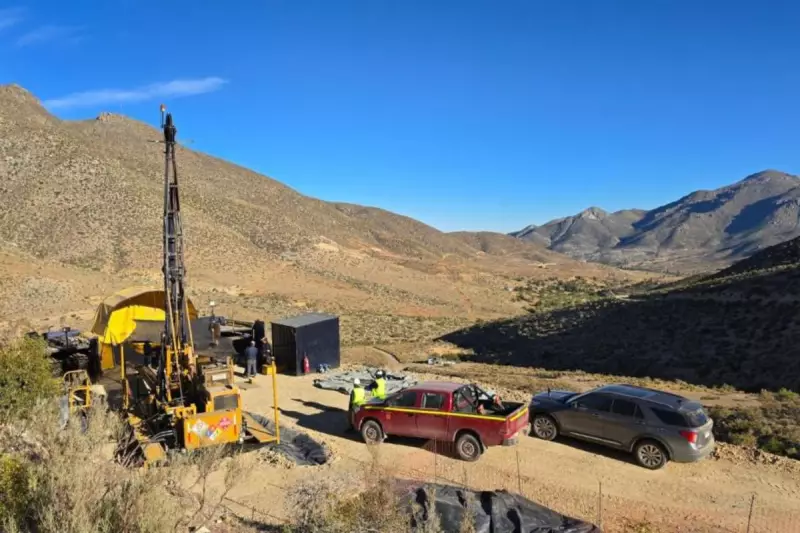
The rig has now been moved 545 metres west-southwest to Target C, where the same deep MT conductor is interpreted to be much closer to the surface. A new diamond drill hole is currently underway.
This hole is strategically designed to first test shallower IP-resistivity anomalies between approximately 250 and 550 metres depth. It will then drive deeper, aiming to punch into the heart of the MT conductor between about 800 and 1400 metres.
A key part of the plan is to carefully navigate around barren magnetite-pyrite zones that could potentially mask the higher-grade mineralisation. With the main porphyry engine now shown to be bigger, deeper, and still wide open, Target C represents a prime opportunity to intersect the high-grade copper-gold-molybdenum core the geophysical data strongly implies.
The work, completed on Wednesday, 3 December 2025, marks a pivotal step forward for the joint venture partners as they zero in on what could be a major new discovery in a world-class mining district.