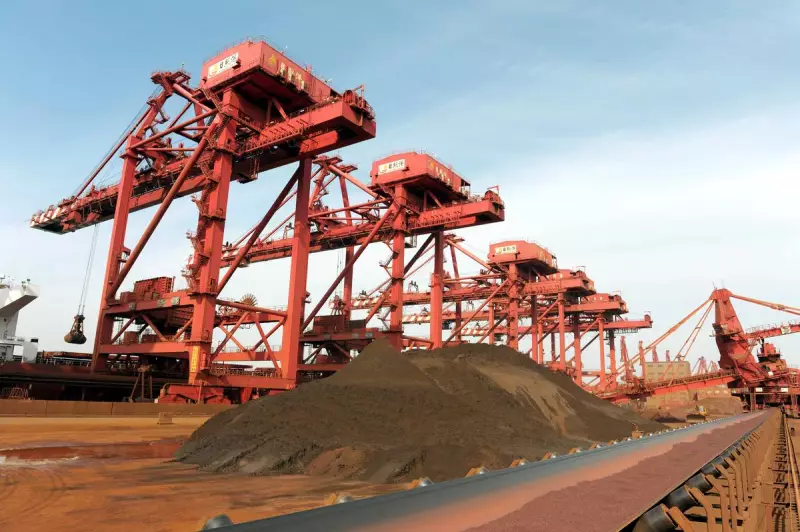
Australia's major investment banks are standing firm on a long-anticipated prediction: a substantial correction in iron ore prices is on the horizon, with a significant drop expected to materialise by 2026. This forecast hinges on a fundamental shift in the global market balance, where new supply is projected to outpace demand.
Analysts Point to Growing Supply and Slowing Demand
Financial giants UBS and Goldman Sachs have both reinforced their bearish outlook for the crucial steelmaking ingredient. Their analysis points to a convergence of factors that will likely push prices down from recent levels. The core of their argument centres on a surge in global iron ore supply, particularly from key producers like Brazil's Vale and new projects in Africa, coinciding with a plateau in demand growth from the world's largest consumer, China.
UBS commodities analyst Lachlan Shaw has articulated a clear timeline for this shift. He suggests that while the market may remain relatively tight in the near term, supporting prices, a decisive move lower is expected in the latter part of 2025. This sets the stage for an average price of just US$83 per tonne in 2026, a notable decline from current benchmarks.

Goldman Sachs aligns with this view, forecasting the market will shift into a sustained surplus from 2025 onwards. The bank's analysts highlight that Chinese steel production has likely reached its peak, removing a primary driver of the previous decade's price rallies. Simultaneously, mine supply growth is accelerating, creating a classic supply-demand imbalance that typically weighs on prices.
Implications for Australia's Mining Sector and Economy
The predicted correction carries significant weight for the Australian economy, where iron ore remains the nation's most valuable export commodity. A sustained period of lower prices would directly impact the revenues and profitability of major miners in the Pilbara region, including BHP, Rio Tinto, and Fortescue.
This, in turn, could affect government royalty revenues in Western Australia and federal corporate tax receipts. For mining companies, the focus is expected to intensify further on operational efficiency and cost control to maintain margins in a lower-price environment. The forecast may also influence investment decisions for new mining projects and infrastructure.
UBS forecasts the iron ore price to average US$101 per tonne in 2025, before falling to the US$83 average in 2026. This downward trajectory is attributed to the anticipated arrival of new supply volumes onto the market that will outstrip the modest growth in demand. The bank notes that current prices are being supported by low port inventories in China and persistent concerns about supply reliability, but these factors are seen as temporary.
China's Structural Changes Define the New Era
The demand side of the equation is fundamentally changing. China's property sector, a historic powerhouse for steel consumption, is undergoing a structural slowdown. Government policy is increasingly shifting focus towards high-value manufacturing and a greener economy, which uses less steel-intensive growth models compared to the old infrastructure and construction boom.
While stimulus measures may provide short-term support for steel production, analysts agree they cannot offset the longer-term structural decline. The era of breakneck Chinese demand growth that fuelled the iron ore bull market is decisively over. The market must now adjust to a new normal of moderate demand paired with ample and growing supply from major mining operations around the world.
For Australian producers, the coming years will test their resilience and adaptability. The predicted price correction to around US$83 per tonne in 2026 serves as a stark reminder that commodity cycles are inevitable, and preparation for a leaner phase is now a critical business imperative.