Australia is positioning itself at the forefront of a global resources revolution, powered not by traditional iron ore or coal, but by a suite of elements deemed essential for modern technology and national security. The federal government has unveiled a multi-billion dollar strategy to supercharge this sector, recognising its pivotal role in the world's clean energy transition and economic resilience.
What Are Critical Minerals and Why Are They So Crucial?
Critical minerals are a group of metallic and non-metallic elements that are fundamentally important to the technologies that define our modern world. Their supply chains are often concentrated in a handful of countries, creating potential vulnerabilities for nations that rely on imports.
These minerals are the building blocks for everything from smartphones and defence equipment to the very technologies driving the shift away from fossil fuels. Lithium, cobalt, graphite, and rare earth elements are prime examples, each playing an indispensable role in manufacturing high-performance batteries, permanent magnets for electric motors, and advanced electronics.

The Australian government, through its Critical Minerals Strategy 2023-2030, has committed a staggering $22.7 billion to develop this industry. This massive investment underscores the strategic priority placed on securing a sovereign capability and capturing more value from Australia's rich geological endowment.
The Power Players: Lithium and Rare Earths Lead the Charge
Within the broad category of critical minerals, a few stand out for their immediate economic and strategic impact. Lithium is arguably the hottest commodity right now, thanks to its irreplaceable role in lithium-ion batteries that power electric vehicles (EVs) and store renewable energy. Australia is already the world's largest lithium producer, and demand is projected to skyrocket as the global EV fleet expands.
Equally significant are the rare earth elements, a group of 17 metals with unique magnetic and phosphorescent properties. They are vital for manufacturing powerful magnets used in wind turbines, EV drivetrains, and sophisticated military hardware like fighter jets and missile guidance systems. While the name suggests scarcity, they are relatively abundant but challenging and environmentally sensitive to process.
Other key minerals on Australia's radar include cobalt (for battery stability), graphite (a major battery anode material), and vanadium (used in large-scale grid batteries). The strategy aims to move Australia beyond just digging and shipping raw materials, focusing on processing, refining, and manufacturing higher-value products onshore.
Strategic Implications and the Road Ahead
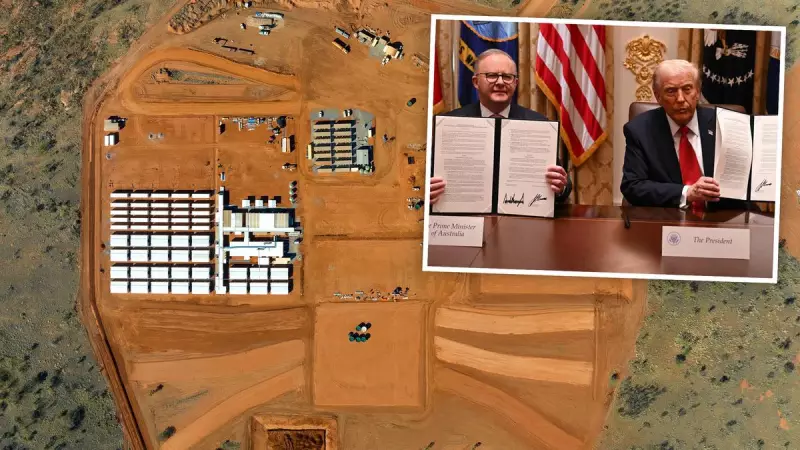
This push for critical minerals is not merely an economic play; it is deeply geopolitical. By developing secure and ethical supply chains, Australia aims to provide a reliable alternative for allied nations, reducing global dependence on dominant producers. This aligns with international partnerships like the Australia-United States Climate, Critical Minerals and Clean Energy Transformation Compact.
The strategy's success hinges on several factors. It requires continued investment in exploration, overcoming technical challenges in mid-stream processing, and building a skilled workforce. Environmental, social, and governance (ESG) standards will also be paramount, as consumers and trading partners increasingly demand responsibly sourced materials.
For Australia, the critical minerals boom represents a historic opportunity. It's a chance to leverage natural resources to fuel the global clean energy transition, enhance economic complexity, and bolster national and allied security. The $22.7 billion commitment signals a clear intent to not just participate in this new resources era, but to lead it from mine to manufacturing.