Aguia Resources has successfully engineered a significant operational turnaround at its Santa Barbara gold mine in Colombia, implementing sweeping changes that have already boosted December gold recoveries to approximately 70 per cent.
Streamlined Operations Deliver Quick Wins
Following an operational review led by Canadian mining engineer Ken Nipius, Aguia moved swiftly to restructure the high-grade, narrow-vein project. The company dramatically reduced its on-site workforce, cutting staffing by more than half to just twenty-five people operating on a single shift. Despite the smaller team, production has remained steady.
The reset focused on process control and circuit performance, avoiding major capital expenditure. Key changes included a return to proven batch-processing methods and the reintroduction of a critical pre-conditioning step using caustic soda and hydrogen peroxide before cyanidation. This step has been crucial for improving gold dissolution and reducing tailings grades.

The company confirmed December gold sales will reach around $120,000, with an average realised gold price of $5,949 per ounce. Margins are expected to improve further as recovery rates climb.
Focus on Grade Control and Future Targets
With a thin margin for error at Santa Barbara, Aguia is now emphasising highly selective mining and stockpiling practices to maximise feed grades and minimise dilution. This strategy is paying off; the operation expects to mine roughly 400 tonnes this month at a grade of 5-7 grams per tonne (g/t) gold. Selective stockpiling has already pushed some mill head grades as high as 13.67 g/t.
Early December test work underscored the importance of the new approach. A 23-tonne batch produced 80 grams of gold at over 70 per cent efficiency. In contrast, a test that skipped the new pre-treatment step saw efficiency plummet to about 36 per cent.
Overall, the restructured operation processed 73.2 tonnes of stockpiled ore in ten days, achieving a 45 per cent improvement in recovery compared to the July-November average. The immediate goal is to push recoveries past the 80 per cent mark, then increase tonnage to transition from a "proof of process" phase to generating meaningful cash flow.
Plans for Growth and Portfolio Focus
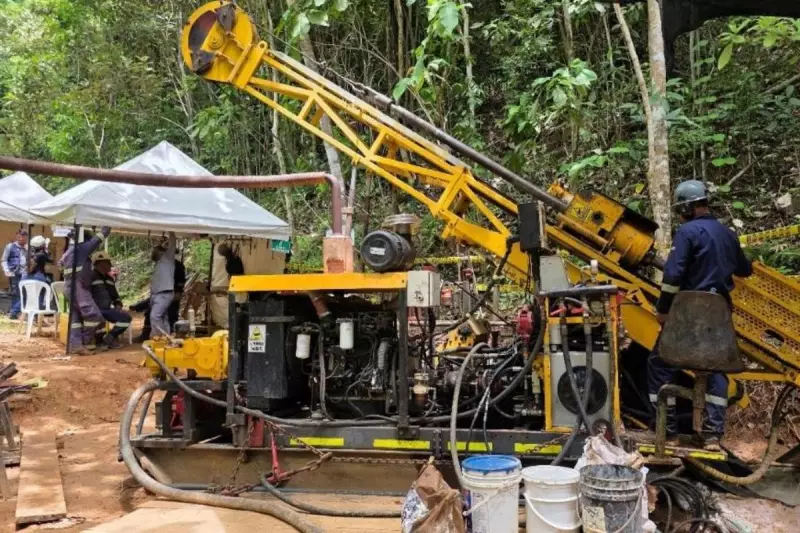
The short-term plan is to maintain small-scale underground development and batch processing, aiming to treat 100-150 tonnes monthly. Aguia targets lifting plant feed grade to 15 g/t gold or better by the first quarter of 2026. To benchmark costs, 50 tonnes of ore will be sent to a Colombian Mint plant in Antioquia for independent processing.
This newfound operational discipline is also paving the way for renewed exploration. Earlier this year, channel samples from a newly discovered vein returned high-grade results, including 18.6 g/t and 16.49 g/t gold, hinting at a larger stockwork system. Exploration drilling is slated to recommence from the September quarter of 2026.
Aguia is also sharpening its corporate focus. The company recently agreed to divest its non-core Atocha silver project in Colombia for C$1 million cash, retaining a 25 per cent equity interest. This move aligns with strengthening its financial position, which is further supported by the advancing Três Estradas phosphate project in Brazil, expected to begin sales by mid-2026.
Chief executive officer Tim Hosking said the changes represent a critical milestone. "We have moved swiftly to implement key changes at Santa Barbara which is yielding promising results very quickly," Hosking stated. "Getting our processes and metallurgy right and now having the right team in place on site provides the basis for a much-improved operation."
For Aguia, the December clean-up at Santa Barbara proves the operation can be controlled and improved without excessive capital. With the goal of over 80 per cent recovery in sight and a Brazilian phosphate cash engine on the horizon, the company is positioning itself for a more focused and resilient 2026.