300 Mining Jobs Hang in the Balance as Contract Talks Reach Standstill
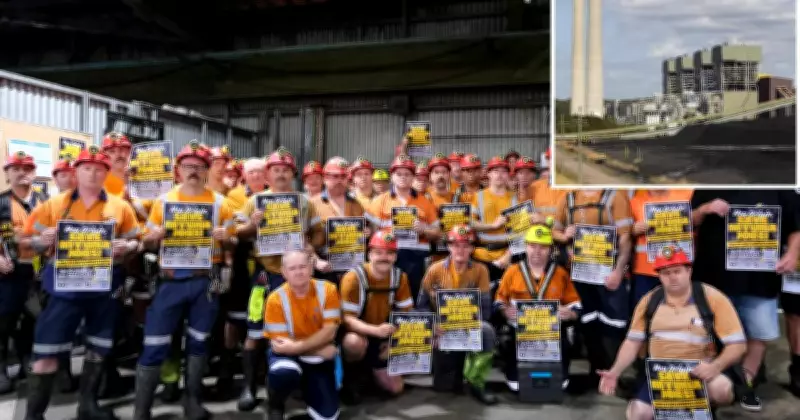
Hundreds of workers at Myuna Colliery face imminent job losses unless a new supply agreement is reached with the Eraring power station's owner, Origin Energy. The existing contract is set to expire next month, placing 300 direct positions and an estimated 1300 indirect roles in serious jeopardy.
Negotiations at Critical Impasse
Centennial Coal, which operates the Myuna mine, has been in tense negotiations with Origin Energy regarding the renewal of their coal supply arrangement. Craig Gillard, Centennial Coal's managing director, confirmed to the Newcastle Herald that discussions have reached a standstill. "The current offer provided by Origin is less than the current contracted offer between Myuna and Origin," Gillard stated, highlighting the financial gap preventing a resolution.
Centennial is now seeking urgent discussions with the NSW government while attempting to re-engage with Origin in a last-ditch effort to preserve employment. This development comes despite Origin's recent announcement that the Eraring power station, which supplies approximately 20 percent of NSW's electricity, will continue operations until 2029.

Community Impact and Union Campaign
Rather than providing relief, the power station extension has heightened anxiety among Myuna workers regarding their job security due to the absence of a new contract. Four major unions representing the mine's workforce have launched a concerted campaign to pressure Origin into securing the jobs. These unions include:
- Collieries' Staff and Officials Association
- Electrical Trades Union
- Australian Manufacturing Workers Union
- Mining and Energy Union
A campaign organiser emphasised the broader community consequences, stating, "Myuna workers are local people with mortgages, children in local schools, and deep ties to the Lake Macquarie community. The mine supports not just 300 direct jobs, but thousands of others including contractors, transport workers, small businesses, and services that rely on stable, well-paid work in the region."
The organiser added a poignant warning: "When a major employer like Myuna closes, the damage does not stop at the gate. It flows through families, communities, and the local economy. A just transition means planning, certainty, and fairness, not silence and delay."
Origin's Position and Historical Context
Origin Energy has gradually reduced its reliance on locally sourced coal since installing a rail unloader loop in 2013. In recent years, the company has sourced about 80 percent of Eraring's coal from Hunter Valley mines, citing cost, quality, and reliability concerns for diminishing its dependence on Centennial's supply.
An Origin spokesman acknowledged ongoing discussions with Centennial but pointed to pricing as the primary obstacle. "We remain in negotiations with Centennial and open to reaching a new deal, however so far, Centennial has quoted prices significantly above other suppliers and we can't justify this when it will drive up power bills in NSW," the spokesman explained.
He further clarified Origin's stance: "Our job is to secure affordable fuel so we can help keep electricity costs down, and it is our hope that Centennial can deliver a more competitive price that allows us to continue our long-standing partnership and keeps their Myuna workers in jobs."
Precedent of Job Cuts and Industry Uncertainty
This situation follows Centennial's decision in 2024 to cut 200 jobs from its Mandalong mine, a move attributed to the inability to secure a new supply deal with Origin, combined with NSW's coal caps and high operational costs. Robin Williams, president of the Mining and Energy Union Northern Mining and NSW Energy District, commented at the time, noting that workers had hoped for more time to plan for future employment opportunities.
The current impasse underscores the ongoing challenges in Australia's energy transition, where the balance between affordable power, employment security, and community stability remains delicate. With the contract deadline looming, stakeholders await decisive action that could determine the economic fate of hundreds of families in the Lake Macquarie region.