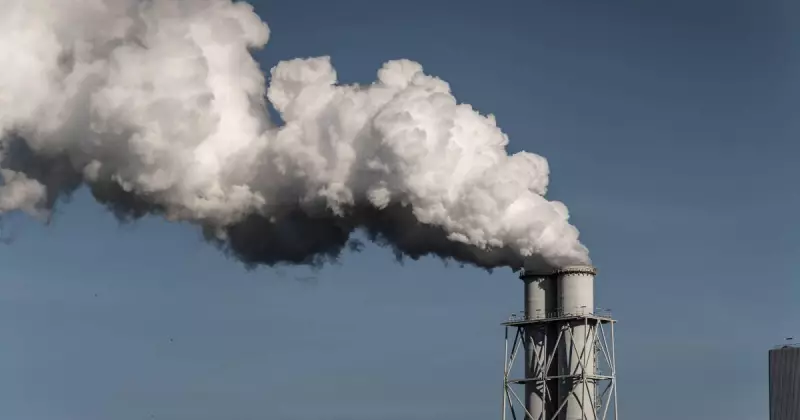
Australian superannuation members are increasingly holding their financial providers to account for continuing to invest billions in fossil fuel expansion, despite the escalating climate crisis.
Grassroots Pressure on Financial Giants
The advocacy group Market Forces is at the forefront of this movement, doing more than just research. They equip their members with detailed email templates to directly challenge superannuation companies, banks, and insurance firms that are still funnelling capital into coal, oil, and gas projects.
One member, Lesley Walker from Northcote, Victoria, recently contacted her own super fund, urging it to stop "propping up the expansion of coal, oil and gas." She expressed shock that financial institutions persist with these environmentally damaging investments but finds empowerment in fighting back through organised action.

Recognising Environmental Advocacy
The credibility of Market Forces is underscored by the recognition of its founder. In 2022, Julian Vincent received the prestigious Goldman Environmental Prize, often referred to as the "green Nobel prize." This award highlights the significant impact of the group's work in exposing the financial sector's role in climate change.
A Broader Canvas of Reader Concerns
The call for accountability in fossil fuel investing appeared alongside other pointed letters to the editor, reflecting a range of national and international concerns from Canberra Times readers.
One correspondent used an allegory about a quarrelling couple and a garden shed to comment on tensions across the Taiwan Strait, suggesting a parallel where a stronger party demands what a weaker one has built.
Another debate centred on the definition of Zionism and anti-Semitism, with one writer arguing that Zionism represents a successful decolonisation movement and that anti-Zionism is inherently anti-Semitic, rejecting arguments that seek to broaden the definition of the term.
Israeli military actions in Gaza were also contested. One reader defended Prime Minister Benjamin Netanyahu, arguing that claims of indiscriminate killing are baseless and that the casualty figures would be far higher if that were the case. The writer also addressed the status of a former Israeli military advocate-general, stating she is under house arrest, not missing.
Finally, significant scrutiny was directed at Australian defence spending. A reader questioned the escalating costs of major projects, notably speculating on the final price tag of the AUKUS submarine deal, originally forecast at $400 billion under former Prime Minister Scott Morrison. The letter also challenged the rationale behind Australia monitoring Chinese naval movements far from its own shores.
The Path Forward for Ethical Finance
The collective message from these public contributions is clear: Australians are demanding greater transparency and responsibility from both corporate and government institutions. Whether it's the climate impact of their retirement savings or the strategic use of defence budgets, there is a growing insistence on future-minded and principled decision-making.
As tools provided by groups like Market Forces lower the barrier for public engagement, the pressure on financial organisations to divest from fossil fuels and align their portfolios with a sustainable future is only set to intensify.