Modular Technology Set to Power Western Australia's Green Steel Vision
Western Australia's ambitious green steel dream is approaching a critical milestone, with a pioneering company's modular smelting operation poised for its first major test in the coming months. Metal Logic has secured iron-rich tenements in the Pilbara region, positioning its innovative, Lego-style technology to potentially transform the local steel industry.
Innovative Smelting Units Offer Scalable Solutions
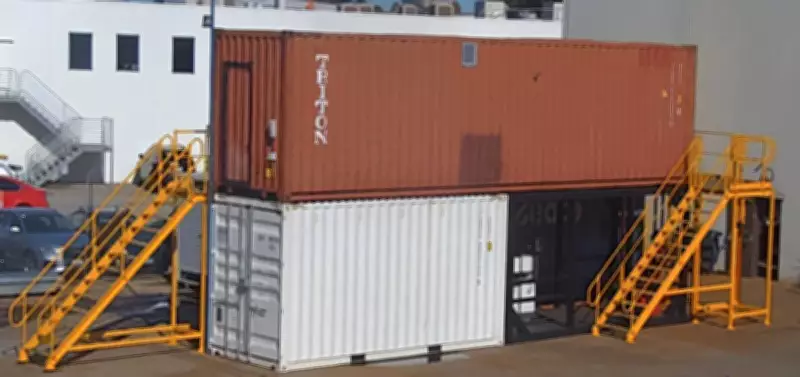
The company's cargo container-sized smelting units, manufactured at its Victorian hub, are designed for high thermal efficiency, significantly reducing energy requirements. According to Metal Logic, this allows for the production of green steel at an initial rate of one million tonnes annually. The fiercely protected intellectual property behind the process claims to yield steel that is both lower in carbon emissions and more cost-effective than traditional methods.
Metal Logic managing director Joel Nicholls emphasized the strategic advantage of their modular approach. "We have secured a strategic piece of land in the heart of the Pilbara to build Australia's first modular clean steel smelting hub," he stated. "Our focus on thermal efficiency has delivered what many thought impossible—a smelting process that is simultaneously lower-cost and lower-emission than conventional steelmaking."

Economic and Environmental Benefits Highlighted
The modular nature of the technology enables scalability with incremental capital investment, potentially retaining around $US400 in value per tonne compared to exporting raw ore. Located within 20 kilometers of major rail lines operated by BHP, Roy Hill, and Fortescue, the site leverages existing infrastructure to process ore from Metal Logic's newly acquired tenements, with plans to eventually handle material from larger mining companies.
Nicholls further explained that the technology works with any ore grade, which could make lower-quality deposits economically viable and unlock stranded resources. "We don't need to rely on subsidies or carbon border adjustment mechanisms to make this work—the thermodynamic efficiency does the heavy lifting," he added.
Government Support and Industry Context
This development aligns with the Cook Government's push for locally manufactured green steel in major public projects. A deadline for expressions of interest in such metal is just a month away, with businesses asked to specify the level of government support needed. Premier Roger Cook previously described green steel as an "existential moment" for Western Australia, though the State Opposition has criticized the initiative as a "thought bubble."
Metal Logic is capitalizing on this governmental appetite by initially targeting rebar for the construction sector. "The Western Australian Government has opened the door for locally manufactured clean steel, and we intend to walk through it," Nicholls affirmed.
Comparative Projects and Future Outlook
The industrial-scale deployment will test Metal Logic's assertion that it can produce steel 20 percent cheaper than conventional "dirty" producers and 60 percent cheaper than other green alternatives. This comes amid other green steel initiatives in the region, such as the Kwinana neo-smelt project—a joint venture involving Bluescope Steel, BHP, and Rio Tinto, with federal funding support—and the Mid-West Green Iron project in Geraldton.
In contrast, Rio Tinto recently paused its BioIron trials, which aimed to use agricultural waste and solar energy for low-carbon iron production. Metal Logic's fast-moving business, producing units since September last year, offers a transportable solution that eliminates costly on-site construction, potentially accelerating adoption.
As Western Australia edges closer to realizing its green steel aspirations, Metal Logic's modular technology represents a promising step toward sustainable, economically viable manufacturing that could reshape the state's industrial landscape and create local jobs.