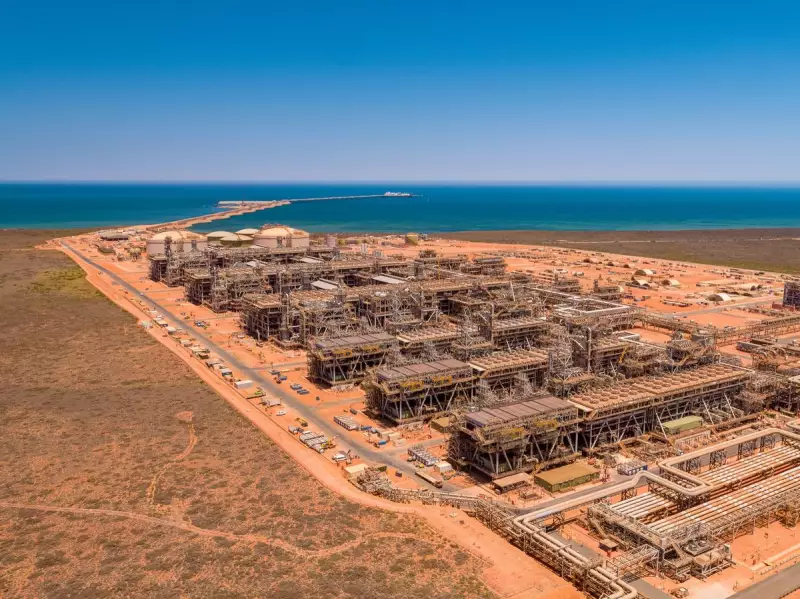
In a major commitment to Western Australia's resources sector, US energy giant Chevron has pressed the button on a multi-billion dollar expansion of its flagship Gorgon liquefied natural gas (LNG) project. The final investment decision for the $3 billion Stage 3 development was confirmed this week, unlocking new gas resources and extending the facility's operational life.
Unlocking New Gas and Securing Future Supply
The approved expansion, known as the Jansz-Io Compression (J-IC) project, is a critical piece of infrastructure for the massive Gorgon operation located off the northwest coast. It involves the construction of a subsea gas compression facility at the Jansz-Io field, approximately 200 kilometres offshore from Barrow Island.
This advanced technology is designed to maintain gas flow from the Jansz-Io reservoir as natural pressure declines over time. By compressing the gas at the seabed, Chevron can continue to recover resources efficiently and ensure a steady supply of gas to the three LNG trains and domestic gas plant on Barrow Island for years to come.

A Long-Term Investment in WA Jobs and Economy
The financial green light represents a significant vote of confidence in the state's energy future. The $3 billion capital expenditure will support local jobs and contracting opportunities during the construction phase. First gas from the new compression system is targeted for 2028.
Chevron Australia's general manager, David Fallon, emphasised the project's strategic importance. He stated the J-IC project would help maintain reliable gas supply for the Gorgon facility, which is a cornerstone of both the Asian LNG market and Western Australia's domestic gas network. The Gorgon joint venture, operated by Chevron (47.3%), includes ExxonMobil (25%), Shell (25%), and Japanese partners Osaka Gas (1.25%), Tokyo Gas (1%), and JERA (0.417%).
Navigating Challenges and Future Outlook
The final approval comes after the project faced substantial cost increases and delays. Originally estimated at $2.5 billion, the price tag has risen to $3 billion due to global supply chain pressures and inflation. Furthermore, the project's timeline was pushed back from a planned 2025 start-up.
Despite these hurdles, the commitment underscores the long-term role Chevron sees for natural gas in the energy transition. The Gorgon project, which began production in 2016, is one of the world's largest LNG developments and incorporates one of the biggest carbon capture and storage (CCS) systems globally to mitigate emissions from the reservoir gas.
This expansion ensures the facility remains a competitive and vital supplier of lower-carbon intensity LNG to trading partners, while continuing to contribute to the Western Australian economy through royalties, local content, and domestic gas supply for decades into the future.