Centennial Coal Rejects Origin's Three-Year Eraring Supply Deal
Centennial Coal has formally rejected a three-year coal supply contract proposed by Origin Energy for the Eraring Power Station, arguing the terms would force the company to sustain significant financial losses. The decision, announced on Thursday evening, places approximately 300 jobs at the Myuna Colliery in jeopardy and threatens broader economic stability across the Hunter Region.
Unacceptable Terms and Financial Strain
In a detailed statement, Centennial explained that Origin's offer, which would have extended supply through to Eraring's scheduled closure in 2029, was contingent on maintaining the existing contract terms set to expire this month. The company emphasised that accepting the deal would result in losses of around $1 million per week, a situation it deemed unsustainable for workers, local communities, and the colliery's operations.
"Under Origin's current offer, Myuna would continue losing around $1 million a week while the financial upside flows straight to Origin, reflected in rising profits. That is not a sustainable arrangement," Centennial stated. The company highlighted that it is not seeking profit from the proposed deal but aims to break even and protect employee jobs until Eraring's closure.

Origin's Position and Market Dispute
Origin Energy countered by asserting that Centennial's asking price exceeds market rates by approximately $50 million annually. The energy giant, which has increasingly sourced coal from Hunter Valley mines in recent years, placed responsibility for operational costs squarely on Centennial and its parent company, Banpu.
"The cost of operating Myuna is a matter for Centennial and its parent company, Banpu, a company of substantial size and profitability. Origin and NSW households and businesses cannot be expected to wear those costs," Origin declared on Thursday. Additionally, Origin urged Centennial to develop a comprehensive support package to assist workers in transitioning beyond mining, referencing potential recommendations from the Net Zero Economy Authority.
Worker Concerns and Community Impact
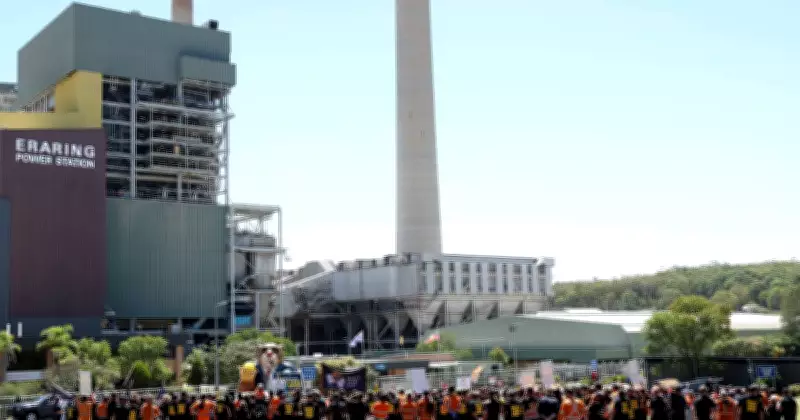
The rejection has sparked immediate concern among Myuna Colliery employees, many of whom participated in a union-led rally outside Eraring Power Station on Wednesday. Electrical team leader Damien Brogan, a 19-year veteran at the site, expressed fears about forced relocation or retraining.
"I've either got to look at retraining in another industry, or potentially do fly-in-fly-out and move to another community," Brogan said. He emphasised the deep community ties, noting that workers' families are integrated into local schools and businesses. The colliery supports an estimated 1800 indirect jobs, including contractors, transport workers, and various small businesses across the Hunter Region.
Political and Union Responses
Local federal Labor MPs Pat Conroy and Dan Repacholi have condemned Origin's handling of the negotiations, pledging support for the mine workers. Lake Macquarie state MP Greg Piper has called for continued dialogue, suggesting exploring alternative arrangements such as profit-risk agreements.
Mining and Energy Union northern district president Robin Williams appealed for collaborative efforts, stating, "We call on all parties, including the state and federal governments to put their heads together and come to a genuine, commercially sustainable agreement that keeps Myuna operating alongside Eraring and provides real certainty for workers, contractors and the Lake Macquarie community."
Integrated Supply Chain and Energy Security
Centennial underscored the critical integration between Myuna Colliery and Eraring Power Station, describing them as a single supply chain essential for energy security in New South Wales. The company criticised attempts to separate the operations, arguing that this does not constitute a viable transition plan.
With Eraring remaining one of Origin's most profitable assets, contributing to a $1.5 billion profit last year, Centennial contends that a fair agreement is necessary to ensure stability until the power station's decommissioning. The ongoing dispute highlights the complex challenges facing the energy sector as it navigates economic pressures and transition timelines.