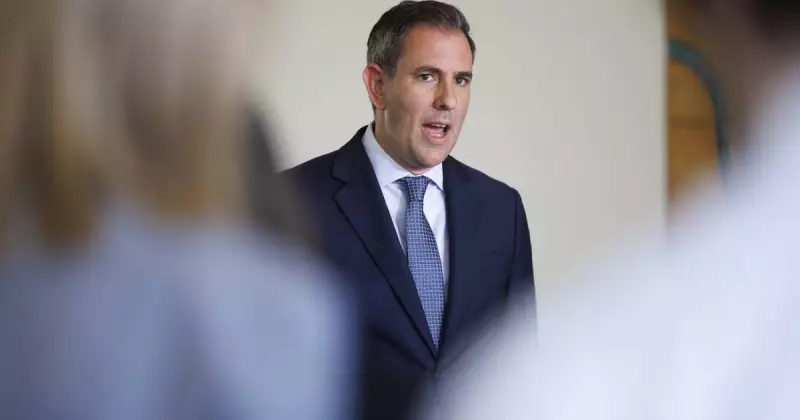
Treasurer Dr Jim Chalmers has delivered a sobering assessment of the nation's finances, with the Mid-Year Economic and Fiscal Outlook (MYEFO) confirming the budget will remain in the red for the foreseeable future. The update, released on Wednesday, projects a $36.8 billion deficit for the 2025-26 financial year and places the country's gross debt on the brink of $1 trillion.
A Legacy of Debt for the Next Generation
While the government has avoided drastic cuts, its strategy of asking public service agencies to find efficiency dividends has drawn criticism for lacking a clear path to surplus. The most striking consequence outlined in the MYEFO is the intergenerational burden being created. Children currently in primary school will be entering a workforce tasked with repaying the debt accrued from today's recurrent spending.
This raises profound questions of fairness, especially during a period of relatively low unemployment. The government's recurrent expenditure, coupled with unavoidable spending pressures in areas like the NDIS, aged care, and defence—worth some $12.7 billion—continues to outpace revenue gains from bracket creep and high commodity prices.

Balancing Savings with Sovereign Capability
Dr Chalmers faces a difficult balancing act. The pursuit of savings is necessary, but experts warn against repeating the mistakes of the past that hollowed out the Australian Public Service (APS). The loss of institutional knowledge during previous administrations has proven costly, leading to increased reliance on consultants and poorly implemented policies.
This tension is evident in the treatment of national science. While the CSIRO has received $233 million in new funding for critical research in artificial intelligence and minerals, the threat of job cuts remains. The government must ensure that budget trimming does not come at the expense of Australia's sovereign capabilities.
In a move that will impact household budgets, the MYEFO confirmed that popular energy rebates will not be extended. This decision comes as economists from major banks warn of a potential interest rate rise as early as February, adding further pressure to mortgage holders.
A Decade of Deficits Ahead
The economic picture remains challenging. Despite the Treasurer's focus on banking revenue windfalls and making "difficult decisions," the structural deficit persists. With the next election not due until 2028, the government appears to be using its political capital to make unpopular choices now.
The MYEFO ultimately signals a period of belt-tightening, not just for Australian families this Christmas, but for the government itself. The document underscores a long-term fiscal challenge where the decisions—and debts—of today will be inherited by the workers of tomorrow.