Economic Headlines Shape Political Fortunes for Global Leaders
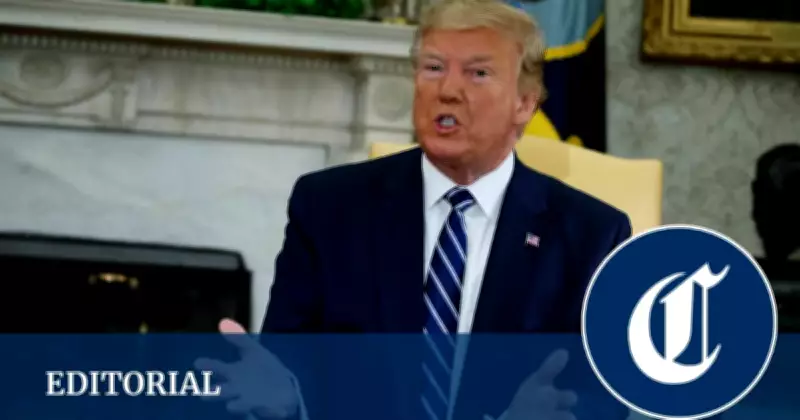
In a striking parallel of political reality, two world leaders find their fates increasingly tied to economic performance this week. President Donald Trump and Australian Prime Minister Anthony Albanese, despite their differing political landscapes, are both confronting economic data that could define their electoral futures. For one, the news brings potential optimism; for the other, it signals mounting pressure.
Australia's Inflation Surprise Undermines Government Confidence
Thursday delivered an unwelcome shock for the Australian government as inflation figures exceeded expectations. The annual rate of price increases reached 3.4 percent, surpassing economist forecasts and market predictions. This development presents multiple challenges for Prime Minister Anthony Albanese and Treasurer Jim Chalmers.
First, rising prices directly impact household budgets, affecting consumers who are also voters facing cost-of-living pressures. Second, with inflation significantly above the Reserve Bank of Australia's target midpoint of 2.5 percent, the likelihood of interest rate hikes increases substantially. Higher borrowing costs remain deeply unpopular with the electorate.

Third, and perhaps most damaging politically, the inflation data contradicts Treasurer Chalmers' assertion from just over a year ago that "the worst is behind us." Such declarations have a tendency to haunt governments, as demonstrated by former Treasurer Paul Keating's famous "recession we had to have" comment that provided political ammunition to opponents.
Historical Economic Wisdom Echoes in Contemporary Politics
The fundamental political truth articulated by President Bill Clinton's strategist James Carville in 1992 remains relevant today: "It's the economy, stupid." This simple phrase encapsulates the reality that voters consistently prioritize economic wellbeing above other issues, regardless of what dominates media headlines.
While Albanese and Chalmers undoubtedly understand this principle, current economic challenges may require constant reminder as other policy areas compete for attention. With federal elections still two years away, continued economic stagnation or deterioration could provide opposition parties with powerful campaign material, potentially turning the Treasurer's optimistic assessment into a recurring political liability.
Trump's Economic Landscape Presents Different Challenges
Across the Pacific, President Donald Trump faces a contrasting economic scenario. Recent official figures revealed robust annualized GDP growth of 4.4 percent during the third quarter of 2025, with expectations of further acceleration in the final quarter. This strong economic performance could significantly influence upcoming mid-term elections in November.
Historical patterns suggest Trump responds to market pressures, having previously moderated positions on issues like Greenland acquisition and European tariffs following stock market declines. Similarly, his criticism of Federal Reserve leadership diminished when markets reacted negatively to potential threats to central bank independence.
The approaching mid-term elections, where all House of Representatives seats and one-third of Senate positions face contest, could determine Trump's legislative freedom. While current polling suggests potential Republican losses in the House, sustained economic improvement for ordinary voters might alter this trajectory.
Political Survival Hinges on Economic Management
For both leaders, political longevity appears increasingly dependent on economic outcomes. American Democrats seeking to constrain Trump's agenda must prioritize economic messaging that resonates with voters experiencing financial pressures. Similarly, Prime Minister Albanese's continuation in office likely requires demonstrable progress on inflation control and cost-of-living relief.
The parallel experiences of these leaders underscore the enduring political wisdom that economic conditions ultimately shape electoral fortunes. As both administrations navigate complex global economic currents, their ability to deliver tangible improvements for ordinary citizens will likely determine their political survival in coming electoral tests.