Rio Tinto chairman Dominic Barton has declared that global fragmentation stemming from the Iran war is at its highest level in 60 years, creating a favourable environment for the mining giant to capitalise on shifting geopolitical dynamics.
Barton's assessment of global trends
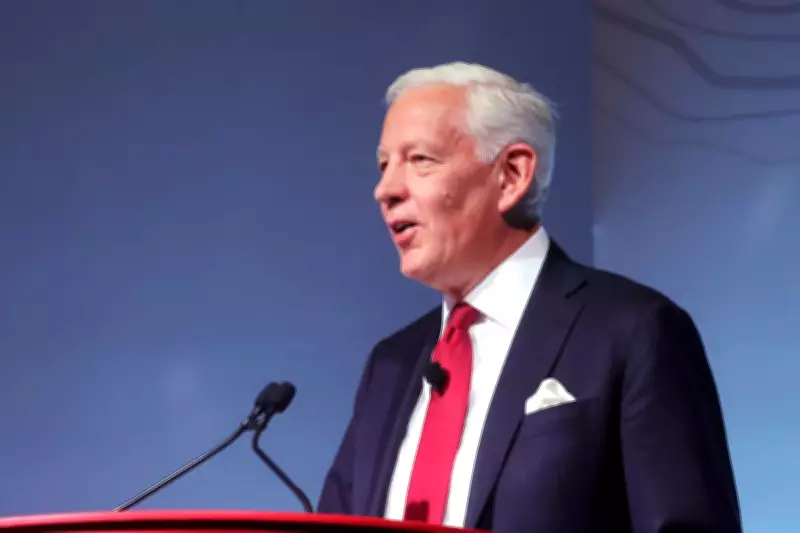
Speaking at a business event in Perth on Wednesday, Barton said the current level of geopolitical fragmentation was unprecedented in recent decades. He noted that the ongoing conflict in Iran had accelerated the breakdown of global cooperation, leading to a more multipolar world order. This fragmentation, he argued, presents unique opportunities for resource-rich companies like Rio Tinto.
“We are seeing a level of global fragmentation that we haven't seen in 60 years,” Barton told the audience. “This is a boon for Rio Tinto because our assets are diversified across stable jurisdictions, and we can navigate these complexities better than many competitors.”

Opportunities amid instability
Barton highlighted that the Iran war has disrupted supply chains and energy markets, driving up demand for commodities such as copper, aluminium, and lithium. Rio Tinto, with its extensive portfolio of mines in Australia, the Americas, and other regions, is well-positioned to meet this demand. He also pointed out that the company’s focus on long-term investments aligns with the current trend of nations seeking resource security.
“In a fragmented world, countries want to secure their supply of critical minerals. Rio Tinto is a trusted partner for many governments, and we are seeing increased interest in our projects,” Barton added.
Criticism and context
However, Barton’s comments drew criticism from some quarters. Political analysts noted that while fragmentation may benefit certain corporations, it often comes at the cost of global stability and humanitarian suffering. The Iran war, which began in 2024, has caused widespread devastation and displaced millions.
Barton acknowledged the human toll but maintained that Rio Tinto’s role is to provide essential materials for global development. “We are not policymakers. Our job is to deliver the resources the world needs, and we do that responsibly,” he said.
Rio Tinto’s performance
The mining giant has seen its share price rise by 15% since the start of the Iran conflict, outperforming the broader market. Analysts attribute this to increased demand for metals used in defence, infrastructure, and renewable energy. Rio Tinto recently announced a $2 billion expansion of its Pilbara iron ore operations, citing strong demand from Asia.
Barton concluded by emphasising that Rio Tinto would continue to invest in Australia and other stable regions. “We are committed to our operations here and will keep creating value for shareholders and communities alike,” he said.