People who regularly travel via helicopter over water should consider emergency underwater evacuation training, the nation’s aviation watchdog has recommended.
Background of the incident
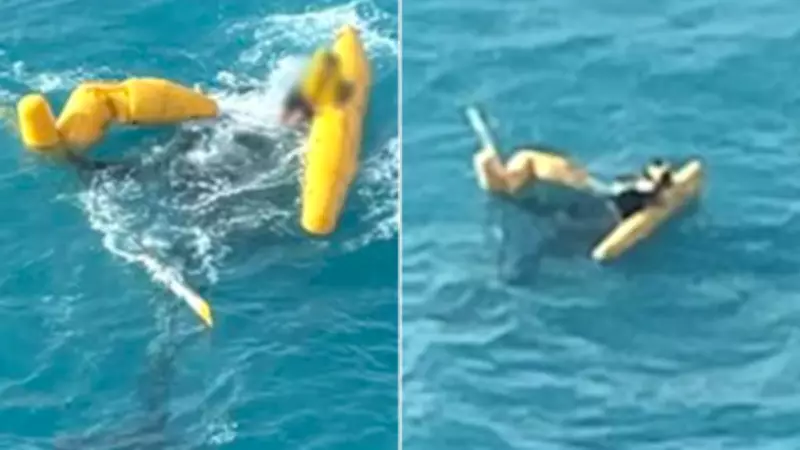
It comes after three people were seriously injured when a helicopter lost power and had to ditch into waters off Far North Queensland. One of the occupants had to swim underwater to safely evacuate the aircraft, which immediately rolled and began sinking on impact. All three suffered serious chemical burns from aviation gasoline in the water but, thanks to the pilot’s mayday call, they were rescued after about 50 minutes clinging to emergency floats. One of the passengers was further injured while being winched to safety.
ATSB final report
The Australian Transport Safety Bureau on Thursday handed down its final report into the helicopter crash in the Torres Strait where a pilot and two passengers were involved in a midair emergency. The helicopter, a Robinson R44 Raven I, left Thursday Island on October 8 last year to drop off two passengers on Coconut Island for work. During the flight, at about 600 feet over the ocean, the helicopter engine had a total power loss. The pilot made a mayday call and deployed emergency pop-out floats before instructing the passengers to brace moments before making a forced landing onto the ocean surface off Horn Island.

The three people were all seriously injured in the crash and taken to hospital for treatment.
Evacuation details
The ATSB said the helicopter hit the water and immediately rolled onto its left side. The pilot told the passengers to evacuate, with one passenger forced to swim underwater to get out. All three were wearing lifejackets and managed to hold onto the floats or parts of the wreckage until a rescue helicopter arrived about 50 minutes later. The pilot and passengers received serious injuries from chemical burns caused by exposure to aviation gasoline in the water while waiting to be rescued. During the winching operation, one person hit part of the submerged wreckage, fracturing a rib. All three were taken to Thursday Island Hospital for treatment. The ATSB said the helicopter sank and was not able to be located or recovered.
Safety recommendations
The crash prompted an ATSB investigation and also a critique into safety messages and decisions made before and during the flight. “Passengers who regularly fly in helicopters for their employment are not always provided with aviation-specific training including helicopter underwater escape training (HUET),” it said. “Research has shown that disorientation, entanglement with debris, unfamiliarity with seat belt release mechanisms and difficulty locating or opening exits are commonly cited as hazards when attempting to escape from a helicopter following an in-water accident.” The ATSB said HUET training provides people with familiarity with crash environment and improves occupant confidence in their ability to manage an in-water emergency. “Individuals and organisations whose employees regularly travel in helicopters over water are encouraged to consider the potential life-saving benefits of HUET for their employees in otherwise survivable helicopter accidents,” it recommended.