Australian Farmers Sound Alarm Over Middle East Conflict's Impact on Food Security
Australian agricultural producers have issued a stark warning that the ongoing conflict in the Middle East presents a more significant threat to the nation's food security than disruptions to global oil supplies. This alarming assessment comes as crucial fertiliser shipments become entangled in a major international trade battle, with potentially devastating consequences for domestic food production.
Critical Fertiliser Supply Lines Under Threat
The agricultural sector is experiencing growing alarm as Iran's closure of trade-rich sea lanes through the strategically vital Strait of Hormuz continues. This blockage is effectively choking off nearly one quarter of the world's traded nitrogen fertiliser, specifically urea, which is essential for modern farming operations across Australia.
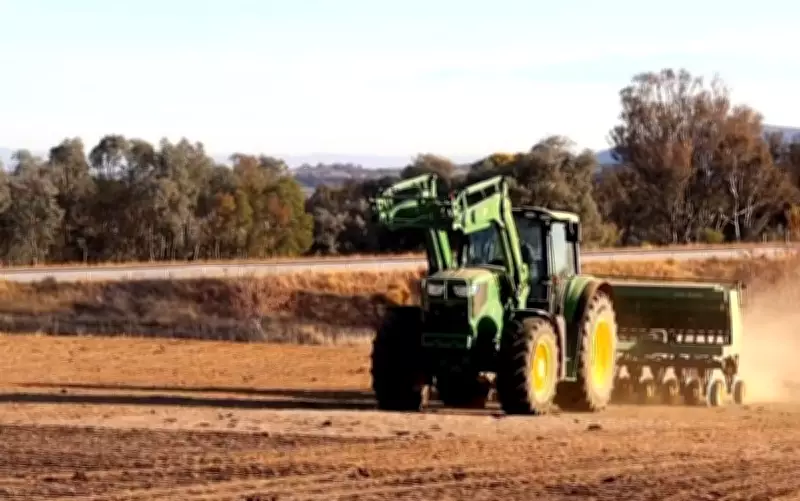
New South Wales farmer Jacob Wright articulated the multifaceted nature of the crisis, stating, "To get the crop in the ground, the tractor's got to have diesel in it." However, he emphasized that the fertiliser shortage represents an even more dire scenario for agricultural producers nationwide.

"We're worried. We're worried that prices could double or triple. We're worried that we might not even be able to get it," Wright expressed with palpable concern about the unfolding situation.
Potential Catastrophic Consequences for Food Production
Queensland farmer Brendan Taylor provided a sobering perspective on the potential outcomes, warning, "Expensive urea is bad. No urea is possibly catastrophic from a food security point of view." Taylor fears that already escalating fertiliser prices will translate into a cost shock that most Australian consumers are completely unprepared to face.
The Queensland producer outlined the inevitable ripple effects, cautioning that "It would absolutely flow on into the price of bread, into the price of beef and meat, chicken." This prediction suggests that Australian households could soon experience significant increases in their grocery bills as a direct result of the Middle East conflict's impact on agricultural inputs.
Political Debate Intensifies Over National Preparedness
The issue sparked heated exchanges in Parliament, with Energy Minister Chris Bowen placing blame for Australia's fertiliser manufacturing capacity, stating, "It is a sad story that urea manufacturing closed while the Member for Hume was Minister for Energy."
Nationals Senator Matt Canavan countered with his own perspective, arguing that "the government should be stockpiling fertiliser while at least we don't make it ourselves." Minister Bowen responded by revealing that Australia currently maintains five weeks of fertiliser stocks at the national level, with an additional twelve weeks held privately within the industry.
While the Energy Minister asserted that the nation is well prepared with fuel supplies, critics have dismissed these claims as "nonsense." Tony Seabrook, former president of the Pastoralists and Graziers Association of Western Australia, questioned the current state of Australia's fuel production capacity, asking pointedly, "How can it possibly be that we've got two small refineries working, now producing about 10 per cent of what we need? What happened? What the hell happened?"
Global Shipping Disruptions Compound the Crisis
The vulnerability of international supply chains has been further highlighted by recent developments in global shipping. Maersk, the world's second largest container shipping company, has suspended most of its shipping operations to and from seven Middle Eastern countries as the conflict around Iran intensifies.
This decision by a major global logistics provider underscores the widening impact of the regional conflict and raises serious questions about Australia's ability to maintain consistent access to essential agricultural inputs. The combination of blocked sea lanes and suspended shipping services creates a perfect storm that threatens to disrupt fertiliser supplies at a critical time for Australian farmers.

The agricultural community continues to monitor the situation with growing apprehension, recognizing that the stakes extend far beyond farm gate prices to encompass the fundamental security of Australia's food supply system.