After three decades of outsourced contracts, hundreds of school cleaners across the Hunter and Central Coast have been transitioned into permanent public sector employment. This marks the first stage of a broader state-wide initiative by the NSW Government.
Historic shift to direct employment
Since January 2026, approximately 850 cleaners in the two regions have become direct employees of the NSW Department of Education. This is the first time in 30 years that any school cleaning service in NSW has been brought back into public hands. The new award delivers an immediate five per cent pay rise, mandates proper consultation before hours are cut or altered, and grants cleaners leave entitlements comparable to those of other school staff.
The change follows a review of school cleaning contracts commissioned by the Minns Labor Government after its 2023 election commitment. The review, combined with a recommendation from the NSW Anti-Slavery Commissioner that insourcing could address modern slavery risks faced by cleaners, provided the foundation for reform.

Union campaign pays off
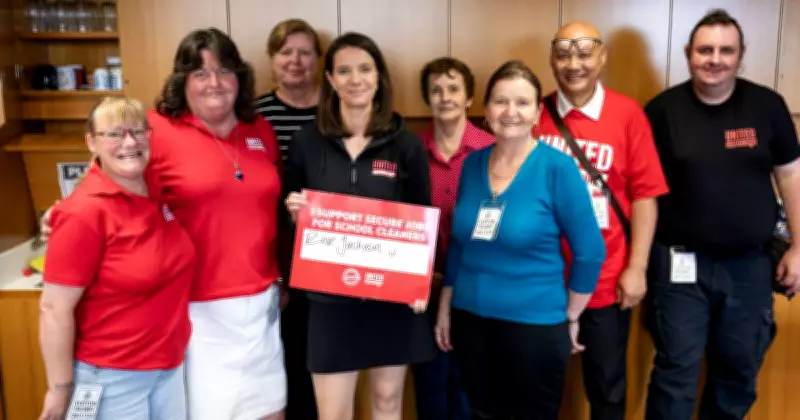
The United Workers Union (UWU), which represents cleaners across NSW, has campaigned for insourcing for years. UWU NSW Secretary Mel Gatfield hailed the outcome as a testament to sustained member organising. "This historic win follows years of campaigning by school cleaners and the United Workers Union to fix a broken contracting system," she said. "Insourcing is proof that when workers stand together, they can win lasting change. This is a victory built by cleaners, for cleaners."
The union argues that outsourcing led to unsustainable workloads and poor hygiene standards. Gatfield noted that contract specifications required cleaners to perform 600 tasks daily, equating to 43 seconds per task, and described conditions that were "almost hidden in plain sight." She added, "For too long, cleaners were treated as invisible, doing vital work without the respect, safety or job security they deserved. They have got the raw end of outsourced contracts: low wages, high injury rates and constant job insecurity. This starts to put that right. It's recognition that safe, clean schools and buildings depend on stable, valued cleaning staff."
Broader implications
The campaign gained support from the NSW Teachers Federation, which publicly backed direct employment. A Federation-supported P&C survey in 2022 documented concerns from parents, students, and staff about cleaning standards and pressures on school sites, bolstering the union's case to the government.
Approximately 7,000 cleaners are employed under the whole-of-government cleaning contract. Under the new arrangements, the Department manages cleaning across participating government agencies, with tailored specifications for schools. Specialist tasks such as carpet and high-access window cleaning are contracted separately. For schools outside the Hunter and Central Coast, new contracts are being established with stronger employee protections, higher hygiene standards, and clearer oversight. Schools including Wyong Public School and Francis Greenway High School held events to welcome cleaners into the Department of Education.
Minister for the Hunter Yasmin Catley stated that cleaners would be given "the respect and job security they deserve" and credited years of union campaigning for the change. The union intends to continue pressing for similar outcomes across the state. "Every school cleaner across NSW deserves the same security and respect," Gatfield said. "We'll keep working with the Government to make sure the next phase delivers for everyone. We won't rest until the remaining 6,000 school cleaners who are still working under private contracts are also insourced."