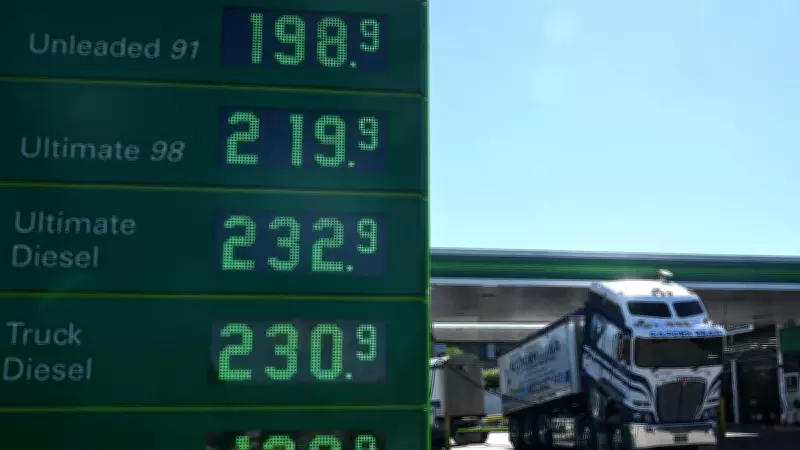
Fuel Shortage Crisis Threatens Australian Food Production and Animal Welfare
The fuel shortage crisis is now escalating into a serious threat to food production and animal welfare across Australia, according to the nation's peak farming body. Regional communities are being pushed to breaking point as diesel shortages intensify, with the National Farmers' Federation warning of potentially severe consequences for the entire food supply chain.
Regional Communities Hit Hardest by Diesel Shortages
The National Farmers' Federation reports that members across the country are experiencing growing difficulty securing diesel, which serves as the lifeblood of agricultural operations. Independent fuel retailers, who supply many regional areas, are struggling to source adequate supplies, creating a critical situation for farming communities.
NFF president Hamish McIntyre explained that demand spikes and tightening global markets are disproportionately affecting regional areas. "While national fuel supplies may look fine on paper, the impacts are being acutely felt in regional communities right now," he stated. "Independent retailers rely on the spot market, and that's where the pressure is biting."

Unlike metropolitan areas dominated by major fuel chains, many country towns depend almost entirely on small independent operators. When these businesses cannot access fuel supplies, farmers are left without the diesel needed for essential agricultural activities.
Government Response and Industry Concerns
The federal government has taken initial steps to address the crisis, with Energy Minister Chris Bowen announcing that an extra 100 million litres of fuel will be kept in Australia. The government has temporarily relaxed fuel quality rules to allow this redirected supply, with Ampol committing to prioritise regions experiencing shortages and the spot market that supplies independent distributors.
Climate Change and Energy Minister Chris Bowen has also reduced the national minimum stockholding obligation for petrol and diesel to help stabilise the nation's fuel supply. The NFF has welcomed these measures as a "first step" but warns that far more comprehensive action may be required.
"The government must be prepared to pull other available levers if the situation continues to deteriorate," McIntyre emphasised. He urged the Albanese Government to maintain pressure on major fuel companies and consider regulatory measures if necessary, including geographic or sector-specific interventions to ensure critical industries receive adequate supply.
Immediate Threats to Food Production
Farmers across Australia are struggling to secure enough fuel for planting and harvesting crops, as well as maintaining dairy and meat livestock operations. These challenges could have major repercussions for supermarket shelves and family dinner tables nationwide.
McIntyre warned that the issue is rapidly escalating from a logistics problem into a genuine threat to Australia's food system. "Farmers and fishers are telling us fuel is becoming harder to access and the prices are simply becoming unrealistic," he said. "If independent retailers can't get supply, farmers can't get diesel — and if farmers can't get diesel, they can't plant, harvest or move food to market."
If the crisis worsens, McIntyre suggested that food production should be prioritised under the Liquid Fuel Emergency Act 1984, which provides special powers during fuel supply emergencies.
Local Impacts and Community Anxiety
In the Adelaide Hills, Meadows service station owner Reno Yang described the situation as "day-to-day" as he rations diesel to keep the town supplied. While general customers are limited to 20 litres, he has been working closely with local farmers who need far greater quantities just to keep essential machinery operational.
Yang explained that uncertainty around delivery schedules is creating "real anxiety" within the community. "Farmers rely on diesel every single day and when I can't tell them when the next truck is coming that puts enormous pressure on everyone," he said.

Animal Welfare and Broader Concerns
The NFF has highlighted that fuel shortages also pose serious animal welfare risks. Poultry growers require fuel to maintain proper shed conditions, while livestock producers depend on diesel to transport fodder and maintain animal welfare standards.
The organisation has called on the Australian Competition and Consumer Commission to act swiftly if any anti-competitive behaviour is detected in the fuel market. Internationally, the International Energy Agency has announced the release of 400 million barrels of oil from emergency reserves to stabilise global supply — a move the NFF hopes will be reflected in Australia's domestic response.
Despite these global efforts, McIntyre stressed that the immediate priority must be ensuring fuel reaches regional areas as farmers approach crucial planting and harvest windows. "Australian agriculture depends on reliable fuel access every day," he emphasised. "Keeping diesel flowing to farm businesses is essential to keeping food moving from paddocks to plates and ports."
The fuel shortage crisis represents a complex challenge affecting multiple sectors of Australian society, with regional communities and agricultural producers bearing the brunt of supply disruptions that threaten both economic stability and food security.