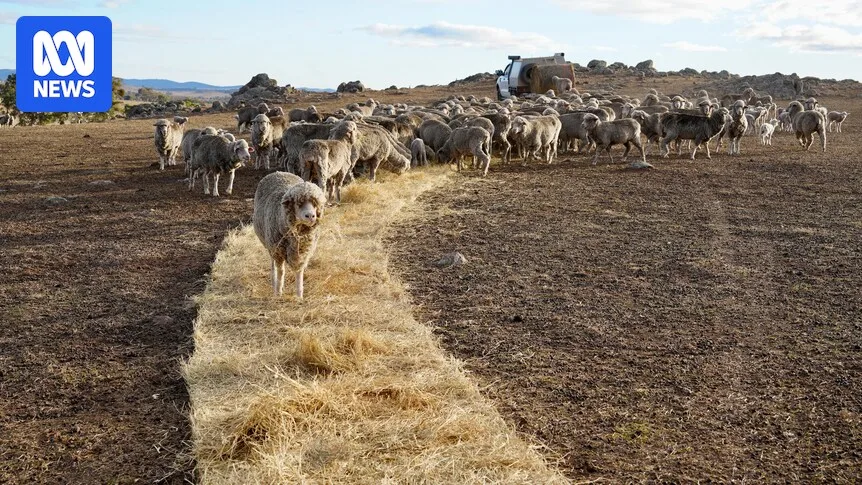
Farmers in the ACT region are enduring severe drought conditions, with some saying the current dry spell is worse than the last major drought. Tony Butler, a sheep farmer near Yass, has been forced to sell off hundreds of his merino flock due to a lack of grass on his property.
“For the last couple of months, we've had 40 to 50mm promised by the Bureau [of Meteorology] and we've got nothing,” Mr Butler said. He and his wife have been hand-feeding their sheep, a task that takes up to five hours every second day. They have already sold about 800 sheep and plan to sell another 350.
Cattle farmer Marcus Truman, who works a property at Uriarra on the ACT's western outskirts, described conditions as the toughest in 20 years. “It's a pretty grim scene here, not just here but all of southern Australia given the very poor spring and autumn we had,” he said. Mr Truman is down to his last bales of hay and expects two more truckloads soon, as there is nothing for his cattle to eat.

Climatologist Janette Lindesay from the Australian National University said rainfall in the region has been well below average since the start of 2025. “If we look at just March, April, May — the autumn season — the average is 137mm at the Canberra Airport weather station, and we've had 96mm so far, so we're well behind,” she said. She warned that the ACT could be on track for its hottest May on record if trends continue.
While the area is not officially drought-declared, the dry and warm conditions have taken a toll. Mr Truman noted that producers in Queensland and northern New South Wales are buying up cattle after floods, offering some relief for graziers. However, he expressed doubt that even incoming rain would help much, as cooler temperatures have set in. “You never say no to rain … but it's come so late that it doesn't really help us,” he said.