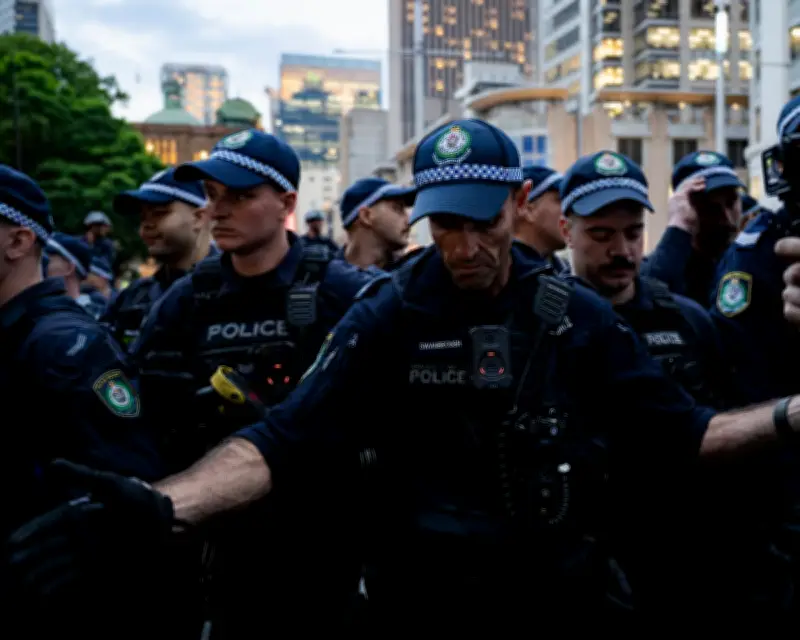
Twenty-five people who were charged after protesting against the visit of Israeli President Isaac Herzog will face a six-week joint trial in Sydney next July. The decision was made at Downing Centre Local Court on Thursday after their lawyers successfully argued that there were common legal issues across the cases.
Court Proceedings
Acting Deputy Registrar Soly Najm scheduled a week-long pre-trial hearing for 8 March 2027, followed by a six-week trial beginning 19 July 2027. Felicity Graham, one of nine lawyers representing the protesters, told the court she expects New South Wales Police Commissioner Mal Lanyon to be the first witness called.
The court heard that Assistant Police Commissioner Paul Dunstan and Greens MPs Sue Higginson and Jenny Leong may also be called, and consideration is being given to other ministers and members of parliament.

Background
Thirty people were charged after protesting against Isaac Herzog's visit to Australia at Sydney's Town Hall in February. Police withdrew charges against one of those protesters last month. The police response on the night of the protest is being investigated by the Law Enforcement Conduct Commission over allegations of police brutality.
Twenty-five of those charged applied for a joint trial, which was opposed by the police. Police Prosecutor Sergeant Adrian Walsh told the court it would create significant issues with witnesses, given some were common to all 25 cases, but a significant number related to individual matters.
Legal Arguments
Graham led the arguments for a joint hearing, stating the cases shared common legal and factual issues. This included allegations that police engaged in an unlawful response to the protest because it was an authorised protest. At the time, police considered the protest unauthorised due to a public assembly restriction declaration under a law passed after the Bondi terror attack, which effectively banned protest marches in certain areas.
That law was struck down in April by the Court of Appeal after being found unconstitutional following a successful challenge by Blak Caucas and the Palestine Action Group. Graham argued the finding meant the protest was authorised, given protesters had submitted a Form 1 (a formal notice of intention to hold a public assembly) to police with their intention to march from Town Hall to Parliament House.
“The police operation prevented them from exercising that right,” she told the court. She also said there was likely to be a challenge to the validity of the police's use of a major event declaration, typically used at major sporting or cultural events, which expanded police powers during Herzog's visit. Graham also raised potential shared arguments on the admissibility of evidence across the 25 protesters.
Charges
The protesters face a range of offences, including assault police, resist arrest, and failure to comply with move-on directions.