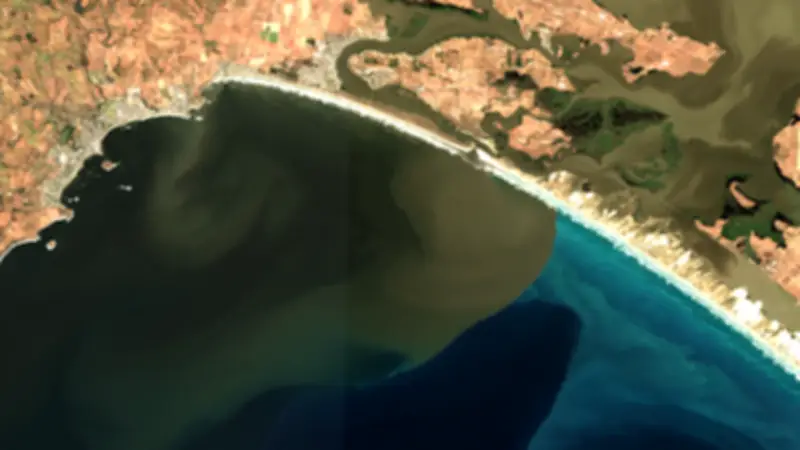
The 2022-23 Murray River flood, the largest in 66 years, sent a colossal plume of muddy floodwater 40 kilometres out into the Southern Indian Ocean, delivering a burst of nutrients that dramatically boosted the marine food web. New research reveals that more than 200,000 tonnes of organic carbon were carried out to sea between July 2022 and June 2023—29 times more than the same period in 2020–21.
Flooding Rains and Ocean Gains
For decades, the rivers of the Murray-Darling Basin have been heavily regulated by dams and irrigation networks, reducing the volume of water entering the ocean by about 60% compared to 100 years ago. However, nature broke through during the massive floods of summer 2022–23, when heavy rains filled the Basin’s waterways. The threshold for a flood on the Murray is a daily water flow of 50 gigalitres a day at the Victoria-South Australian border; this flood reached 168 gigalitres a day.
The flood carried millions of juvenile common carp—a highly destructive, invasive freshwater fish—into the open sea. Because carp cannot survive in saltwater, they perished en masse, piling up on local beaches at densities of up to 7 kilograms per square metre.

How the River Fed the Sea
These nutrients from the Murray provided a substantial boost to the middle of the ocean food chain. Scavengers such as crabs and smaller fish like yellow-eye mullet were the main beneficiaries, feeding on scraps of organic matter, including dead carp. According to the researchers, an estimated 35% of the tissues of these animals came from the organic matter carried by the flood in the months afterward.
Australasian snapper also benefited. These slow-growing larger fish frequently swam in and out of the flood zones, preying on smaller fish and crustaceans that had been eating food rich in nutrients from the flood. This means the floodwaters gave snapper and other predators a longer-term boost, effectively storing more of the land and river nutrients in the ocean food web.
How to Trace Nutrients from a Flood
It is not easy to trace what happens to nutrients from a river once they wash into the ocean, but it can be done. Every environment has a unique chemical fingerprint, which is reflected inside the tissues of its animals. When nutrients from rivers arrive, they impart part of this fingerprint to the residents of the ocean who eat them—you are what you eat.
By testing the muscles of marine animals for these fingerprints, researchers detected that crabs caught inside the flood plume had a very different sulfur signature compared to those in normal saltwater, meaning they were eating land- and river-based food (the carp). Additionally, the crabs inside the flood plume had a heavily enriched nitrogen signature—another sign they had switched to eating dead carp, effectively bumping them up a level on the food chain.
Did the Nutrient Pulse Fuel the Algal Bloom?
In March 2025, a large and long-lasting harmful algal bloom developed off the coast of South Australia, killing many different marine species in large numbers. Could the nutrient pulse from floodwaters have fuelled it? The bloom has been linked to a marine heatwave and nutrient-rich seasonal upwelling currents. The 2022–23 Murray River floods have also been proposed as a potential contributor. However, this connection remains speculative because of the lag time of 18–24 months and a lack of continuous data collection. Better monitoring after floods would help understand whether there is a link.
Rivers Matter to the Sea
Floods can be seen not as a waste of water, but as a restoration of longstanding connections between ecosystems disrupted by human control of the river. This research shows that the benefits of these flood events are not restricted to land and river ecosystems—they give a major boost to surrounding oceans as well. Floods are important for the long-term health and resilience of coastal ecosystems and fisheries, though more research is necessary to fully understand these connections.