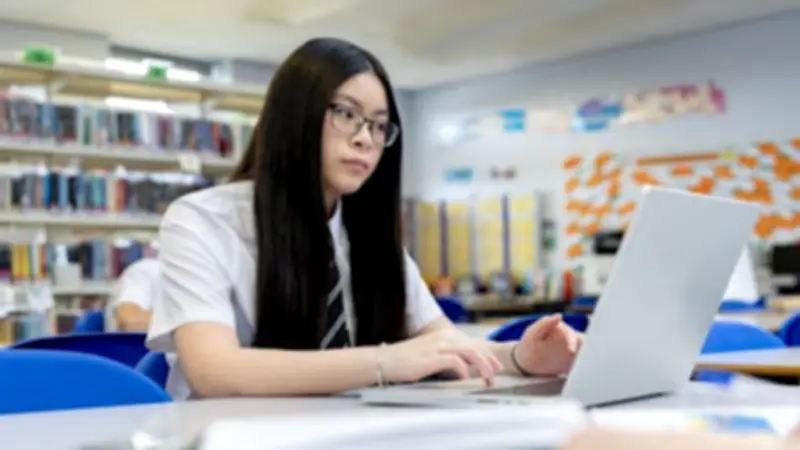
Victorian high schools have been directed to incorporate “planned device-free time” into their learning programs starting from term 1 2027. The initiative, announced by the state government, allows individual schools to determine how to implement the policy, with options including whiteboards, paper-based activities, group debates, practical experiments, or performances.
Background and Context
This move follows earlier screen-time restrictions for younger students: a cap of 90 minutes for years 3 to 6, and minimal screen use from the first year of school through Year 2. Victoria is the first Australian state to introduce guidelines specifically for schools, although screen-time recommendations have existed for health reasons. National movement guidelines advise no more than two hours of recreational screen time per day for children aged 5 to 17, excluding screen time required for schoolwork. Some private schools across the country have also adopted screen-free or largely device-free approaches, marketing them as a mark of quality education.
No Magic Number
Confusion arose around whether Education Minister Ben Carroll had proposed a specific time limit for screen use. A spokesperson later clarified there is no set limit. According to research, minute-by-minute counting of student technology use would be administratively burdensome and meaningless regarding the type or quality of learning. There is no “magic screen time number” that guarantees quality learning; it depends on how technology is used and for what purpose. For instance, a student might spend two hours writing, designing, and creating a digital book, while another might spend two hours passively watching videos on auto-feed with no decision-making, creativity, or problem-solving.

Rising Concerns and Policy Responses
Public concern about young people’s technology use has led to smartphone bans in schools across all Australian states in the last five years and a social media ban for under-16s. However, experts warn against bundling smartphones, social media, AI, recreational screen use, and teacher-directed classroom activities into a single “screen-time” problem. Different forms of technology present distinct risks, purposes, and educational possibilities, and concerns about one type can shape policies for another inappropriately.
What Research Says
According to 2022 OECD research, digital devices can distract students, particularly when used for leisure during lessons or when students are distracted by classmates’ devices. However, devices can also be associated with stronger learning outcomes when used with a focused learning purpose. When used well, they can make lessons more engaging and interactive in complex subjects like science and maths, and equip students with essential skills such as problem-solving and teamwork. Schools must decide when digital devices are beneficial—for visualizing difficult ideas, modeling processes, investigating authentic problems, collaborating, creating, receiving feedback, or improving access for students with different learning needs—and when other methods like discussion, handwriting, sustained reading, physical materials, or outdoor learning are more effective. The choice depends on the curriculum and lesson purpose. Moreover, students need to learn how to evaluate online information, identify misleading or biased AI outputs, protect their privacy, create with technology, behave safely online, and manage distractions in a world increasingly shaped by digital systems and AI.
What Parents Can Ask Schools
Parents can support healthy routines at home, talk with children about their online experiences, and ask schools how technology is used. Useful questions include: What is the learning purpose of the technology? How does it improve or extend learning? How are distraction, privacy, and online safety managed? How are students taught to use digital tools and AI responsibly? Students should also have a voice in decisions about their technology use, as their experiences often differ from adults’. Young people experience both benefits and harms of digital environments directly and can offer insights into how devices support learning, where they create distraction, and any unintended consequences of policy changes.