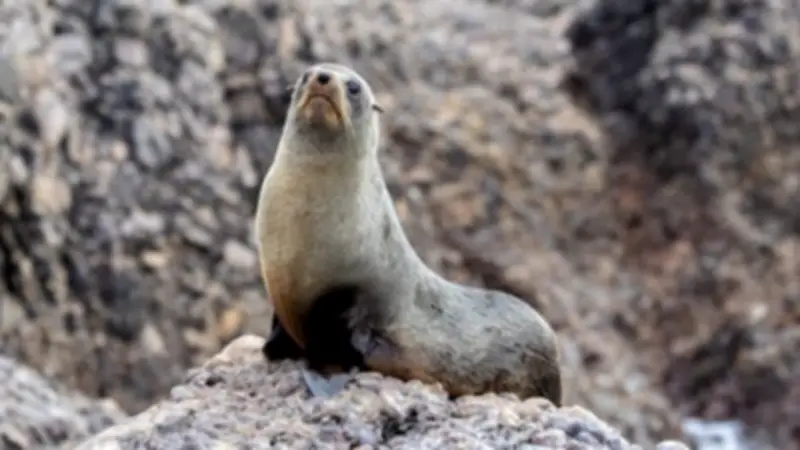
An Australian fur seal hauled out on Albatross Island, in the northwest of Tasmania. Seal pups and seabird chicks are suffering in extreme weather. How can we protect them?
Extreme Weather Impacts on Wildlife
Extreme weather is becoming the new normal, disrupting human communities across the globe. It is also affecting wildlife populations in complex and increasingly concerning ways. Our new research shows extreme heat, heavy rain and storm surges are affecting seals and seabirds during a critical period of their development – as pups and chicks.
An Environment Under Pressure
Research shows the marine waters of southeast Australia are warming several times faster than the global average. Meanwhile, marine heatwaves, heavy rainfall and storms are becoming more frequent and severe. These kinds of extreme weather are already threatening many marine predator species. Marine predators that breed on land – such as seals and seabirds – are especially exposed because they rely on both the ocean and land to find food and raise their young.

What We Studied
In our study, we analysed long-term monitoring data from 14 breeding colonies – including six Australian fur seal, five short-tailed shearwater and three shy albatross colonies – across Tasmania and Bass Strait. We also examined daily weather and ocean records, and tested 19 types of extreme weather using various measures — including the number of warm, cool, and wet days a colony experienced. This was to identify which weather events had the strongest impacts on breeding success, and when those effects occurred.
What We Found
Our study shows extreme weather is reducing the breeding success of Australian fur seals, short-tailed shearwaters and shy albatross populations. This matters because these species only raise one pup or chick each year, so repeated breeding failures can put a colony or population’s long-term health at risk. We also found each species has a distinct “window of vulnerability”, meaning short periods during breeding when pups and chicks are especially sensitive to certain types of extreme weather. Here are our key findings.
1. Storm Waves Are Washing Seal Pups Away
Extreme weather is affecting the breeding success of Australian fur seals on Tenth Island, a small low-lying seal colony in Bass Strait. Tenth Island is only about ten metres above sea level, meaning it is especially exposed during storms. Our analysis shows years with storms that caused large waves during pupping season – the annual summer period when seals give birth and raise newborn pups — had substantially lower pup numbers. This is because large storm waves can wash pups into the sea, drown them or separate them from nursing mothers. This population was most vulnerable to extreme waves between late November and early January, when newborn pups haven’t yet learnt to swim and remain heavily dependent on their mothers. However, other higher seal colonies – such as on Judgement Rocks and West Moncoeur Island – appeared to be more resilient to large storm waves.
2. Heavy Rain Is Flooding Seabird Burrows and Nests
At East Kangaroo Island in northeast Tasmania, heavy rainfall reduced the breeding success of short-tailed shearwaters. We found these seabirds are most vulnerable to heavy rainfall from early December to late January. This period aligns with the stages of early incubation – when adult birds sit on eggs to help them hatch – and early chick-rearing. These migratory seabirds nest in burrows, which normally provide protection from predators and temperature extremes. But heavy rainfall can cause burrows to flood or collapse, drowning chicks or eggs and exposing them to cold conditions. However, we did not observe the same effect in four other shearwater colonies we studied. This may be because they have deeper soils and more native vegetation, which may reduce burrow flooding or collapsing risk.

3. Endangered Albatross Face Several Weather-Related Threats
Shy albatross breed at only three colonies worldwide. All are located in Tasmania, but each is exposed to different extreme weather. At Albatross Island in northwest Tasmania, both extreme heat and rain affected shy albatross breeding success. This population was most vulnerable to extreme rain from late October to December. This is when shy albatross go through incubation and early broodguard – the phase after hatching where adult birds protect their chicks from predators and harsh weather. Extreme heat increased the risk of chicks suffering heat stress, particularly from late December to March. One reason is albatross chicks are covered in thick down – a type of soft, fine feathers – that may cause them to overheat, particularly on their exposed rocky nesting sites. At The Mewstone, an island off Tasmania’s southern coast, prolonged wet conditions reduced chick numbers during hatching and broodguard. This is because young chicks aren’t waterproof and may get hypothermia in flooded nests. Large waves caused by storms also reduced chick numbers at Pedra Branca, a tiny granite island exposed to powerful Southern Ocean swells. Monitoring cameras captured nests being washed away by extreme waves.
What We Can Do
Our findings stress the need for high-resolution weather monitoring near breeding colonies. We must also consistently monitor vulnerable populations, so we can better protect them from extreme weather. Restoring habitats may improve breeding outcomes by increasing soil stability and reducing the risk of flooding. And artificial nests may reduce breeding failures related to extreme weather. Using forecasts, conservation managers can also protect vulnerable species before or during extreme weather. For example, before a heatwave managers could use misting – which involves spraying a fine mist of water over bird nests – to help reduce heat stress in vulnerable chicks. Local geography, breeding behaviour and the timing of extreme weather all shape how vulnerable a population is. And as climate change makes extreme weather more frequent and intense, it’s vital we understand when and where wildlife is most at risk.