A new exhibition in Berlin is using digital technology to reconstruct the site of what has been described as the first genocide of the 20th century, where at least 3,000 Herero and Nama people died in a German concentration camp on Shark Island, Namibia. The exhibition, titled Fractured Lifeworlds, opens this week at the Spore Initiative and presents four years of research by Forensic Architecture, a multidisciplinary research agency that uses visual reconstructions to investigate human rights abuses.
Shark Island: A Site of Atrocity
From 1905 to 1907, Shark Island was the site of a concentration camp where Herero and Nama prisoners were subjected to forced labour, starvation and systematic abuse. At least 3,000 people are estimated to have died there. Today, the island is used as a tourist campsite, and monuments honouring German colonial figures such as Adolf Lüderitz and Heinrich Vogelsang stand on the island. The exhibition aims to uncover this forgotten history and hold Germany accountable for its colonial past.
Forensic Reconstruction of Colonial Violence
The centrepiece of the exhibition is a series of films that combine oral testimony from descendants of genocide victims with geological research. One 30-minute film reconstructs the concentration camp, showing how German authorities weaponised the harsh environment against prisoners and shipped their skulls back to Germany for pseudoscientific research. The investigation also identifies sand mounds nearby believed to be unmarked mass graves for prisoners killed on Shark Island.

The Hyphen Project and Ongoing Extraction
Underneath Shark Island, the port of Lüderitz is set to expand as part of the Hyphen project, a multibillion-euro British-German green hydrogen initiative. For many Nama and Herero descendants, the project recalls familiar patterns of extraction. Much of the infrastructure is being developed across 4,000 square kilometres of ancestral land belonging to Nama communities, who have been excluded from meaningful participation in the project. Sima Luipert, adviser to the Nama Traditional Leaders Association, fears the port expansion could disturb burial grounds. “When they dredge, they don’t seem to realise that they are not simply moving dirt. They are disturbing the dead,” she says.
Germany’s Refusal to Pay Reparations
Germany has refused to pay reparations to Herero and Nama descendants, offering instead development aid payments negotiated with the Namibian government. When Germany formally recognised the atrocities in 2021, it described them as a genocide “from today’s perspective,” a formulation critics say avoids legal and political implications. “Germany can swiftly compensate victims of the Holocaust while invoking strict legal technicalities to deny reparations to Africans,” Luipert says. She views the exhibition as a way to provide evidence – “a digital shield against historical denial”.
Reading the Landscape
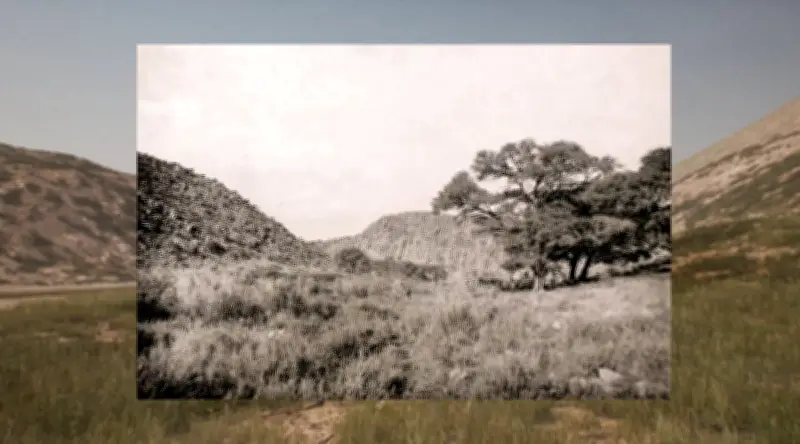
Forensic Architecture’s approach in Namibia involves what founder Eyal Weizman calls “forensic botany.” The agency analysed shades of grey in colonial photographs to infer patterns of grass density, combined with oral histories and modern satellite data to reconstruct the erasure of local communities. The aim is to recover a record inscribed in the landscape, effectively “sending a satellite back in time.”
Contemporary Art and Memory
Contemporary artworks add further layers to the exhibition. Tuli Mekondjo contributes an embroidered Herero uniform titled Schutztruppe, originally worn by German colonial soldiers but adopted by Herero communities as an act of resistance. By stitching a human skeleton onto the fabric, Mekondjo transforms it into a wearable memorial for prisoners who died on Shark Island.
A Timely Reminder
As Germany continues to debate the meaning and scope of its memory culture, Fractured Lifeworlds is a timely reminder that the past remains part of the present. The exhibition runs from 7 June to 30 April at the Spore Initiative in Berlin.