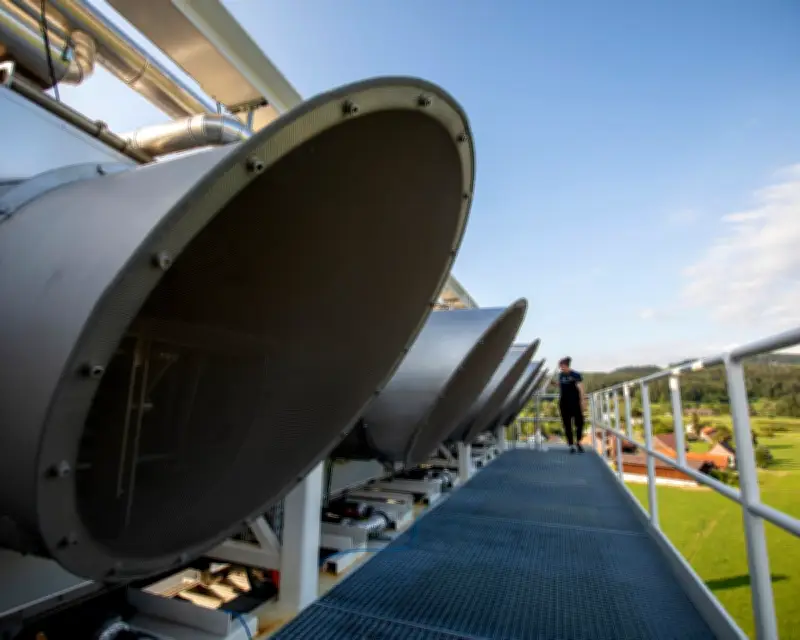
Humanity must scale up novel carbon dioxide removal (CDR) technologies at an even faster pace than the rapid deployment of solar panels to limit global heating to 1.5°C, according to a new report. The study, published on Tuesday, finds that these emerging methods—such as machines that suck CO2 directly from the air and biochar production—must grow at “highly ambitious rates” to bridge the gap between government pledges and Paris Agreement targets.
Current State of Carbon Removal
Currently, novel CDR accounts for only 0.1% of the 2.2 billion tonnes of CO2 removed globally each year. The vast majority comes from land-based actions like tree planting, which face space limitations. While novel CDR has grown by 40% annually, it starts from such a small base that it needs to match or exceed the growth rates of solar panels and electric vehicles—the fastest-growing climate technologies. Alarmingly, only one-fifth of planned capacity has been delivered in recent years.
Gap Between Pledges and Needs
“Countries have pledged around 2.7 billion tonnes of carbon removal by 2035 and about 3.6 billion by 2050, but climate pathways require much more, especially in the long term,” said William Lamb, a scientist at the Potsdam Institute for Climate Impact Research and co-author of the report. “This leaves a gap that grows significantly over time.” CDR is seen as essential to offset hard-to-avoid emissions and to bring temperatures back down after an inevitable overshoot of 1.5°C.

Fragile Support System
The third edition of this independent scientific assessment reveals that support for CDR remains fragile. Policy dismantling and volatility in the United States under President Donald Trump—who has left the Paris Agreement and promoted fossil fuels—undermines credibility and pressures other jurisdictions. Additionally, Microsoft, which purchased 82% of novel CDR credits, reportedly paused its procurement in April. While a Microsoft spokesperson said the programme has not ended, the slowdown highlights the vulnerability of relying on first movers.
Ana Hernández from the Foundation for Climate Research in Spain noted that these examples contribute to declining corporate ambitions. “No G20 country has a legally binding removal target, and the NDCs submitted in 2025 did not increase ambition for carbon removal,” she added.
Long-Term Necessity
Scientific pathways to halt global warming require sharp cuts in fossil fuel use, reversing nature destruction, and deploying technologies to remove residual CO2. However, many CDR methods do not store carbon permanently. Thomas Gasser from the International Institute for Applied Systems Analysis emphasized that even impermanent methods can offset warming from short-lived pollutants, but extreme climate impacts will worsen without large-scale removal. “While we are indeed far behind in terms of CDR development, it remains the only option to revert climate change in the long run—although only if greenhouse gas emissions are also reduced to near-zero,” he said.