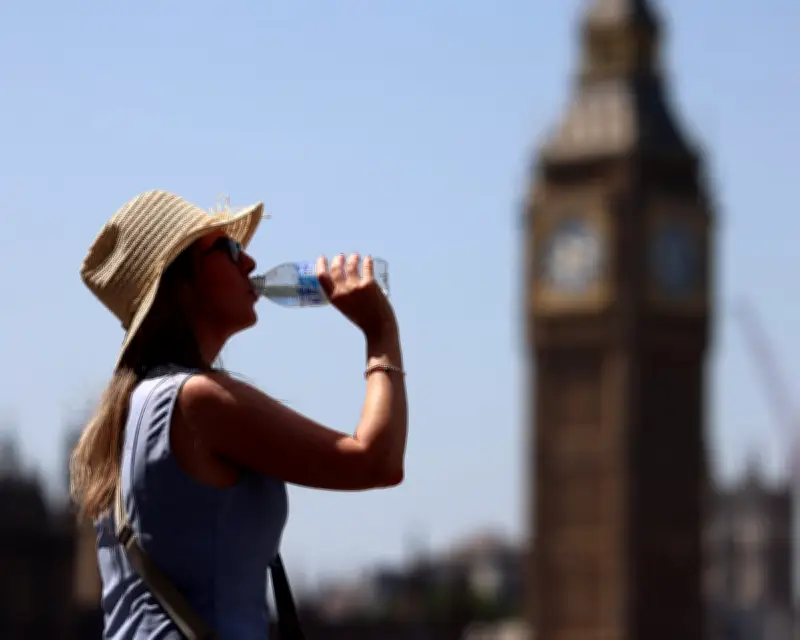
The United Kingdom is experiencing an unprecedented heatwave, with temperatures soaring past 40°C for the first time in recorded history, prompting desperate measures across the nation. Emergency services are on high alert as the extreme heat poses serious health risks, particularly to the elderly and vulnerable populations.
Record-Breaking Temperatures
On Tuesday, the mercury hit 40.3°C in Coningsby, Lincolnshire, breaking the previous record of 38.7°C set in 2019. The Met Office issued its first-ever red warning for extreme heat, covering large parts of England from London to Manchester and York. This warning indicates a risk to life, with temperatures expected to remain dangerously high overnight.
Emergency Measures Implemented
Schools across the affected regions have been closed, with many parents forced to take emergency leave or arrange last-minute childcare. Hospitals have canceled non-urgent appointments and are treating dozens of patients for heat-related illnesses such as heatstroke and dehydration. The NHS has set up cooling centers in several cities, including London, Birmingham, and Newcastle, to provide respite for those without air conditioning.

Transport Disruptions
The heatwave has also caused significant disruptions to transportation. Railway operators have imposed speed restrictions to prevent tracks from buckling, leading to delays and cancellations. Some train services have been suspended entirely, including parts of the East Coast Main Line. London Underground passengers faced sweltering conditions as many carriages lack air conditioning, with temperatures inside reaching 35°C. Network Rail has warned that speed restrictions may remain in place for several days.
Health Warnings and Advice
Public Health England has urged people to stay indoors during the hottest part of the day, between 11 am and 4 pm, and to drink plenty of water. The government has activated its emergency alert system, sending warnings to millions of mobile phones advising of the extreme heat. According to Dr. Agostinho Sousa, head of extreme events and health protection at the UK Health Security Agency, “Heat can be fatal, especially for older people, those with underlying health conditions, and young children.”
Impact on Infrastructure
The heat has also caused damage to infrastructure. Roads have buckled in several areas, including the M25 motorway, leading to lane closures. Power grids are under strain as demand for air conditioning surges, though the National Grid has assured that supply is currently stable. Fire services have reported a spike in grassfires, with crews battling blazes in London, Essex, and Yorkshire.
Climate Change Link
Scientists have linked the heatwave to climate change, noting that such extreme events are becoming more frequent and intense. Dr. Friederike Otto, a climate scientist at Imperial College London, stated, “This heatwave would have been virtually impossible without human-caused climate change. It is a stark reminder that we need to adapt to a warmer world.” The UK government has faced criticism for its slow progress on climate adaptation, with opposition parties calling for increased investment in heat-resilient infrastructure.
Community Response
Communities have rallied together to help those in need. In London, volunteers have been distributing water and sunscreen to homeless people, while local councils have opened public buildings as cooling centers. Some businesses have allowed employees to work from home, and outdoor events have been canceled or postponed. The RSPCA has advised pet owners to keep animals cool and avoid walking dogs during the heat of the day.
Looking Ahead
The heatwave is expected to peak on Tuesday, with temperatures gradually easing from Wednesday. However, the Met Office has warned that the heat could return later in the summer. The government is reviewing its emergency response and considering long-term measures, including mandatory air conditioning in new buildings and increased green spaces in urban areas to combat the urban heat island effect.