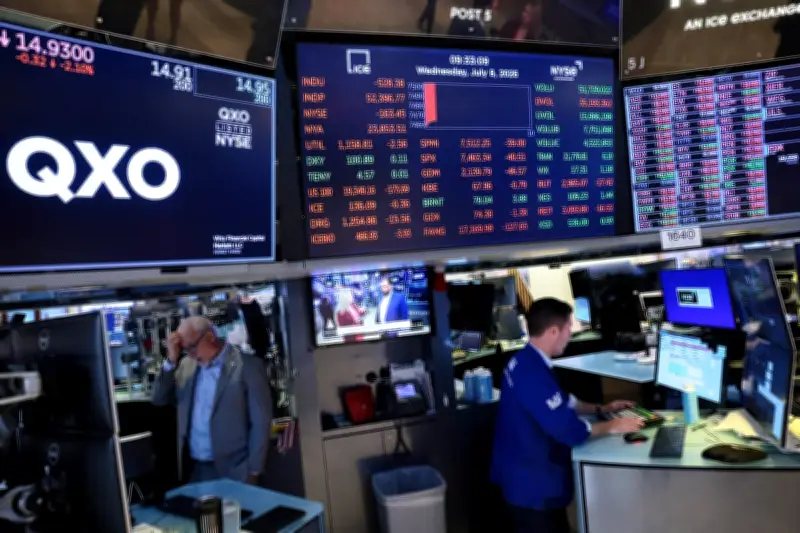
US stock markets suffered steep losses on Wednesday, with the Dow Jones Industrial Average plunging more than 500 points as escalating geopolitical tensions with Iran and persistent worries about higher interest rates spooked investors. The broad sell-off erased gains from earlier in the week and marked the worst single-day decline for major indices in over a month.
Market indices in the red
The Dow closed down 512 points, or 1.5%, at 33,456. The S&P 500 fell 1.8%, while the Nasdaq composite dropped 2.3%, dragged lower by technology shares. The sell-off was broad-based, with all 11 S&P 500 sectors finishing in negative territory. Energy stocks were among the hardest hit, falling 3.2%, as oil prices retreated on concerns that a potential conflict could disrupt global supply chains.
According to market analysts, the decline was triggered by a combination of factors. The United States and Iran have exchanged harsh rhetoric over the past 48 hours, with the US deploying additional naval assets to the Persian Gulf. Investors fear that any military confrontation could send oil prices soaring and destabilize the global economy.

Interest rate concerns persist
At the same time, expectations that the Federal Reserve will continue raising interest rates to combat inflation weighed on sentiment. Data released this week showed the US economy added more jobs than expected in June, fueling speculation that the central bank will maintain its hawkish stance. The yield on the 10-year Treasury note rose to 4.35%, its highest level in three months, making equities less attractive relative to bonds.
“The market is caught between two fears: the geopolitical risk from Iran and the monetary policy risk from the Fed,” said Lisa Chen, a senior portfolio manager at Pinnacle Investments. “Investors are reducing exposure to risk assets until there is more clarity on both fronts.”
Technology and energy lead losses
Technology stocks, which are particularly sensitive to interest rate changes, bore the brunt of the selling. Apple fell 2.8%, Microsoft lost 3.1%, and Nvidia dropped 4.2%. The energy sector also struggled, with Exxon Mobil declining 3.5% and Chevron falling 2.9%, as crude oil prices slipped 2% to $78 per barrel.
Bank stocks were mixed, with JPMorgan Chase edging up 0.3% after reporting better-than-expected quarterly earnings, while Goldman Sachs fell 1.2%. The financial sector overall declined 0.8%.
Global ripple effects
The sell-off in US markets reverberated across global exchanges. European stocks closed lower, with the Stoxx Europe 600 falling 1.2%. Asian markets also declined, with Japan's Nikkei 225 dropping 1.6% and Hong Kong's Hang Seng index losing 1.4%. Investors are now watching for any diplomatic developments between the US and Iran that could ease tensions.
“The situation in the Middle East is fluid, and any escalation could have severe consequences for global markets,” warned Sarah Jenkins, an economist at Global Insight. “Central banks are also walking a tightrope between controlling inflation and supporting growth.”
Outlook remains uncertain
Market participants are now focused on upcoming economic data, including the consumer price index report due next week, which could influence the Fed's next move. Some analysts believe that if inflation shows signs of cooling, the central bank may pause its rate hikes, providing relief to equities. However, the Iran situation remains a wild card.
“We are in a period of heightened volatility,” said Chen. “Investors should brace for more swings until the geopolitical and monetary policy outlook becomes clearer.”