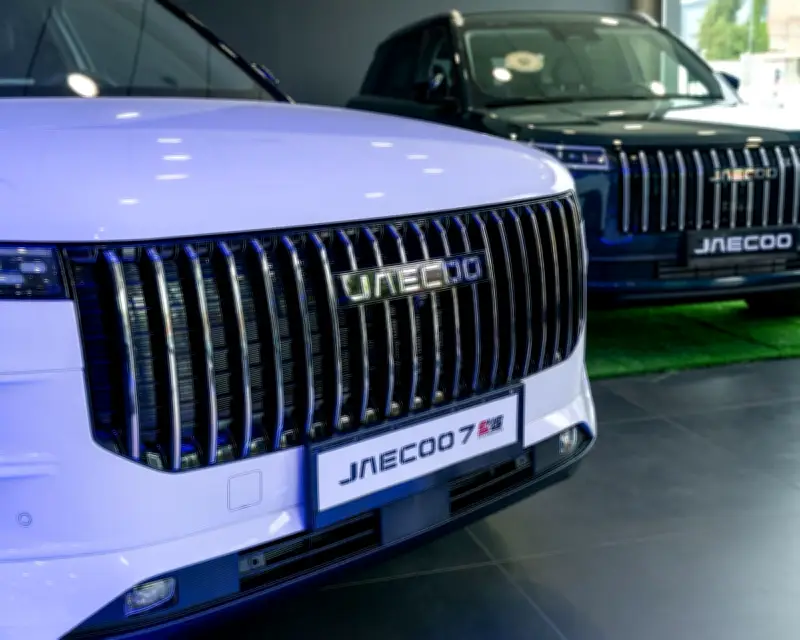
UK car sales in May reached their highest level for the month since before the COVID-19 pandemic, driven in part by strong growth from Chinese manufacturers BYD and Chery. Car registrations increased by 7% to 160,662 units compared to the same month last year, according to data from the Society of Motor Manufacturers and Traders (SMMT).
Chinese EV makers gain momentum
Sales of battery electric vehicles (BEVs) recorded the fastest growth, accounting for more than 27% of the market. Chery, the Chinese automaker behind the Jaecoo and Omoda brands, sold 8,200 cars in the UK during May. BYD sold 5,200 vehicles during the same period. Over the first five months of 2025, BYD's sales doubled compared to the previous year, while Chery's sales increased fourfold.
MG, which is owned by China's state-owned SAIC, saw its sales grow by 13% to nearly 7,500 units. Meanwhile, China's Leapmotor and Geely experienced significant growth, selling 900 and 1,100 vehicles respectively, up from negligible numbers a year earlier.

Chinese manufacturers have been expanding their presence in the UK market, which has not imposed punitive tariffs on Chinese EV imports. Demand for electric cars has been boosted by government grants introduced last July and rising fuel prices linked to geopolitical tensions in the Middle East.
Tesla and other players
The surge in electric vehicle demand also benefited non-Chinese automakers. Tesla, led by Elon Musk, recorded a 45% sales increase in May, though its year-to-date sales are up only 3%. This development comes ahead of an initial public offering for Musk's SpaceX, which aims for a valuation of $1.77 trillion, potentially making it the largest IPO in history.
Mike Hawes, chief executive of the SMMT, commented: "Britain's car buyers are responding to a market offering more choice than ever, from both new and familiar brands, resulting in a robust May."
Private buyers drive growth
The SMMT noted that private buyers, rather than corporate fleets, were responsible for the strongest May increase in sales since 2019. Sue Robinson, chief executive of the National Franchised Dealers Association, which represents retailers, described the figures as "encouraging" and said they showed consumers were "increasingly considering lower-emission motoring options due to the continued high price of fuel."
ZEV targets and industry response
The strong growth in electric vehicle sales makes it likely that carmakers will comply with the zero emission vehicle (ZEV) mandatory sales targets. While BEV sales were below the headline 33% proportion required, New AutoMotive, a think tank tracking the EV transition, estimates the true target is about 24.6% due to flexibilities in the rules. Sales of plug-in hybrid electric vehicles (PHEVs) also help manufacturers lower their targets.
Ben Nelmes, chief executive of New AutoMotive, said there was "real consumer and private buyer momentum behind electric vehicles." He added: "Manufacturers have invested billions to deliver the cars drivers want, and drivers are buying them."
However, the SMMT and its manufacturer members are lobbying the UK government to further weaken the ZEV targets. Hawes said there was an "urgent" need for a further review of the targets to provide a "credible" path to net zero.