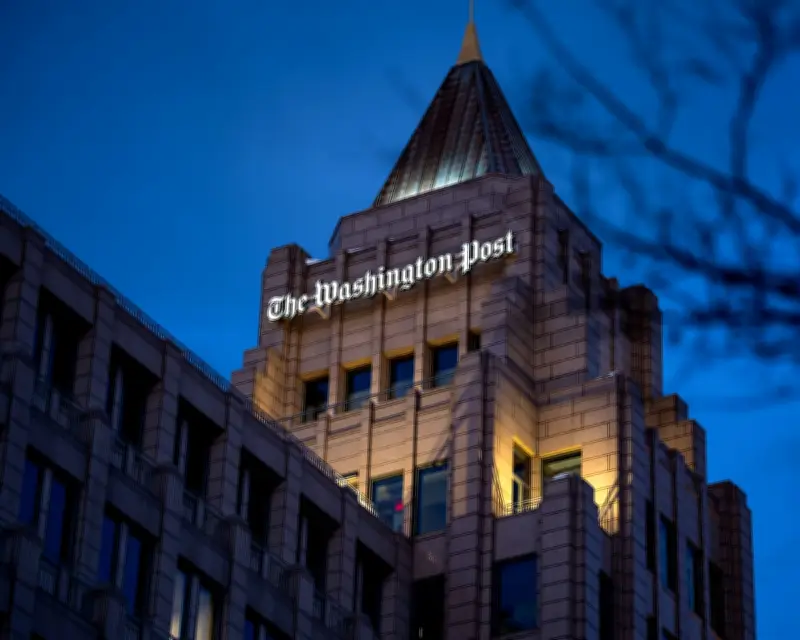
Former President Donald Trump has filed a defamation lawsuit against The Washington Post, accusing the newspaper of publishing false and malicious statements about his actions following the 2020 presidential election. The lawsuit, filed in a Florida state court on Wednesday, seeks unspecified damages and demands a retraction of the alleged falsehoods.
Core Allegations in the Lawsuit
According to the legal filing, Trump asserts that the Post deliberately mischaracterized his communications with state election officials in the weeks after the November 2020 election. Specifically, the suit claims the newspaper reported that Trump pressured Georgia Secretary of State Brad Raffensperger to “find” enough votes to overturn the state’s election results. Trump argues that his phone call on January 2, 2021, was merely a discussion of alleged irregularities, not an attempt to subvert the democratic process.
The lawsuit cites a series of articles published in late 2020 and early 2021, including one that stated Trump “demanded” that Raffensperger alter the vote count. Trump’s legal team contends that the word “demand” was used to create a false narrative of criminal intent. They argue that the Post’s reporting was “knowingly false” and motivated by political bias.

Legal and Political Context
This defamation case is part of a broader pattern of Trump suing major media outlets over coverage he deems unfair. In recent years, he has filed similar lawsuits against CNN, The New York Times, and other organizations. Legal experts note that defamation cases against public figures face a high bar under the U.S. Supreme Court’s New York Times v. Sullivan standard, requiring proof of “actual malice”—that the publisher knew the information was false or acted with reckless disregard for the truth.
Trump’s attorney, Alina Habba, stated, “The Washington Post has repeatedly engaged in a campaign of disinformation against President Trump, and this lawsuit seeks to hold them accountable for their malicious and false reporting.” The Post’s spokesperson, Sarah Frazier, responded, “We stand by our reporting and will vigorously defend against this baseless lawsuit.”
Impact on Media and Public Discourse
The lawsuit reignites debates about press freedom and the boundaries of political speech. Media watchdogs have expressed concern that such lawsuits could chill investigative journalism, particularly coverage of elected officials. However, Trump’s supporters argue that the mainstream media must be held responsible for biased reporting that undermines public trust.
Neither the Washington Post nor its parent company, Nash Holdings, has yet filed a formal response. The case is expected to proceed slowly, with pre-trial motions likely focusing on whether the Post’s reporting meets the actual malice standard. A trial date has not been set.
This is not the first time Trump has targeted the Post; he previously threatened legal action over its coverage of his business dealings and tax returns. The outcome could have significant implications for how news outlets cover controversial political figures.