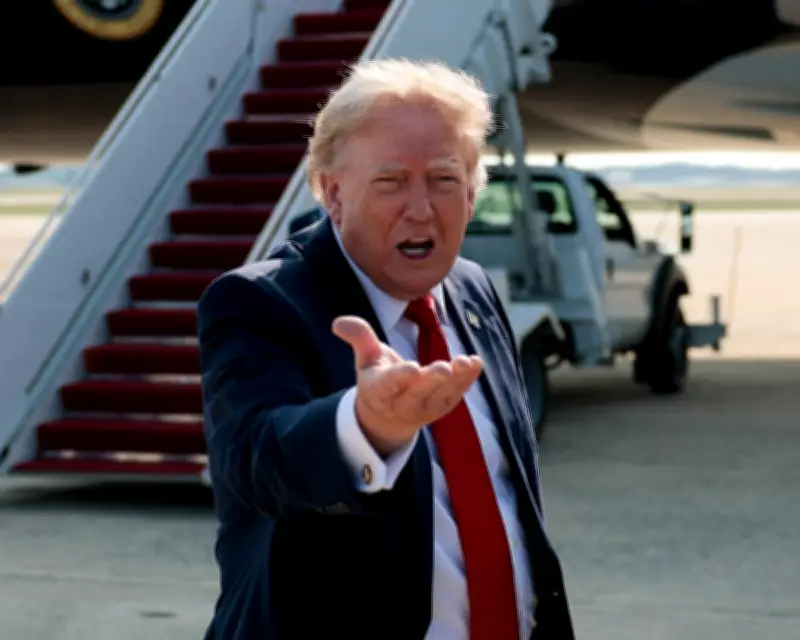
Donald Trump has refused to renew the United States-Mexico-Canada Agreement (USMCA), the North American trade pact he once championed as his signature deal. Instead, the US will keep the agreement alive on a short leash of annual reviews rather than committing to another 16 years, a move that introduces uncertainty for businesses and investment across the continent.
Deadline Passes Without Renewal
Wednesday marked the deadline built into the USMCA for the three countries to jointly decide its fate. The agreement, which replaced the 1992 North American Free Trade Agreement (NAFTA), is set to expire in 2036. After virtual talks between officials from all three governments, the US trade representative’s office confirmed that Washington had walked away from renewing the deal on its existing terms, pointing to persistent US trade deficits with both neighbors.
The refusal does not kill the pact outright. The USMCA remains in force while negotiations continue, but it will now face a review every year rather than once every six, as originally designed. This shift raises the prospect of damaging businesses that rely on the USMCA and could limit investments across North America. The deal currently governs about $2 trillion annually in goods and services between the three countries, according to CNBC.

Administration Cites Unaddressed Issues
A senior administration official, briefing reporters on a call announcing the decision, said Trump had “chose not to rubber stamp a USMCA renewal without addressing existing issues.” The official added: “So in other words, the United States did not agree to renew the USMCA in its current form. So, as a result, the USMCA is not renewed.”
In a statement, Jamieson Greer, the US trade representative, said the US would “continue to engage with Mexico and Canada to address the Agreement’s shortcomings.” The decision underscores a shift in Trump’s stance on the pact he once celebrated as a landmark achievement.
Trump’s Changing Stance on USMCA
Trump has routinely criticized the USMCA of late, and last month threatened to abandon it. “We don’t need anything that Canada has. We don’t need anything that Mexico has, but they need everything that we have. And they have to treat us better,” he told reporters in the Oval Office. However, Trump struck the deal himself in 2020, during his first term, as an updated version of NAFTA. At the time, he described the USMCA as the “fairest, most balanced, and beneficial trade agreement we have ever signed into law.”
Implications for North American Trade
The decision to shift to annual reviews introduces significant uncertainty for businesses operating under the USMCA. Companies that rely on tariff-free trade and regulatory alignment across North America may face disruptions, as the annual reviews could lead to renegotiations or potential termination. This could limit long-term investments in manufacturing, agriculture, and services that depend on stable trade rules. The USMCA currently covers a vast volume of trade, and any instability could ripple through supply chains and economic planning across the three nations.